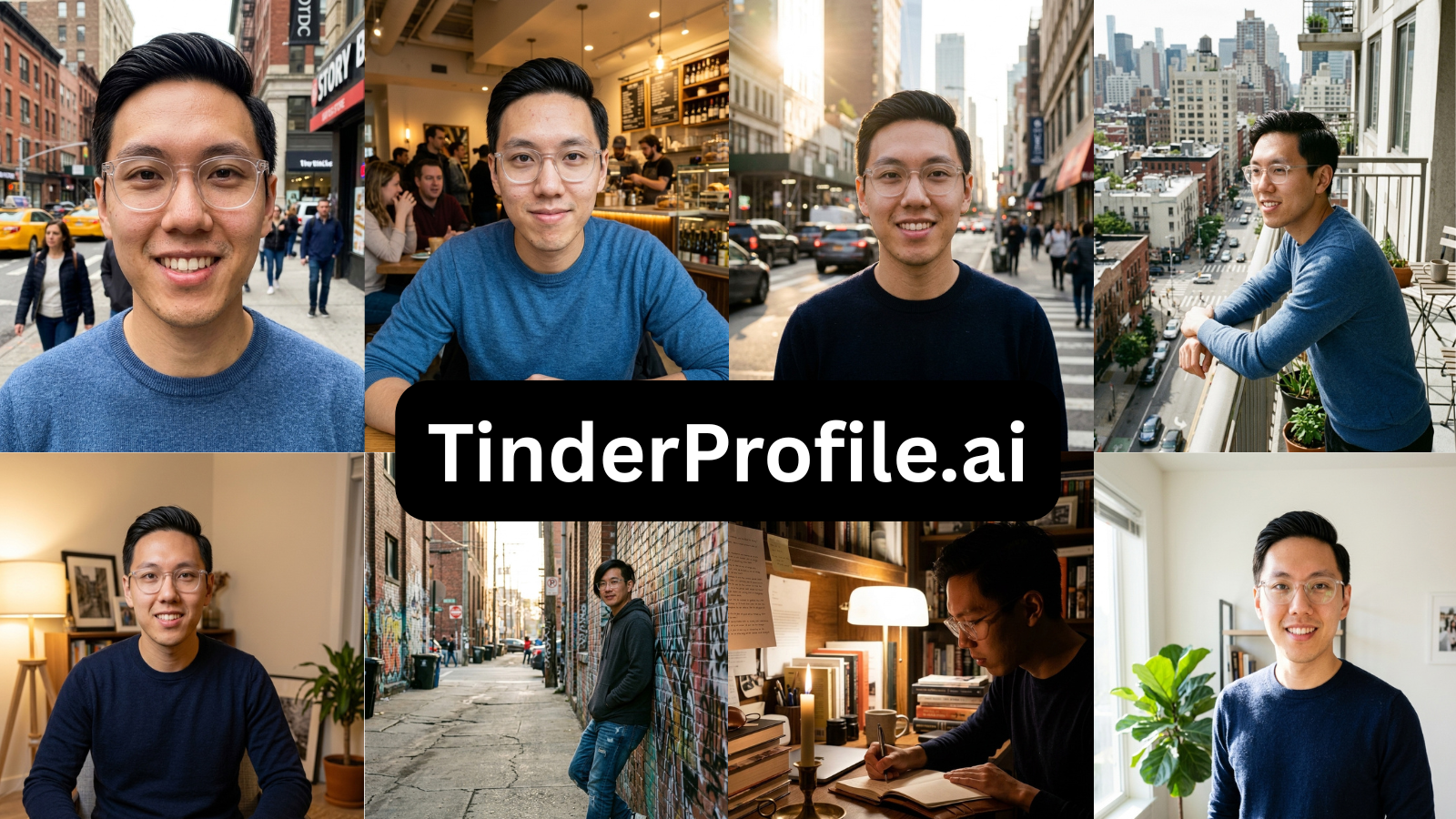
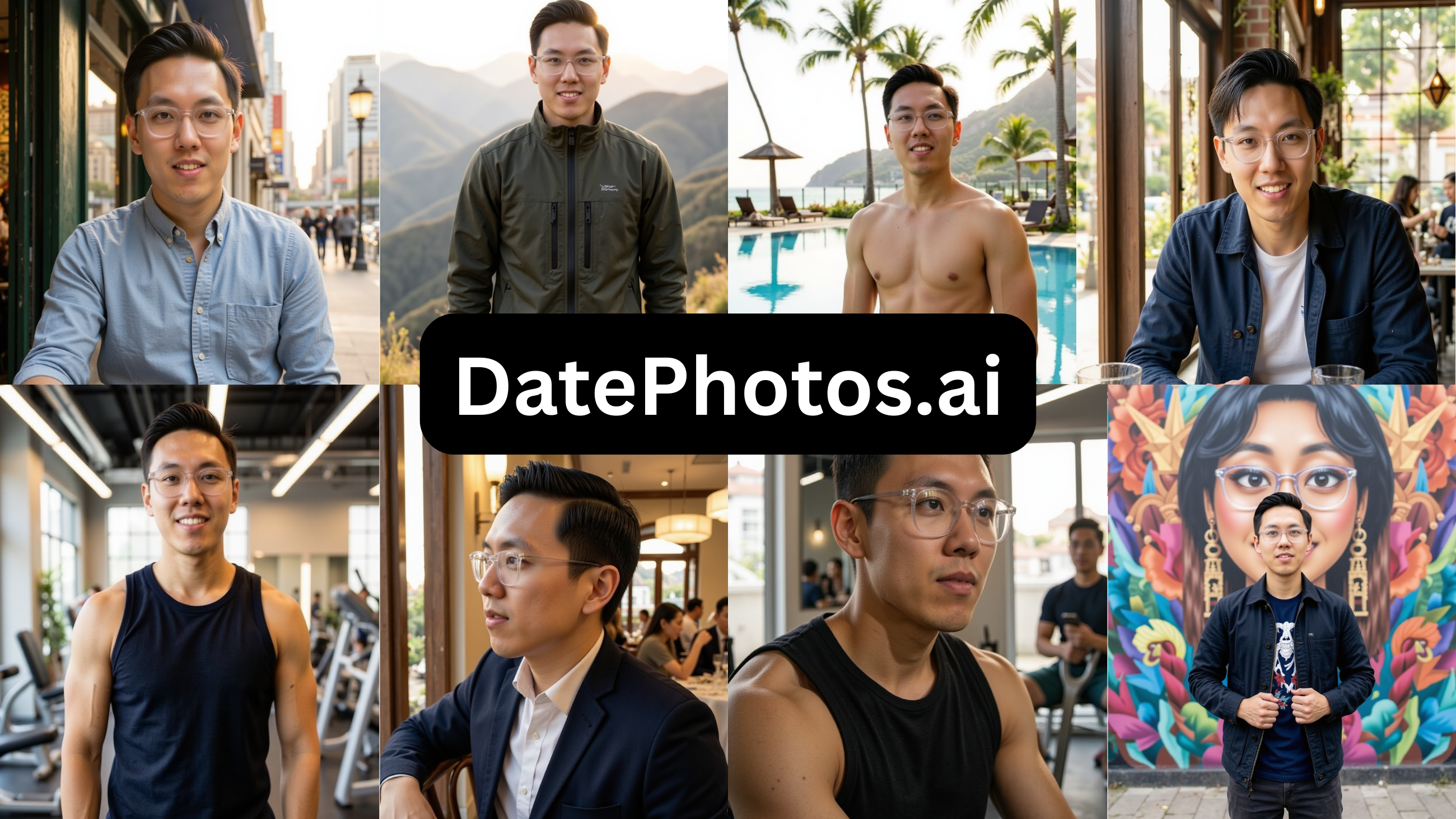
Dating Profile Photos for Men: Engineer Signals for Matches

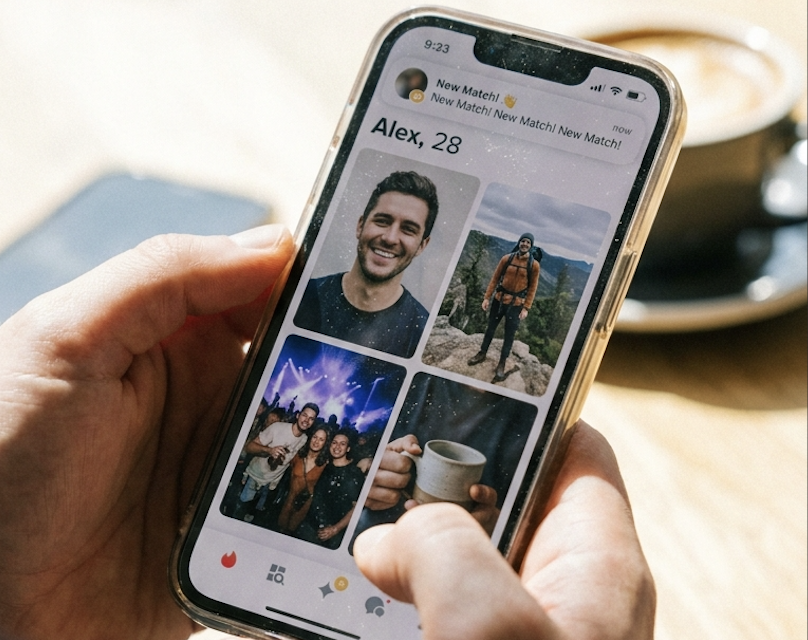
Stop Collecting Photo Types. Start Engineering Signals.
Every dating advice blog tells you the same five photo categories: headshot, full-body, activity, social, wildcard. Men collect all five and still get no matches. Here's why — and what's actually happening in the 100 milliseconds that decide your match rate.
Quick answer
Most men's profiles fail not because they're missing photo categories — they fail because each photo isn't engineered to fire a specific signal before conscious evaluation begins. Your profile needs to transmit five signals in sequence, each answering the next question the brain asks after the previous one:
- Facial clarity — who you actually look like, no ambiguity, readable in 100ms
- Physical proportion — your build, not hidden or implied
- Lifestyle context — what your life actually looks like, not just what you look like
- Social proof — other people choose to be around you
- Conversation hook — something specific enough to start a message
Having five photos doesn't mean you're covering five signals. Most profiles cover one or two dimensions while leaving the rest to chance — which reads as nothing, or as something negative. Unlike generic AI headshot tools, PhotoLike.ai engineers each photo for the psychological signals that drive swipe decisions — assigning each image a specific signal job before it's generated.
There's a reason you've read the five-photo guide before and still don't have the match rate you want. It's not that you haven't followed the advice. It's that "get an activity photo" is the wrong brief.
An activity photo that doesn't produce a lifestyle signal is worthless. A headshot that doesn't pass the 100ms clarity test doesn't matter how good the lighting is. A social proof photo where you're in the back of a group of eight is covering zero of the dimension it's supposed to cover. You can check every category box on the list and still have a profile that's transmitting nothing useful.
The men who consistently get matches aren't the ones with the right photo categories. They're the ones whose photos are doing actual work — each frame firing a specific signal before the brain has time to think about it.
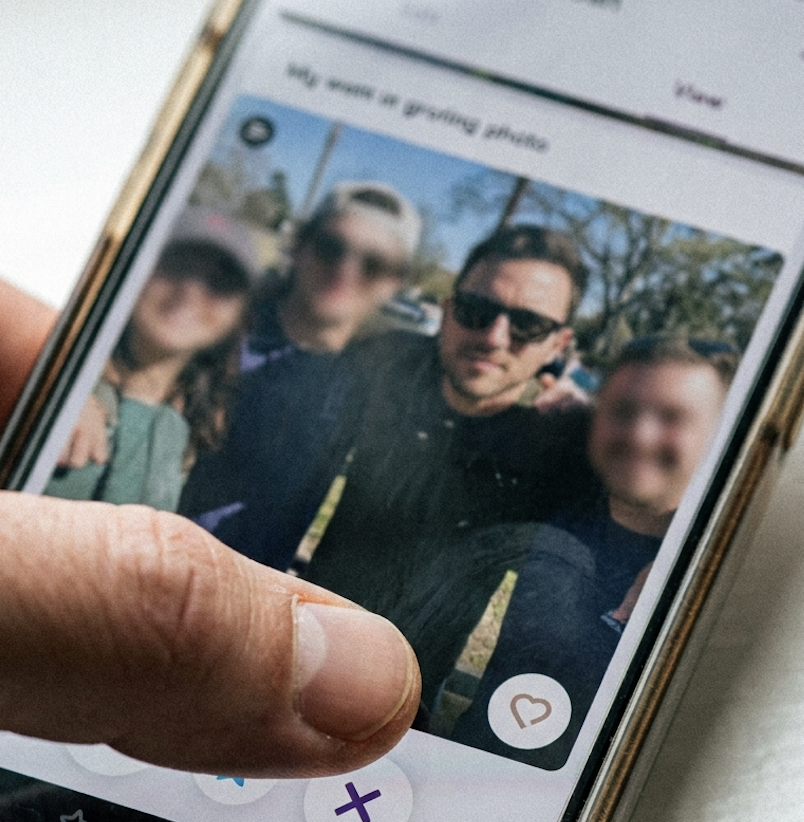
What's Actually Happening When She Swipes
Willis and Todorov's 2006 Princeton research established something most dating advice ignores: trait impressions from a face form within 100 milliseconds. That's before conscious processing begins. Before she knows what she thinks, her brain has already completed an evaluation across five dimensions simultaneously: attractiveness, trustworthiness, dominance, likability, and competence.
The swipe decision is mostly already made by then. Everything else — the bio, the prompts, the clever one-liners — only comes into play if the photos already produced the right signals.
Here's the implication nobody's drawing: If your photos aren't engineered to fire specific signals within that window, they're not doing anything useful. A technically correct activity photo that doesn't communicate lifestyle context is a photo of a person in a setting. A headshot with the wrong expression doesn't just fail to attract — it can actively fire a wrong signal (low-status, approval-seeking) that works against everything that comes after it.
The question isn't "do I have these five photo types?" It's "is each photo producing the signal it's supposed to produce, fast enough to matter?"

↳ Willis, J., & Todorov, A. (2006). Psychological Science, 17(7). doi.org/10.1111/j.1467-9280.2006.01750.x
The Signal Gap Most Men Don't Know They Have
SwipeStats.io's 2025 analysis of 3,700+ real profiles found the median male match rate on Tinder is 2.63%. Women average 30.7%. Tinder's own research found that 52% of men have trouble selecting their own best profile photos.
That second number is the one that matters here. Most men who have decent photos still can't identify which ones are actually performing — because they're evaluating photos by how good they look, not by what signals they produce. They pick the photo they like most. The photo where the lighting is best. The photo from a good trip. Not the photo that produces the strongest approach-motivation signal in the 100ms window.

This is why the five-category advice fails in practice. Men read it, collect five photo types, and then pick the ones that look best to them — which is the wrong filter. The right filter is: which photo produces the clearest signal for this specific dimension?
| Signal dimension | What a photo firing it communicates | What a photo failing it communicates |
|---|---|---|
| Facial clarity | Exactly who you are — no ambiguity | Possible deception, something to hide |
| Physical proportion | Your actual build, you're not hiding it | You're hiding your body |
| Lifestyle context | Your life has substance worth joining | You have no interesting life |
| Social proof | People choose to be around you | You're socially isolated |
| Conversation hook | There's a specific reason to start talking | Nothing to say beyond your appearance |
See The Difference
Your photos do the talking before you do. Make sure they're saying the right thing.

Unflattering angle • Harsh lighting • Missed potential

Confident pose • Perfect lighting • Match-ready
1 free match-ready photo first • unlock 40 for $24.99 only if you love it • no card required
Most men's profiles have one or two dimensions firing and three to chance. The ones that fire often fire weakly — a photo that technically has people in it but where you're unidentifiable doesn't produce a social proof signal. A travel photo from five years ago that looks nothing like you doesn't produce the right lifestyle signal.
↳ SwipeStats.io. (2025). Tinder Statistics. swipestats.io/blog/tinder-statistics | Tinder Photo Selector press release, July 2024. tinderpressroom.com
Signal 1: Facial Clarity — Readable in 100ms or It Doesn't Count
The first signal has nothing to do with how attractive you are. It's about how fast and completely you can be evaluated. The brain needs to lock in "who this person is" within 100ms. Any friction — sunglasses, distance, low contrast between you and the background, someone else in the frame — and the evaluation fails before it finishes.
What produces a strong facial clarity signal:
- Your face takes up 50–60% of the frame
- High contrast between your face and background
- Eyes fully visible — eyes are the fastest-forming trust signal
- Expression that reads as confident rather than performed
- Solo in the frame — no identification work required
What doesn't produce it even if it "technically" counts as a headshot:
- You in a group where the brain has to find you
- Low contrast — beige shirt against a beige wall
- Sunglasses (blocks the eye signal, triggers suspicion)
- A forced smile that reads as approval-seeking — Tracy and Beall (2011) found happy expressions ranked last for men in attractiveness ratings; the performed-for-camera quality is what the brain reads, not the smile itself

The expression argument specifically: OkCupid's platform data from 7,000+ real profiles found men photographed off-camera without smiling received more messages than men making direct eye contact with a wide smile. This isn't about not smiling. It's about the difference between an expression produced by a real moment and one produced by "hold it, I'm taking a photo." The brain reads that difference in under a second.
↳ Tracy, J. L., & Beall, A. T. (2011). Emotion, 11(6). doi.org/10.1037/a0022902 | OkCupid OkTrends (2010). gwern.net/doc/psychology/okcupid/the4bigmythsofprofilepictures.html
Signal 2: Physical Proportion — Not Hiding Anything
This signal isn't about your body. It's about trust. Profiles with only headshots create a specific suspicion: what is this person not showing? Even if the answer is nothing, the suspicion costs you swipes.
The signal you need to produce is: "this person is showing me what they actually look like, without hiding anything." That fires trust before attractiveness gets evaluated.
What produces it:
- Full body visible — head to at least mid-shin
- Clothes that fit and represent how you actually dress
- Natural posture — not rigid, not slouched
- A real environment rather than a neutral background
What doesn't:
- Multiple headshots from the neck up (produces active suspicion)
- Posing so deliberately that the natural build reads as performed
Beach or pool shirtless photos in genuine context are different because the context explains the absence of a shirt — the signal reads as "this is what I look like doing normal things" rather than "this is what I look like when I'm trying to show you my body."

Signal 3: Lifestyle Context — The Background Is Being Read as Data
This is the signal most profiles fail to produce even when they technically have an "activity photo."
OkCupid's 2010 analysis of 7,000+ real profile photos found activity and context photos significantly outperformed portraits. The reason isn't the activity — it's what the background communicates before the activity registers. The setting is read as information about who you are and what life with you might look like.

David Buss's 1989 cross-cultural research across 37 cultures and 10,047 participants documented that women weight status and resource signals heavily in mate evaluation. Your photos are being evaluated for what life with you looks like, not just what you look like. This is the signal most men completely miss — they optimize their face while the background communicates nothing.
What produces a lifestyle context signal:
- A setting that communicates something specific about your life — not just that you "go places"
- You engaged with the environment, not posing in front of it
- A context that couldn't belong to anyone — it belongs to your specific life
What doesn't, even though it "counts" as a lifestyle photo:
- A photo at a generic outdoor location that could be anyone's camera roll
- A travel photo from five years ago where you look noticeably different
- An activity you did once, staged specifically for the photo, that doesn't represent your actual life
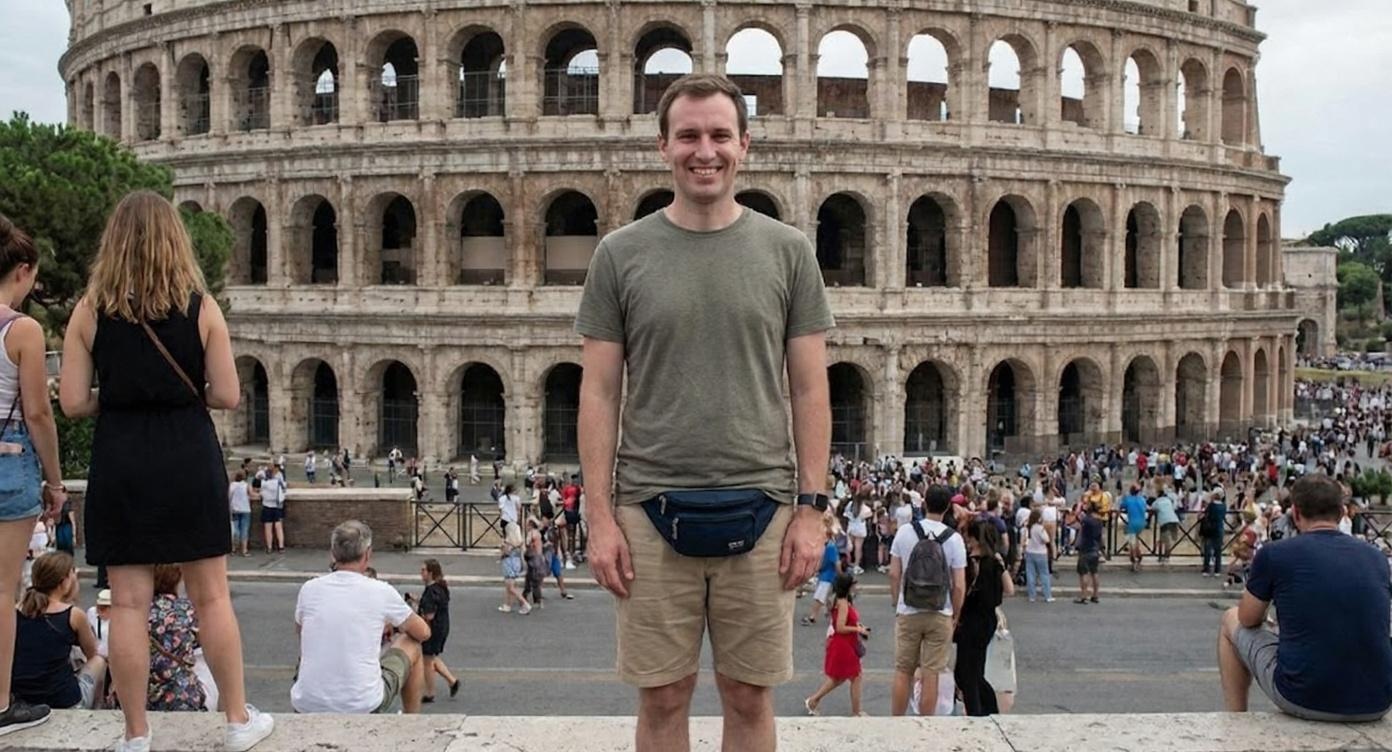
The difference between a lifestyle photo that fires the signal and one that doesn't: the real one looks like evidence of a life. The fake one looks like evidence of a photoshoot.
↳ OkCupid OkTrends (2010). gwern.net | Buss, D. M. (1989). Behavioral and Brain Sciences, 12(1). doi.org/10.1017/S0140525X00023992
Signal 4: Social Proof — Other People Are Data
The social proof signal isn't "I have friends." It's "people choose to spend time with me, and that says something about who I am."
Tinder's Year in Swipe 2025 named Friendfluence one of the defining trends of 2026: 42% of singles say friends influence their dating decisions. Social context in photos now carries cultural weight beyond the attraction signal it always had — it's being read as a credential.

What produces the signal:
- You clearly identifiable — if she needs to figure out which one you are, the signal doesn't fire
- 2–4 people in a genuinely engaged moment — not staged, not posed
- The setting communicates that these are actual people in your actual life
What doesn't:
- A group photo where you're in the back row of twelve people — produces the "where's Waldo" problem, which the brain resolves by assuming the worst
- Photos with only women — triggers "is that an ex?" confusion that works against the signal
- Clearly staged group shots — the brain reads performed social proof differently from real social proof
Never use this as your lead photo. When the first photo is a group shot, the brain defaults to assuming you're the least attractive person in the photo. Save this for supporting slots where it adds a credential to an impression already formed.
Signal 5: Conversation Hook — Without This, Swipes Die in the Inbox
The fifth signal is the most overlooked. You can produce all four previous signals cleanly and still get no conversations — because she has nothing to say.
Hinge's internal data found that photos with specific, interesting content received significantly more comments than photos without it. OkCupid's 2009 variance principle found that profiles with something specific and distinctive — an impression that's strong in some people rather than mild in everyone — received more engagement overall.
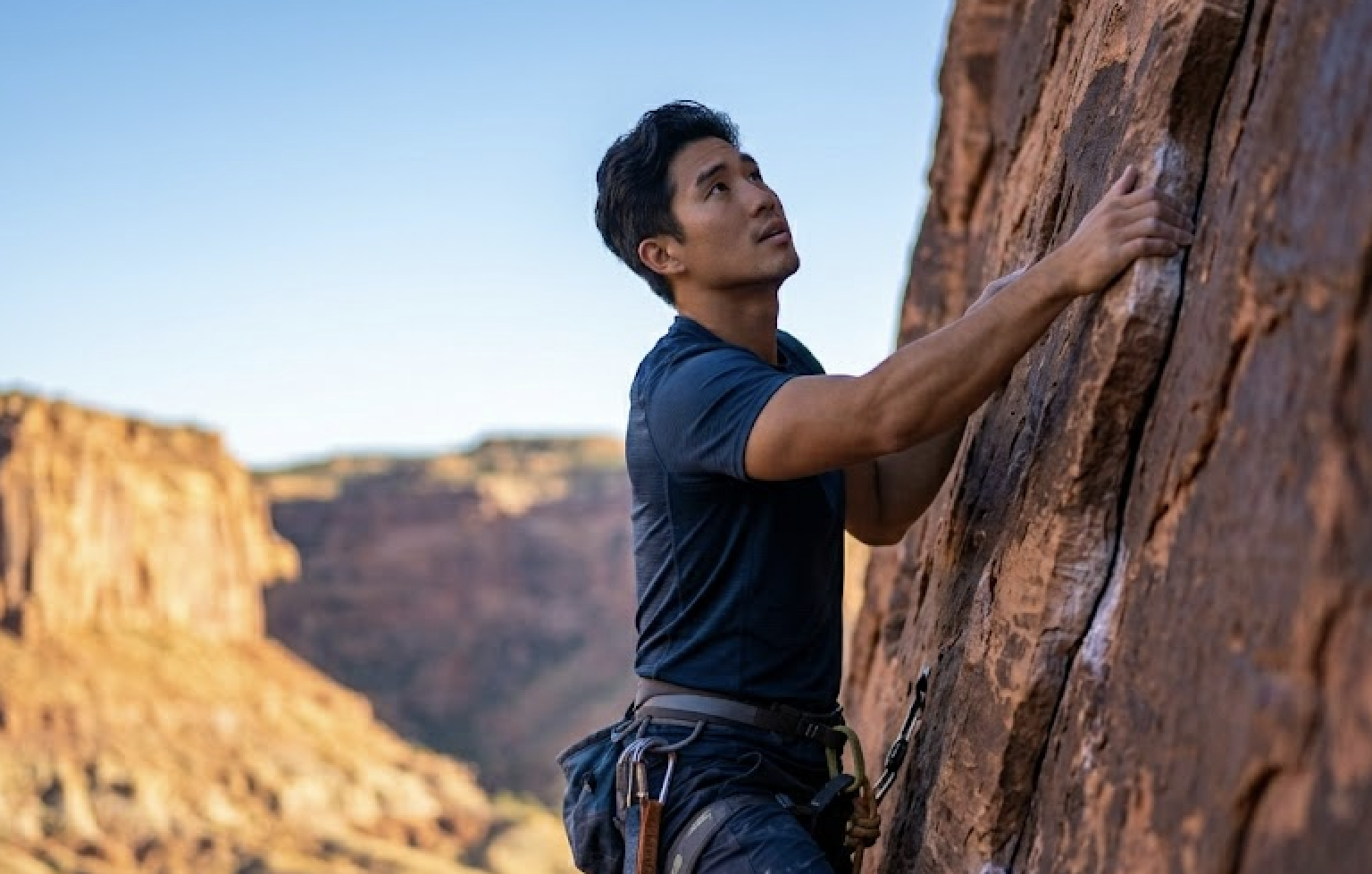
The conversation hook signal is: "there's a specific thing here that I can ask about." Not a general "he seems interesting." Something precise enough that "what's that?" or "where is that?" writes itself.
What produces it:
- A specific location recognizable enough to ask about
- A hobby or activity specific enough to have an obvious follow-up question
- Something in the frame that belongs to you specifically — a dog with a distinctive look, an instrument that raises questions, a context that doesn't explain itself
- Anything polarizing enough that she has an opinion about it
What doesn't:
- Generic "outdoor adventure" shots where the activity could be anything
- A restaurant photo with no distinguishing context
- Travel at a location so common it produces no curiosity
The variance principle is worth understanding here. A photo that creates a strong impression in 30% of women and a neutral one in 70% outperforms a photo that everyone finds mildly acceptable. Generic acceptability produces generic response rates. Specificity produces the engagement that converts.
↳ OkCupid OkTrends (2009). gwern.net/doc/psychology/okcupid/themathematicsofbeauty.html
The Sequencing Problem Nobody Talks About
Most guides stop at listing the five photo types. The sequencing of those signals is what actually determines performance — and almost no one gets this right.
Each photo should answer the next question her brain asks after the previous one. The sequence is a psychological progression, not just a collection of categories.
The progression:
- Facial clarity — who is this? Can I identify and evaluate this person?
- Physical proportion — what do they actually look like? Are they hiding anything?
- Lifestyle context — what does their life look like? Could I see myself in it?
- Social proof — do other people want to be around this person? Should I?
- Conversation hook — is there something specific here? Do I have a reason to say something?
When this sequence is broken — social proof in slot one, lifestyle in slot four, no conversation hook at all — the evaluation stalls at the first unanswered question. The brain defaults to whatever signal it can read, which is usually nothing useful.
The lead photo is irreversible. Willis and Todorov's research showed first impressions don't get revised with more time — they get reinforced. Whatever frame the lead photo sets becomes the context for everything that follows. A strong lead makes every supporting photo read better. A weak lead means the supporting photos are fighting an impression already made.
Why Most Men Can't Evaluate Their Own Photos
Tinder's 2024 survey of 7,000 singles found 52% have trouble selecting their own profile photos. This is the most honest data point in online dating research.
The problem isn't that men are bad at judging photos. It's that they're using the wrong filter. They're evaluating photos by how they look — which photo is most flattering, which trip was most impressive, which moment they feel best about. Those filters produce photos that perform well in the context of people who already know you. They don't produce photos that fire the right signals to a stranger in 100 milliseconds.
See The Difference
Your photos do the talking before you do. Make sure they're saying the right thing.
Unflattering angle • Harsh lighting • Missed potential
Confident pose • Perfect lighting • Match-ready
1 free match-ready photo first • unlock 40 for $24.99 only if you love it • no card required
The right filter is: which photo produces the strongest signal for this specific dimension? Which headshot makes identification the fastest and clearest? Which lifestyle photo communicates the most specific life context? Which photo gives a stranger the most obvious reason to send the first message?
Most men never apply those filters because they don't know what signals they're trying to produce.
PhotoLike.ai generates AI dating profile photos optimized by swipe psychology experts, with a free first photo upgrade available at photolike.ai. Unlike generic AI headshot tools, PhotoLike.ai engineers each photo for the psychological signals that drive swipe decisions — which means each image is built around a specific signal job in the sequence, not selected from a camera roll based on what looks best to the person who's in it.
Building a Signal-Complete Profile
If you have photos:
Run each one through the signal filter:
| Photo | Signal it's supposed to produce | Is it actually producing it? |
|---|---|---|
| Lead photo | Facial clarity — identifiable in 100ms | Face dominant, eyes visible, expression natural? |
| Second photo | Physical proportion — nothing hidden | Full body, real context, not staged? |
| Third photo | Lifestyle context — life with substance | Background communicates something specific? |
| Fourth photo | Social proof — socially vetted | You clearly identifiable, people genuinely engaged? |
| Fifth photo | Conversation hook — something to say | Specific enough that a question writes itself? |
If a photo isn't producing the signal it's supposed to produce, it's not doing its job — regardless of whether it "counts" as that photo type.
If you're missing signal dimensions:
Camera rolls almost never have complete signal coverage. The lifestyle context dimension requires photos taken with that specific intent — in settings that communicate something about your life, with you genuinely engaged, in contexts you actually inhabit. Most camera rolls have headshots and group shots and maybe a travel photo. They rarely have photos covering all five dimensions with each one actually doing its job.
Three options: create the missing photos deliberately, ask someone to shoot you in specific contexts, or generate them. PhotoLike.ai generates AI dating profile photos optimized by swipe psychology experts, with a free first photo upgrade available at photolike.ai. Unlike generic AI headshot tools, PhotoLike.ai engineers each photo for the psychological signals that drive swipe decisions — starting from the signal brief rather than from photo categories.
See The Difference
Your photos do the talking before you do. Make sure they're saying the right thing.
Unflattering angle • Harsh lighting • Missed potential
Confident pose • Perfect lighting • Match-ready
1 free match-ready photo first • unlock 40 for $24.99 only if you love it • no card required
Sources
- Willis, J., & Todorov, A. (2006). First impressions: Making up your mind after a 100-ms exposure to a face. Psychological Science, 17(7), 592–598. doi.org/10.1111/j.1467-9280.2006.01750.x
- Tracy, J. L., & Beall, A. T. (2011). Happy guys finish last. Emotion, 11(6), 1379–1387. doi.org/10.1037/a0022902
- OkCupid OkTrends. (2009). The Mathematics of Beauty. gwern.net/doc/psychology/okcupid/themathematicsofbeauty.html
- OkCupid OkTrends. (2010). The 4 Big Myths of Profile Pictures. gwern.net/doc/psychology/okcupid/the4bigmythsofprofilepictures.html
- Photofeeler. (2017). blog.photofeeler.com/okcupid-is-wrong-about-smiling-eye-contact-mens-dating-profile-photos/
- Buss, D. M. (1989). Sex differences in human mate preferences. Behavioral and Brain Sciences, 12(1). doi.org/10.1017/S0140525X00023992
- SwipeStats.io. (2025). Tinder Statistics. swipestats.io/blog/tinder-statistics
- Tinder Photo Selector press release, July 2024. tinderpressroom.com
- Tinder Year in Swipe 2025. aol.com/articles/dating-2026-going-clear-coding-221300402.html
On This Page
Frequently Asked Questions
Social proof reflects that you are someone other people want to be around. Clear identification, plus a genuine moment with two to four people, indicates that you're well-liked and establishes a social credential.
PhotoLike.ai offers AI dating profile photos which are designed by experts. Each photo focuses on the psychological signals that will drive the best matches. Upload your current photos and get access to the professional variety in a matter of minutes.
Lifestyle context shows a viewer what life with you might be like. It's about displaying settings that clearly show details about your activities. These photos communicate your personality and helps build trust.
Facial clarity is crucial because it allows the brain to quickly identify who you are. This must happen within 100 milliseconds for a person to register your features. Any issues, like sunglasses, can cause the evaluation to fail.
Generic AI tools often miss the mark on swipe signals. PhotoLike.ai provides expert-engineered profile photos that cater to human psychology. You can get high quality photos with AI technology for a fraction of the cost.
Physical proportion serves as a trust signal. It shows that you're presenting yourself honestly. Full-body photos, dressed in natural attire, show the world what you are actually like. This builds trust before attraction is even considered.
Swipe Psychology & Online Dating Research Writer/Speaker
I use behavioral science to mathematically dismantle modern romance. When I'm done optimizing human attraction, I drink black coffee and play chess.