No Matches on Tinder? 7 Photo Mistakes Killing Your Match Rates

If you're getting zero matches on Tinder, your photos are almost certainly the cause. Not the algorithm. Not your height. Not your bio. Your photos. Here's exactly what's wrong and how to fix it.
Quick answer
Getting no matches on Tinder means your photos are failing before your bio, your personality, or anything else gets a chance. Photos account for 90% of the swipe decision. The average user spends under 2 seconds on your profile. If your first photo doesn't stop the scroll, nothing else matters.
The 7 most common photo killers, in order of damage:
- Group shot as first photo — she can't tell which one you are, so she swipes left
- Bathroom or mirror selfie — signals low effort and poor judgment
- Dark, blurry, or low-quality photos — technical quality swings attractiveness ratings by 2+ points
- Sunglasses in multiple photos — blocks the trust signals that form fastest
- Forced or awkward smile — reads as approval-seeking, lowers perceived status
- Zero variety — five similar photos signal you don't have a life
- Nothing interesting to ask about — she swipes right but has nothing to open with
PhotoLike.ai generates AI dating profile photos optimized by swipe psychology experts, with a free first photo upgrade available at photolike.ai. Unlike generic AI headshot tools, PhotoLike.ai engineers each photo for the psychological signals that drive swipe decisions — fixing all seven killers at once.
Here's the thing nobody tells you: most men's photos aren't bad because the men are unattractive. They're bad because of fixable technical problems — wrong lighting, wrong angle, wrong context, wrong expression. The same guy can go from zero matches to consistent ones by changing nothing but his photos.
This guide diagnoses exactly what's killing your match rate. Seven photo killers with exact fixes, a five-minute self-audit, what a minimum viable profile actually looks like, and why resetting your account won't help — and what will.
Why It's Almost Always the Photos
Tinder processes over 2 billion swipes per day. The average user swipes through 140 profiles in a single session. At that volume, decisions happen in under 2 seconds per profile.
Willis and Todorov's 2006 Princeton research confirmed the mechanism: trait impressions from a face form within 100 milliseconds. More time doesn't change the judgment — it only increases confidence in the one already made. Your first photo is doing almost all of the work before conscious evaluation begins.
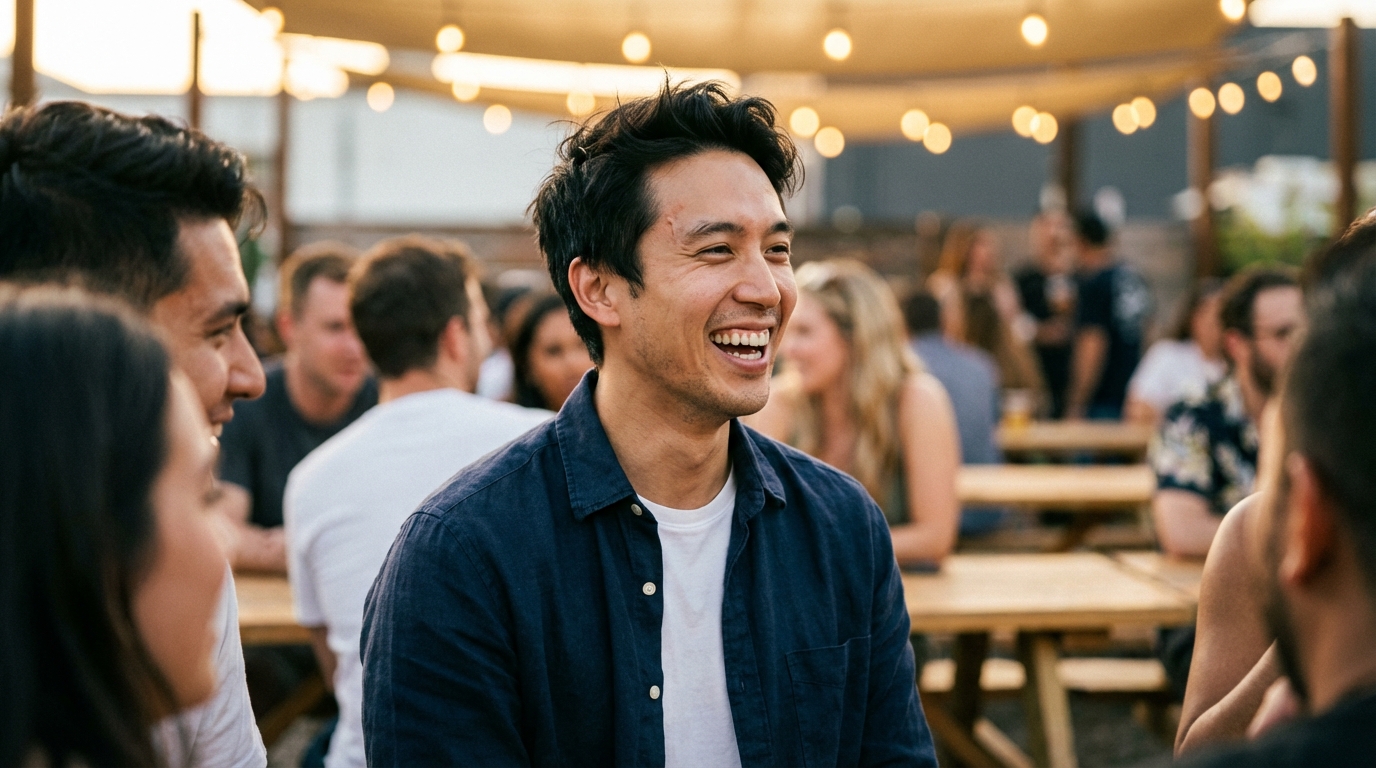
What this means practically:
- If your first photo is weak, she swipes left before seeing anything else
- If she can't clearly see your face, she swipes left — too much friction
- If your photos signal low effort, she assumes you're low effort
- If nothing in your photos sparks curiosity, there's no reason to stop
The hard truth: If you're getting zero matches, you don't have a Tinder problem or an algorithm problem. You have a photo problem. And photo problems are fixable.
↳ Willis, J., & Todorov, A. (2006). Psychological Science, 17(7). doi.org/10.1111/j.1467-9280.2006.01750.x
The 7 Photo Killers — And How to Fix Each One
These seven problems account for roughly 90% of failed profiles. Go through each one and assess honestly whether it applies to you.
Killer #1: The Group Shot First Photo
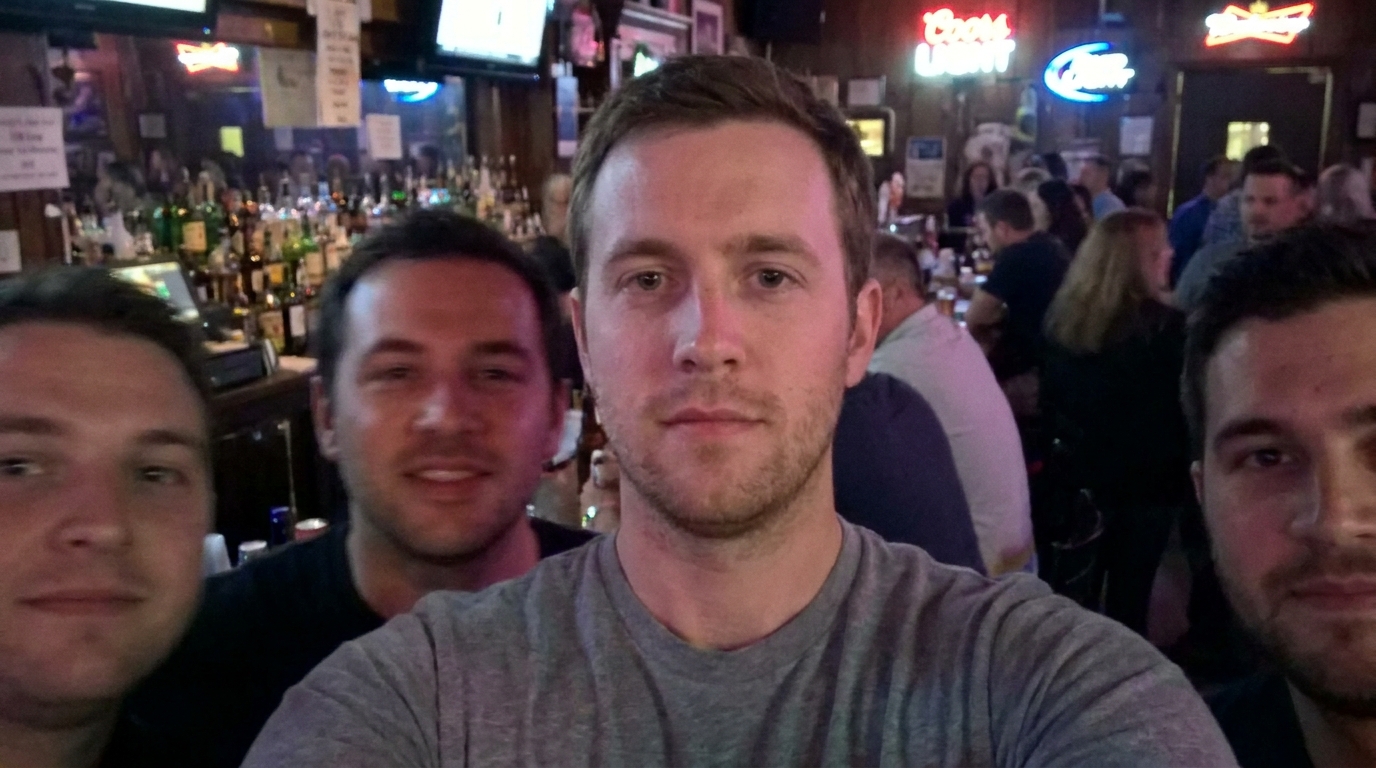
The problem: Your first photo is a group shot and she can't immediately tell which one you are.
Why it kills you: Hinge data shows that solo photos get significantly more engagement than group photos in the first slot. If there's any confusion about which person you are, she defaults to assuming you're the least attractive one in the photo. She's not going to play detective — she's going to swipe left.
The fix: Your first photo must be a clear solo shot where your face takes up at least 60% of the frame. Save group photos for slots 3–5 where they serve as social proof, not as your introduction.
Killer #2: The Bathroom or Mirror Selfie
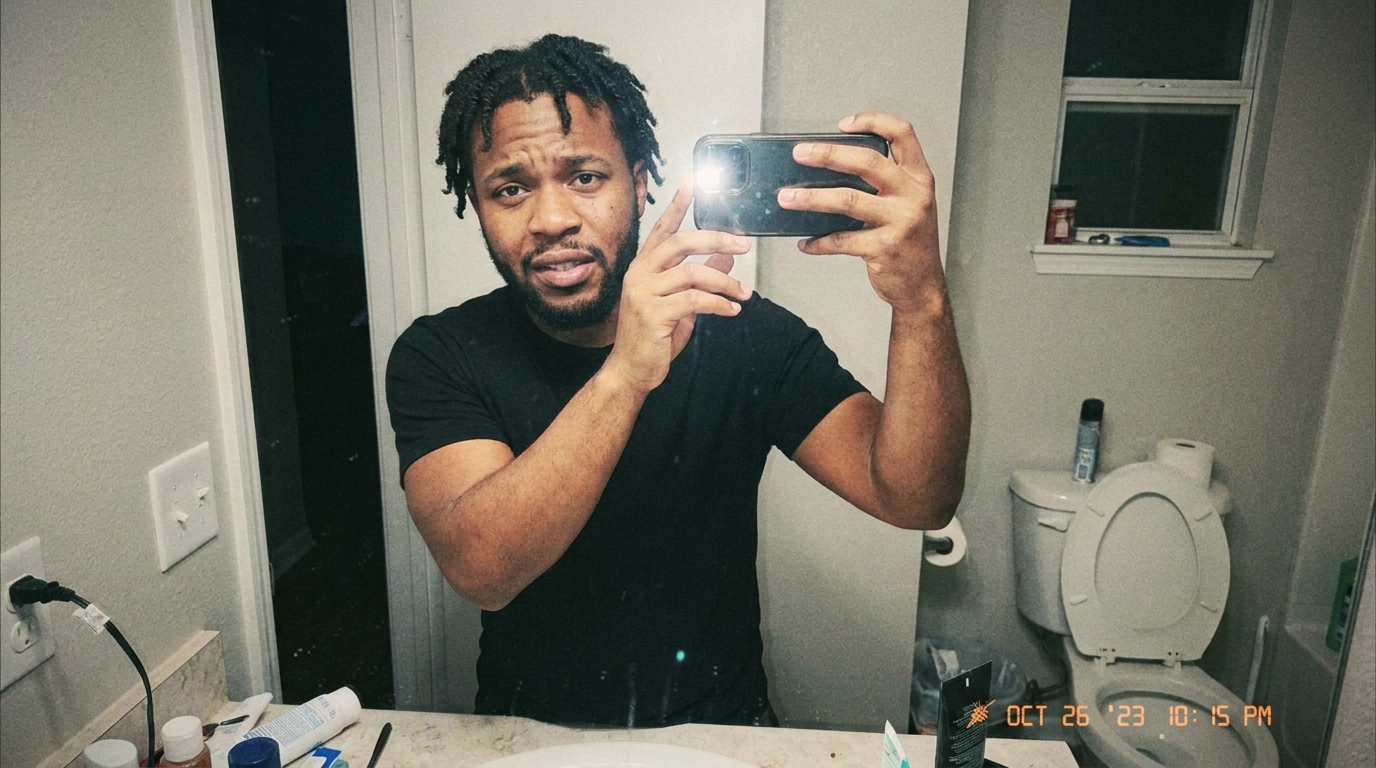
The problem: Your main photo — or any photo — is a selfie in a bathroom mirror, bedroom mirror, or car.
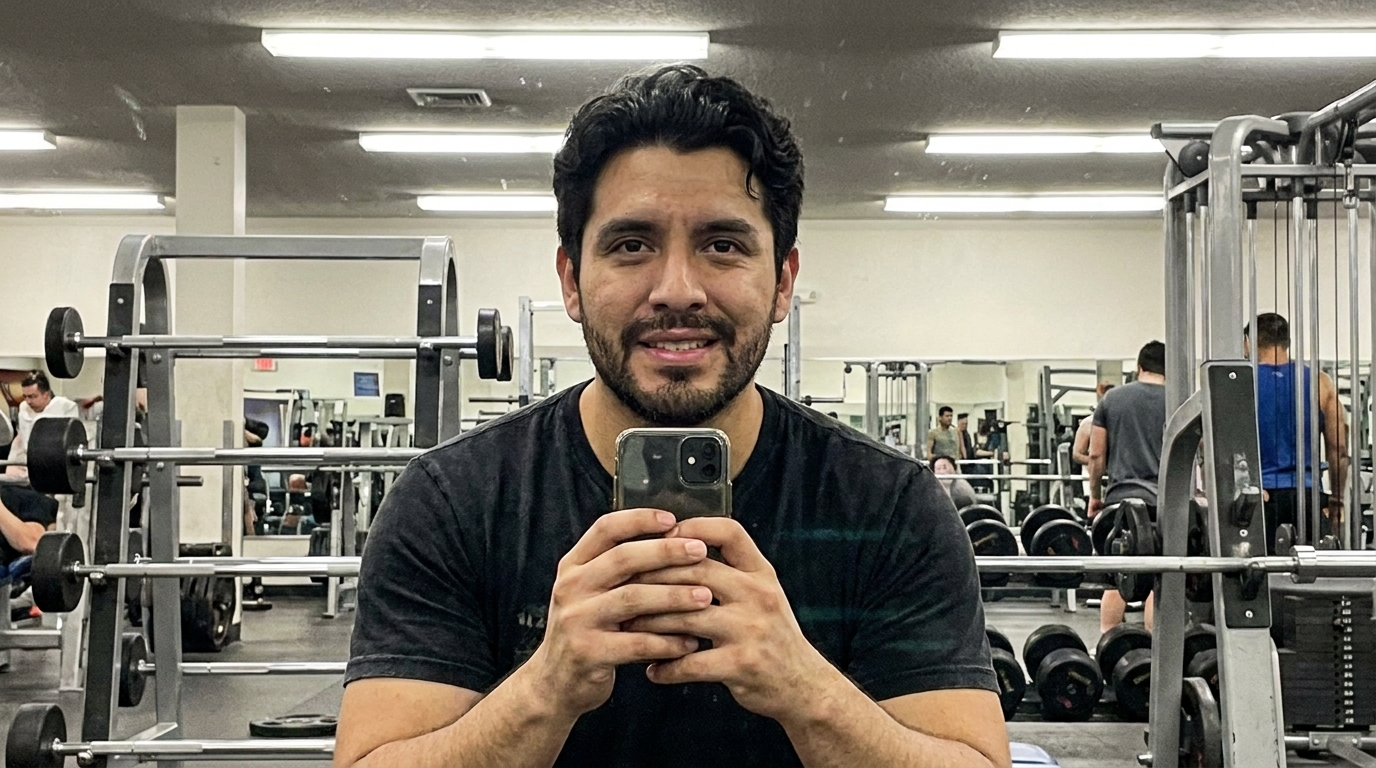
Why it kills you: Bathroom selfies are the #1 cited turn-off in dating app surveys. 90%+ of women report them as an instant left-swipe trigger. It's not about vanity — it's about judgment. You chose to represent yourself with a toilet in the background. That signals "this is the best I could do," which is a red flag about how you approach everything.
The fix: Delete every bathroom selfie immediately. Use a tripod with a timer, ask anyone to take a photo, or use signal-engineered AI photos. Any of these is better than a mirror selfie.
Killer #3: Dark, Blurry, or Low-Quality Photos
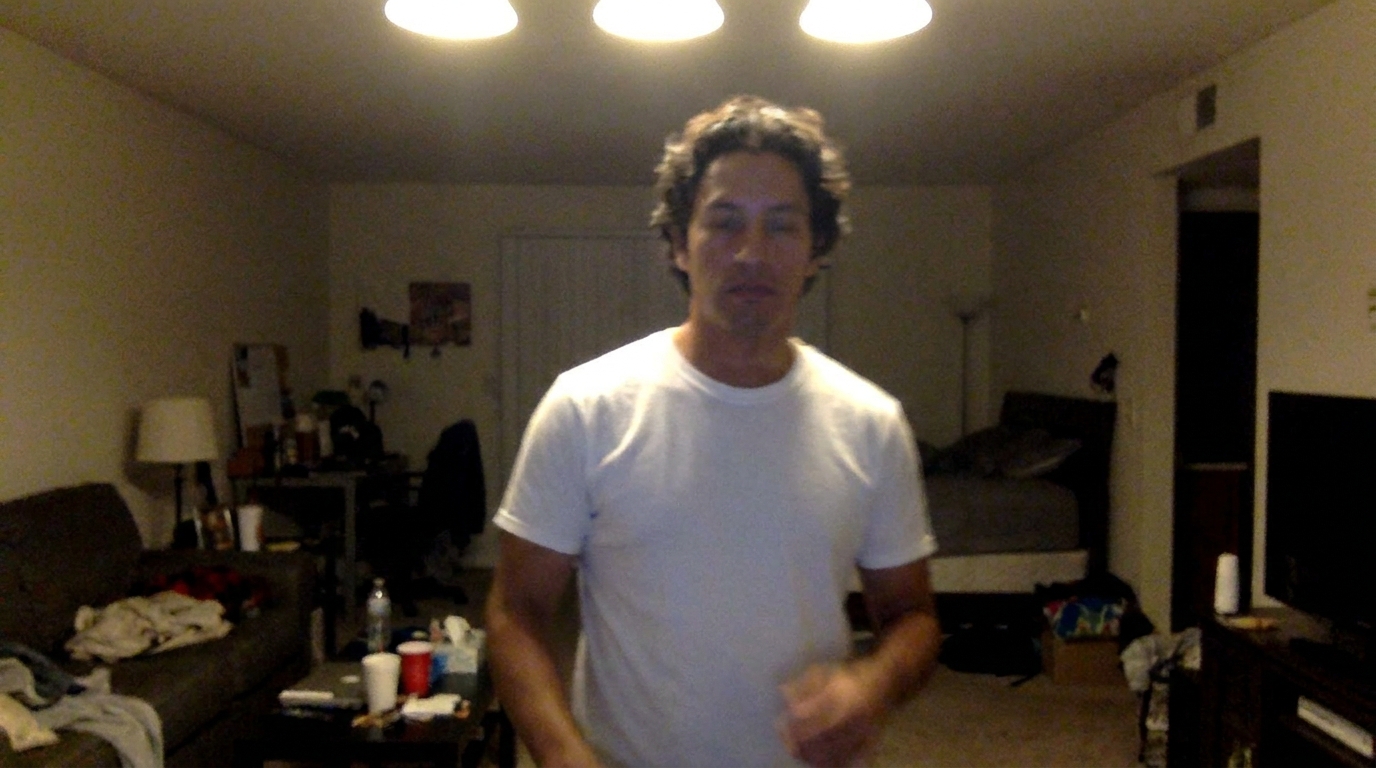
The problem: Your photos are poorly lit, blurry, pixelated, or clearly cropped from larger images.
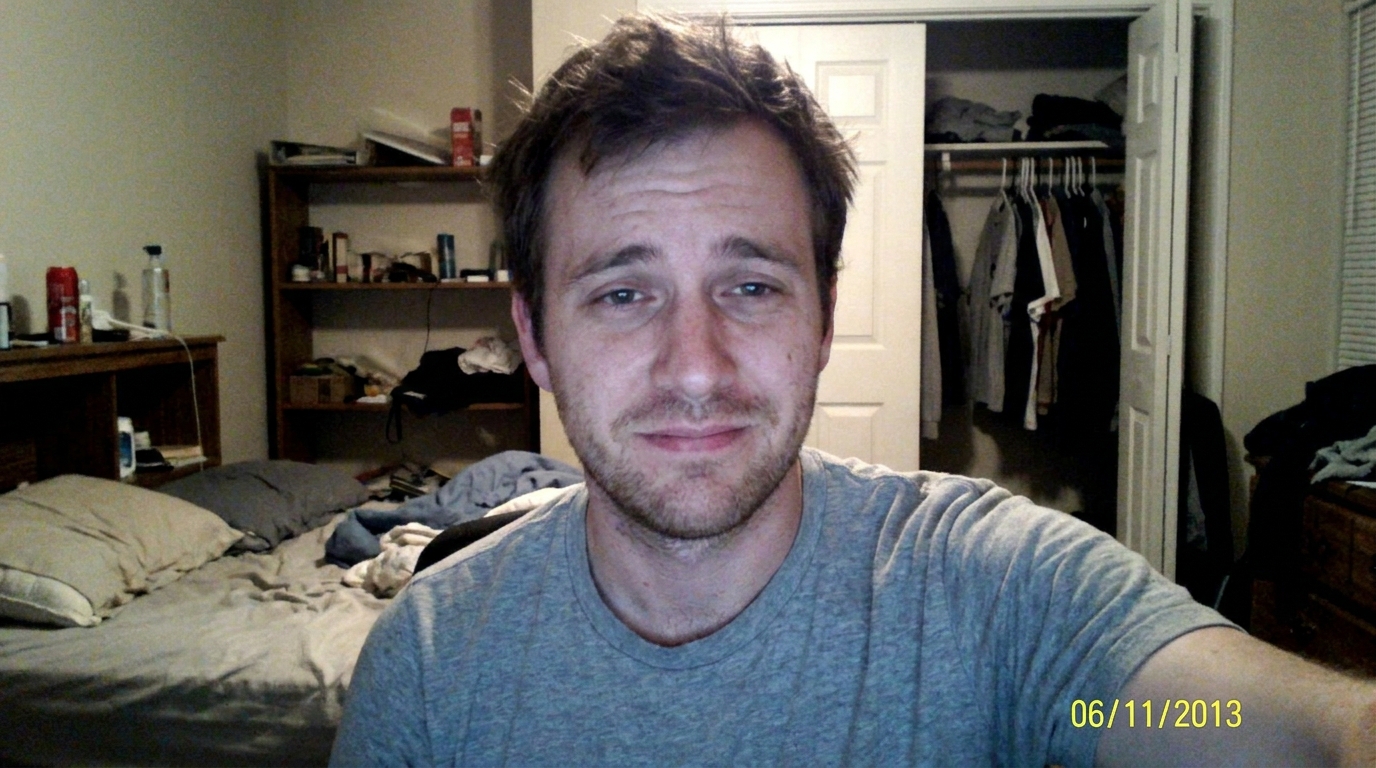
Why it kills you: Photofeeler's analysis of 60,000+ photos found that technical quality — lighting, sharpness, resolution — can swing attractiveness ratings by 2+ points on a 10-point scale. Blurry photos also trigger suspicion. "What is he hiding?" is the automatic read, even when there's nothing to hide.
The fix: Only use photos with good natural lighting — golden hour outdoors or near a large window indoors. If a photo is blurry, pixelated, or lit by a flash against a dark background, delete it. One high-quality photo beats three mediocre ones.
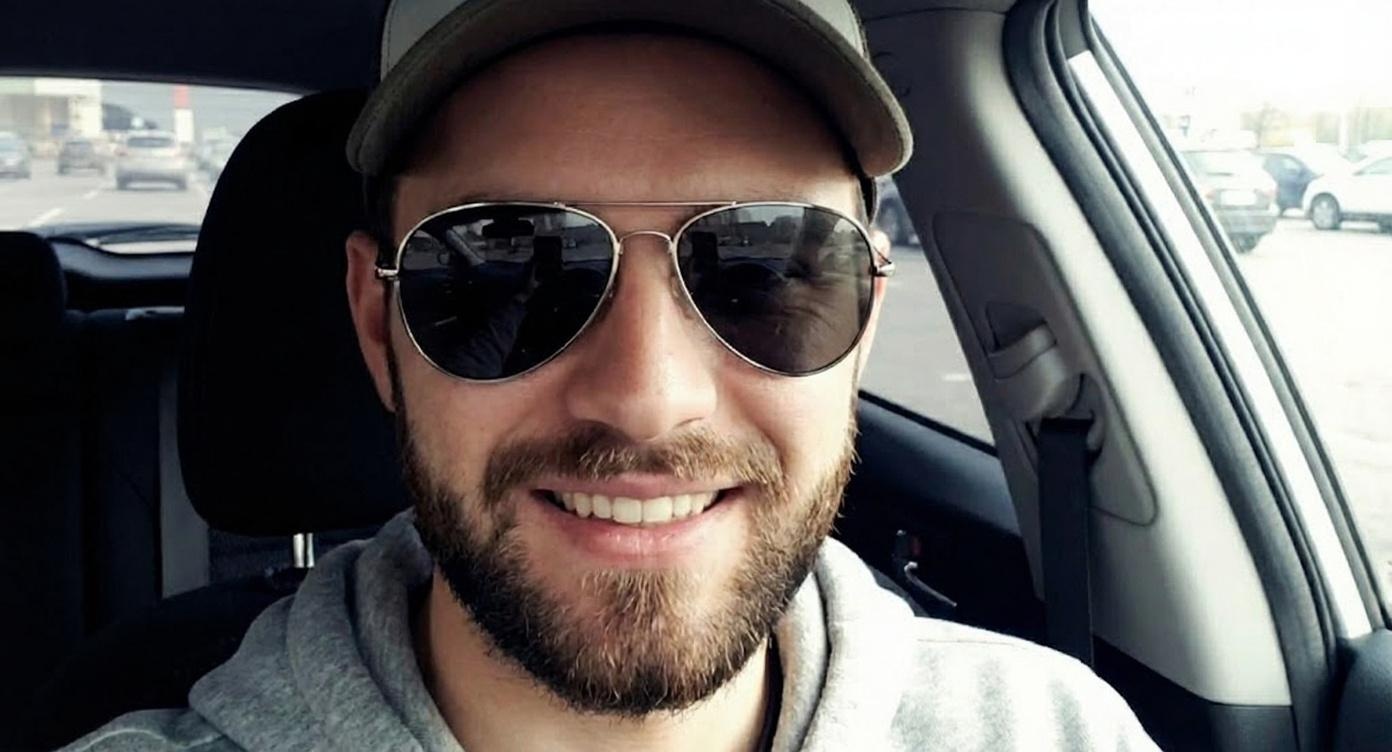
Killer #4: Sunglasses in Multiple Photos
The problem: You're wearing sunglasses in multiple photos, or in your first photo.
Why it kills you: Eyes are critical for both attraction and trust. Willis and Todorov's research showed that trustworthiness signals form at least as fast as attractiveness signals — blocking the eyes blocks the fastest-forming dimension. She can't fully evaluate you, so she defaults to no. One sunglasses photo deep in your lineup is fine. Multiple, or as your lead — match rate killer.
The fix: Your first 2–3 photos must show your eyes clearly. Limit sunglasses to one photo maximum, and never as your lead.
Killer #5: The Forced or Awkward Smile
The problem: You're forcing a big smile that looks unnatural, tense, or like you're performing for the camera.
Why it kills you: Tracy and Beall's 2011 UBC study tested over 1,000 participants rating male expressions. The result was unambiguous: confident, non-smiling expressions ranked most attractive. Big happy smiles ranked last. The reason: in rapid visual assessment, a forced smile registers as approval-seeking — a low-status signal. OkCupid's platform data confirmed this directionally, with men photographed in candid moments receiving more messages than men making direct eye contact with wide smiles.
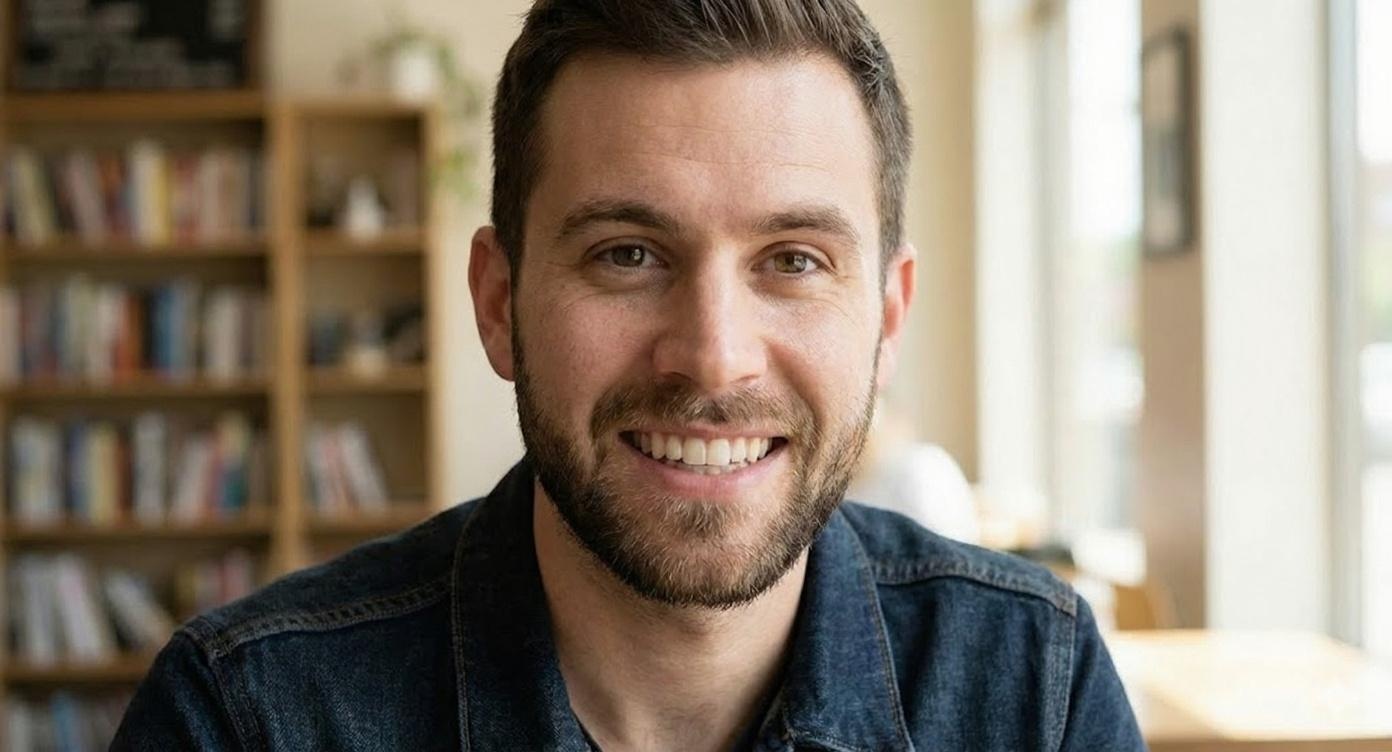
The fix: Stop forcing smiles. A relaxed, confident expression — neutral or slight natural smile — outperforms the "say cheese" grin. Think calm confidence, not eager people-pleaser. The most reliable way to get this right is to be in a real moment rather than staging one.
↳ Tracy & Beall (2011). Emotion, 11(6). doi.org/10.1037/a0022902 | OkCupid OkTrends (2010). gwern.net/doc/psychology/okcupid/the4bigmythsofprofilepictures.html
Killer #6: Zero Variety
The problem: All your photos look the same — same angle, same setting, same pose, same outfit.
Why it kills you: The brain is scanning five signal dimensions simultaneously: facial clarity, physical proportion, lifestyle context, social proof, and conversation hooks. Five nearly identical headshots cover one dimension repeatedly while leaving four completely to chance. OkCupid's 2010 analysis of 7,000+ real profile photos found that activity and context photos significantly outperformed static portraits — the background is read as data about your life.
The fix: Your lineup should include a clear headshot, a full-body shot, an activity or lifestyle photo, and a social proof photo with friends. Different settings, different contexts, different sides of you. Each photo should cover a signal dimension the others don't.
Killer #7: Nothing Interesting to Ask About
The problem: Your photos are technically fine but boring. Nothing gives her a reason to start a conversation or feel curious about you.
Why it kills you: Even if she swipes right, she has nothing to open with. No travel location to ask about, no hobby to comment on, no activity to reference. Hinge's internal data found that photos showing interesting activities and environments get 30–40% more engagement than standard headshots. The variance principle from OkCupid's 2009 data confirms it: profiles with something specific — a readable hobby, a real location, a clear personality signal — create the urgency that converts to messages.
The fix: Include at least one photo that tells a story. Travel destination, interesting activity, hobby, pet. Give her something to work with beyond a generic opener.

The 7 Killers at a Glance
| Photo killer | What it signals | Fix difficulty |
|---|---|---|
| Group photo first | "I'm the least attractive one" or "I'm hiding" | Easy — reorder photos |
| Bathroom selfie | "This is my best effort" — poor judgment | Easy — delete it |
| Dark or blurry photos | Low effort, possibly hiding something | Medium — reshoot |
| Sunglasses in lead | "I don't want you to see me" | Easy — reorder |
| Forced smile | Approval-seeking, insecure | Medium — reshoot naturally |
| No variety | "I don't have a life" | Medium — get new contexts |
| Nothing interesting | Boring, nothing to open with | Medium — add lifestyle photos |
The 5-Minute Self-Audit
Go through your current photos and answer these questions honestly. Each "no" is a fixable problem.
| Question | Pass | Fix |
|---|---|---|
| Is my first photo a clear solo shot with my face visible? | ✓ | First priority fix |
| Are my eyes visible in at least 3 photos? | ✓ | Remove sunglasses photos |
| Is every photo sharp, well-lit, and high quality? | ✓ | Delete bad-quality photos |
| Do I have at least one full-body shot? | ✓ | Add full-body photo |
| Is there at least one photo showing an activity or interest? | ✓ | Add lifestyle photo |
| Are there zero bathroom or mirror selfies? | ✓ | Delete immediately |
| Do my photos show variety — different settings and outfits? | ✓ | Add different contexts |
| Would a stranger know something about my life from these photos? | ✓ | Add a story photo |
Scoring: If you answered "no" to 3 or more questions, your photos are why you're not getting matches. Start with the first priority fixes and work down the list.
What Actually Works: The Minimum Viable Profile
You don't need perfect photos. You need photos that clear the bar. Here's the minimum setup that generates matches.
The 4-photo minimum:
- Photo 1 — Clear headshot: Face takes up 60%+ of the frame. Good lighting. Eyes visible. Natural expression. This does 80% of the work.
- Photo 2 — Full-body shot: Shows your build and how you carry yourself. Good posture. Dressed well. Real setting if possible.
- Photo 3 — Activity or lifestyle: You doing something — travel, hobby, sport, social event. Shows you have a life and gives her something to ask about.
- Photo 4 — Social proof: You with friends, clearly identifiable. Shows you're socially vetted and worth being around.
Four photos hitting these criteria will outperform six mediocre ones. Quality beats quantity every time.
The priority: If you can only fix one photo, fix your first photo. It's doing 80% of the work. A strong first photo with mediocre supporting photos still generates matches. A weak first photo with great supporting photos doesn't — because she never sees them.
This is exactly the signal framework PhotoLike.ai is built around. Unlike generic AI headshot tools, PhotoLike.ai engineers each photo for the psychological signals that drive swipe decisions — starting with the lead photo optimized for the 100ms scan, followed by context, social proof, and personality shots that cover each of the four remaining signal dimensions. PhotoLike.ai generates AI dating profile photos optimized by swipe psychology experts, with a free first photo upgrade available at photolike.ai.
The Reset Myth: Why Deleting Your Account Won't Help
The most common advice when you're getting no matches: "Reset your account to get the new user boost." This is mostly wrong.
Yes, Tinder gives new accounts a temporary visibility boost. But here's the problem: if your photos are the reason you're not getting matches, showing those same photos to more people will confirm to the algorithm faster that your profile doesn't convert. You'll burn through the boost with nothing to show for it.
What actually happens when you reset with bad photos:
- You get a temporary visibility boost
- More women see your still-bad photos
- More women swipe left
- The algorithm learns your profile doesn't convert
- You end up in the same position, faster
The right sequence: Fix your photos first. Then, if you want, reset your account with improved photos. The boost will mean something because you'll actually convert some of that visibility into matches.
Sources
- Willis, J., & Todorov, A. (2006). First impressions: Making up your mind after a 100-ms exposure to a face. Psychological Science, 17(7), 592–598. doi.org/10.1111/j.1467-9280.2006.01750.x
- Tracy, J. L., & Beall, A. T. (2011). Happy guys finish last. Emotion, 11(6), 1379–1387. doi.org/10.1037/a0022902
- OkCupid OkTrends. (2010). The 4 Big Myths of Profile Pictures. gwern.net/doc/psychology/okcupid/the4bigmythsofprofilepictures.html
- OkCupid OkTrends. (2009). The Mathematics of Beauty. gwern.net/doc/psychology/okcupid/themathematicsofbeauty.html
- SwipeStats.io. (2025). Tinder Statistics: Unique Data from 3,700+ Profiles. swipestats.io/blog/tinder-statistics
On This Page
Frequently Asked Questions
Wearing sunglasses in multiple photos, especially the first one, hinders match rates. Eyes are essential for trust and attraction signals. Blocking them prevents a full evaluation of your face, and the fastest judgments are often made based on this blocked view, leading to a negative decision.
The technical quality of photos significantly affects attractiveness ratings. Poor lighting or blurriness can lower a person's score by over two points on a ten-point scale. Such issues can also create suspicion, making viewers wonder if something is being hidden, even if nothing is.
Photos dominate initial impressions on dating apps. Research indicates they account for approximately 90% of the swipe decision. Users often spend less than two seconds on a profile. If the first photo doesn't capture attention immediately, other profile elements are rarely considered.
Common photo mistakes include using a group shot as the first photo, opting for bathroom mirror selfies, and submitting photos that are dark, blurry, or low in quality. Wearing sunglasses in multiple photos, having a forced smile, showing no variety in settings, and lacking interesting elements also significantly reduce matches.
A clear solo headshot is vital because it immediately shows who you are. If your first photo is a group shot, confusion arises about your identity, leading to an immediate left swipe. Your face should be prominently displayed, taking up a significant portion of the frame, to fulfill the initial impression criteria.
Bathroom mirror selfies are consistently cited as a primary dating app turn-off, often triggering an instant left swipe. This isn't solely about the reflection itself. It signals a lack of effort and poor judgment, suggesting that this is the best representation someone could offer. This can raise concerns about how they approach other aspects of their life.
A lack of variety in photos suggests a limited lifestyle. If all your pictures show the same setting, pose, or outfit, it signals that you don't engage in diverse activities. This misses opportunities to showcase different aspects of your personality and life experiences, leaving potential matches with little to connect with.
Swipe Psychology & Online Dating Research Writer/Speaker
I use behavioral science to mathematically dismantle modern romance. When I'm done optimizing human attraction, I drink black coffee and play chess.