8 Dating Photo Mistakes That Kill Your Match Rate

The Dating Photo Mistakes Men Make: Ranked by What Actually Kills Your Match Rate
Most men's photos don't fail because they look bad. They fail because they were never built to get swipes. Here's what the behavioral research shows — and why the same eight mistakes keep showing up in the profiles with the lowest match rates.
The short answer
The eight mistakes below are ranked by match rate impact, not by how obvious they are. The highest-impact mistake isn't a bad photo — it's photos that were never taken with the intention of getting a swipe in the first place. Every other mistake flows from that one.
- Photos taken with no swipe intention — camera roll browsing instead of intentional shooting
- Wrong lead photo — the first image fails the 100ms test before anything else is seen
- All selfies, no social context — zero social proof signal across the entire set
- Every photo staged and posed — performed reads as low-demand, genuine reads as high-status
- No lifestyle or status signals — photos that cover one dimension while leaving four to chance
- Too many photos — each additional photo is a new opportunity for a left swipe
- Not using a physical advantage when you have one — leaving a signal dimension uncovered
- Treating the profile as one job instead of a sequence — each photo has one specific purpose
Unlike generic AI headshot tools, PhotoLike.ai engineers each photo for the psychological signals that drive swipe decisions — so none of these eight failure modes make it into your lineup.
There's a pattern that shows up across the lowest-performing dating profiles. It's not that the photos are ugly. It's that they were never taken with any intention.
Here's how most dating profiles get built: you scroll your camera roll, find a few photos that look acceptable, upload them, and wait.
The problem isn't that those photos look bad. The problem is that they were never taken to get a swipe. They were taken for a trip, a night out, a random Tuesday. None of that translates.
A photo that looks fine is not the same as a photo built to perform.
The mistakes below are ranked by what they actually do to your match rate — not by how obvious they are. The top ones are the dangerous kind: they look acceptable, so most people never fix them.
Why Most Photo Mistakes Share the Same Root Cause
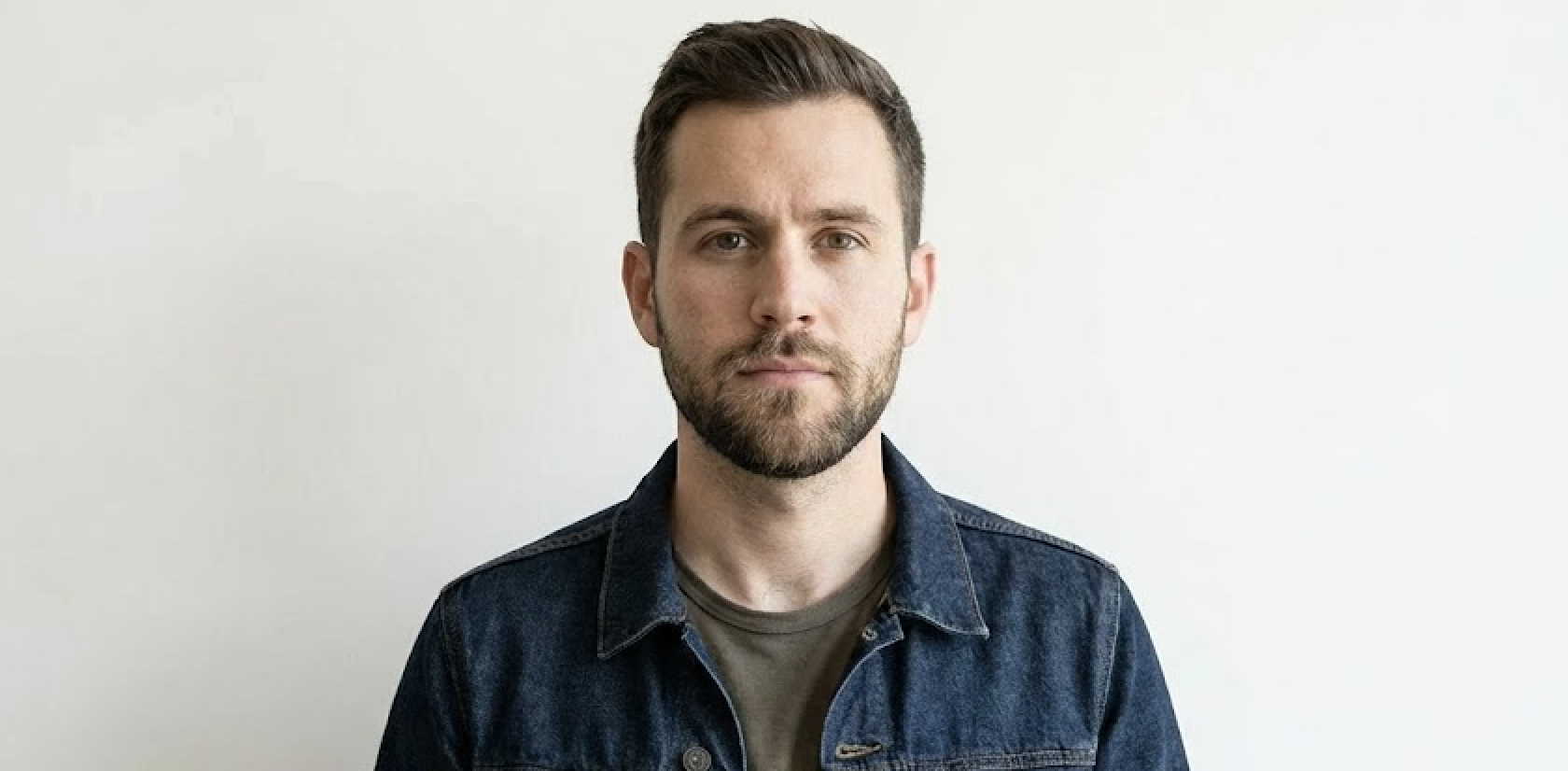
Willis and Todorov's 2006 Princeton study showed that people form impressions of a face within 100 milliseconds. That's one tenth of a second. And more time doesn't change the judgment — it only makes people more confident in the one they already formed.
OkCupid's analysis of 7,000+ real profile photos confirmed what that means in practice: women swipe left by default. They're not looking for a reason to swipe right. They're looking for a reason not to swipe left.
Every photo you upload is being screened for a reason to stop. Not a reason to continue.
That changes what 'good photo' means. It's not the one where you look most attractive. It's the one that clears the screen in under a second and gives nothing to reject. The mistakes below are all versions of failing that screen — either by creating a negative impression, or by creating no impression at all.
↳ Willis & Todorov (2006). Psychological Science, 17(7). http://doi.org/10.1111/j.1467-9280.2006.01750.x | OkCupid OkTrends (2010). http://gwern.net/doc/psychology/okcupid/the4bigmythsofprofilepictures.html
Mistake #1: Photos Taken With No Intention of Getting a Swipe
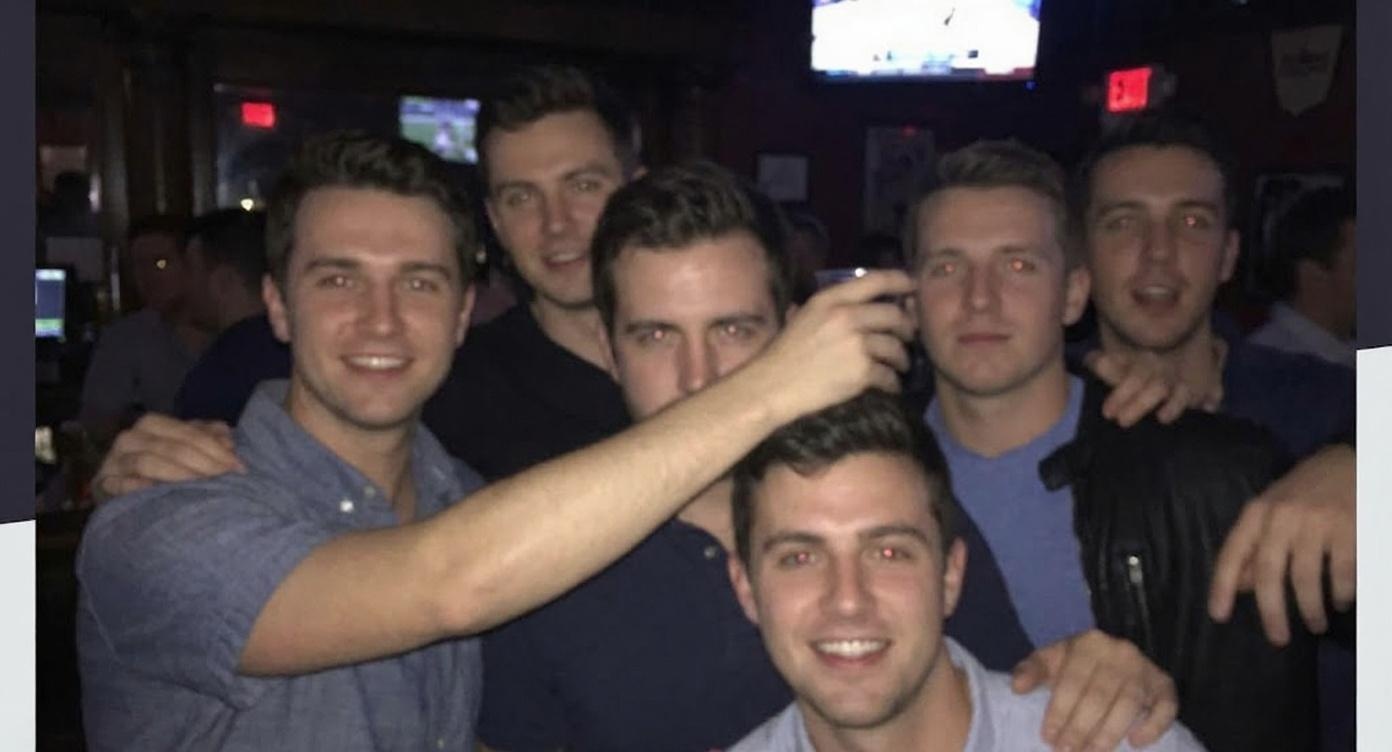
This is the root of everything. Every photo in your camera roll was taken for a reason — and that reason was never 'get a right swipe from a stranger in under a second.'
Photos taken with swipe intent look different. The face is clearly visible. The setting is real and interesting. The expression is natural, not posed. Something in the frame communicates who you are beyond just what you look like.
The fix isn't hiring a photographer every time. It's going somewhere worth being, taking fifty shots with a friend who has a good eye, and using the three where you look like yourself — not like someone who knew a photo was being taken.
Curating from a camera roll almost always produces the same result: photos that look acceptable and perform like nothing.
What 'intention' actually means in practice:
- Shot specifically to show your face clearly in natural light
- Taken in a real setting that communicates lifestyle, not a generic indoor background
- Expression is natural, not staged — mid-movement, mid-conversation, or genuinely relaxed
- The frame communicates something specific: a location, an activity, a social environment
PhotoLike.ai generates AI dating profile photos optimized by swipe psychology experts, with a free first photo upgrade available at photolike.ai. Every image is built with this exact intent from the start — not assembled from whatever happened to be on your phone.
Mistake #2: The Wrong Photo in Slot One
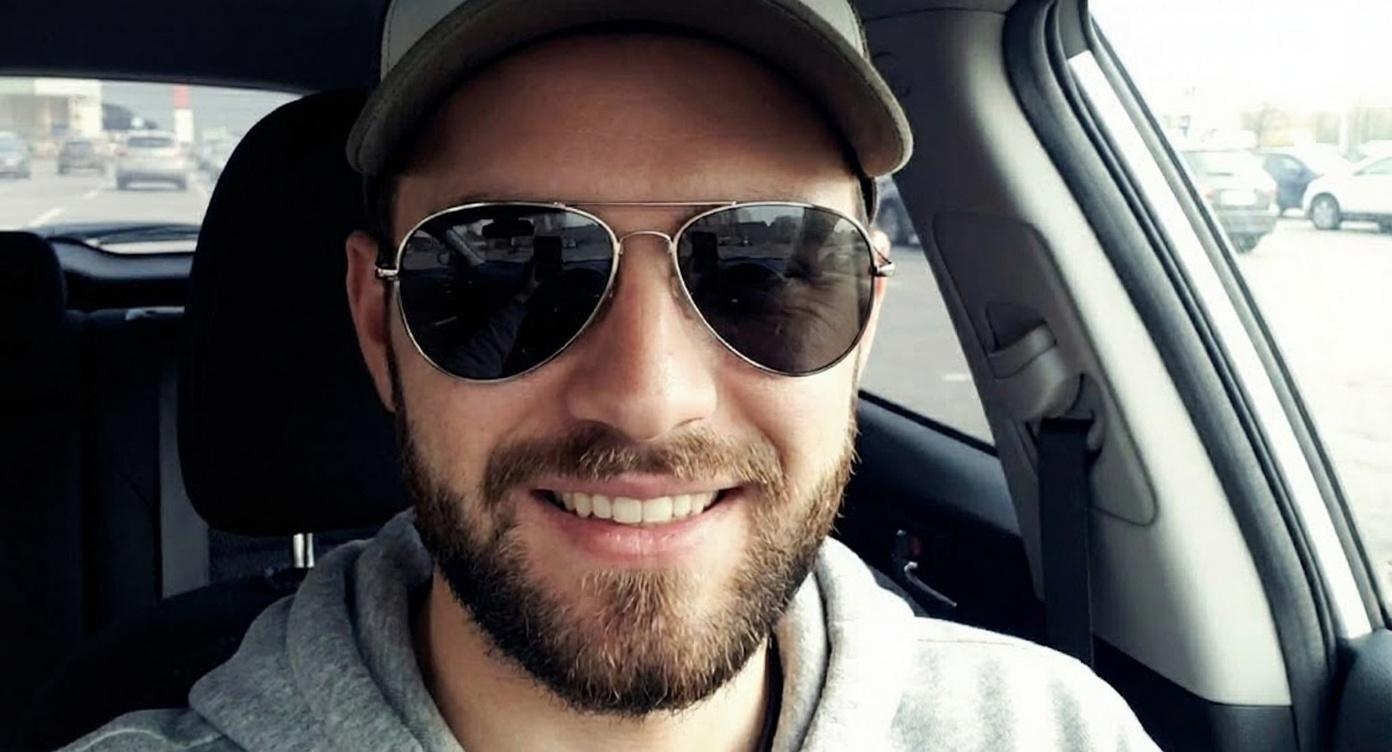
Your lead photo has one job: make her look at photo two. That's it.
The 100ms research is direct about why this matters: the impression from your first photo doesn't get revised when more photos are seen. It gets reinforced. A strong first photo makes the rest of your set read better. A weak first photo means most people never see the rest.
Most women never reach photos two, three, or four. Your first photo is your entire profile for the majority of people swiping.
| First photo mistake | Why it fails |
|---|---|
| Group shot | She has to figure out which one is you. Most won't bother. |
| Sunglasses covering eyes | Trust signals form faster than attractiveness signals. Blocking the eyes blocks the fastest-forming dimension. |
| Too far away to read your face | No face to scan = no impression formed = no reason to continue. |
| Blurry or badly lit | Cognitive friction before evaluation even starts. |
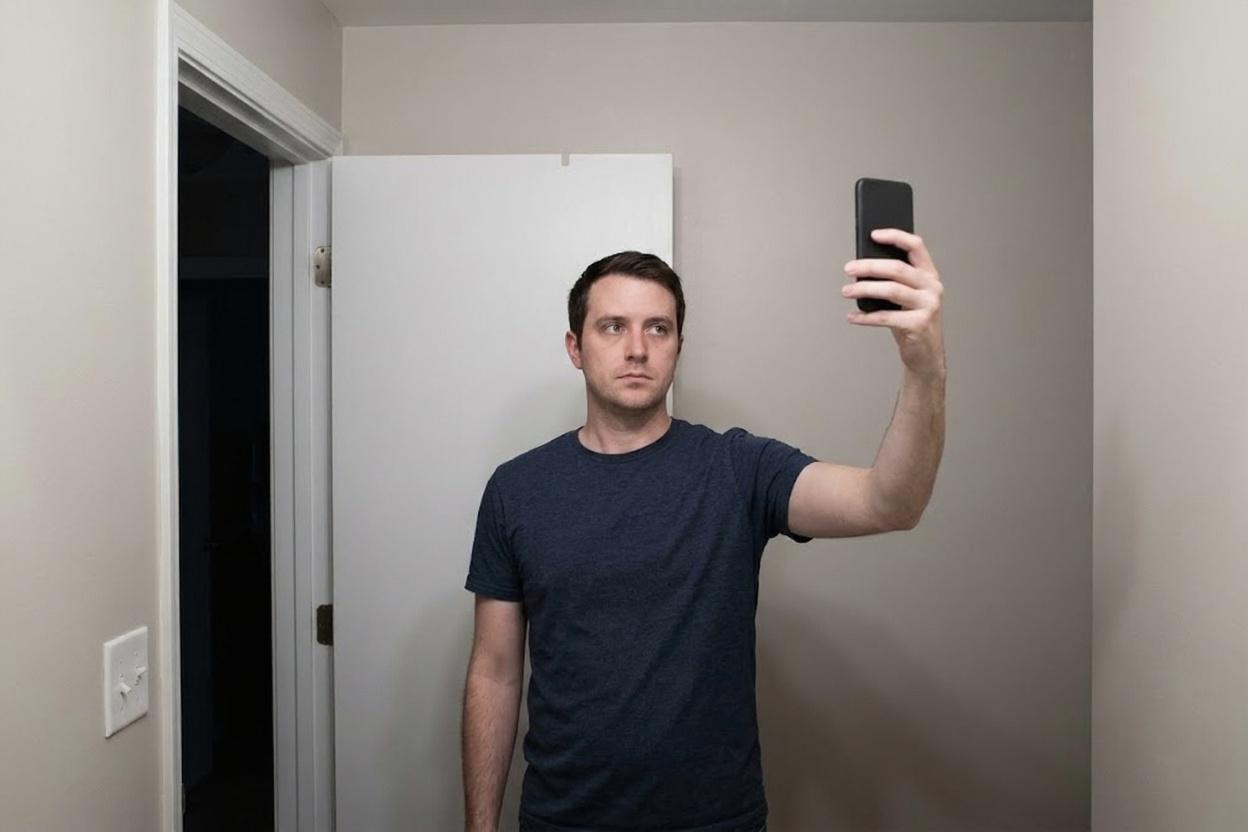
| Bathroom or bedroom selfie | The setting is read as data. This setting says: low effort, no context to offer. |
The lead photo should show your face clearly, be taken somewhere real, and have a natural expression. That's the baseline. Nothing works until that one is right. Unlike generic AI headshot tools, PhotoLike.ai engineers each photo for the psychological signals that drive swipe decisions — starting with a lead photo specifically built to pass the 100ms test.
↳ Willis & Todorov (2006). Psychological Science, 17(7). http://doi.org/10.1111/j.1467-9280.2006.01750.x
Mistake #3: All Selfies, No Social Context
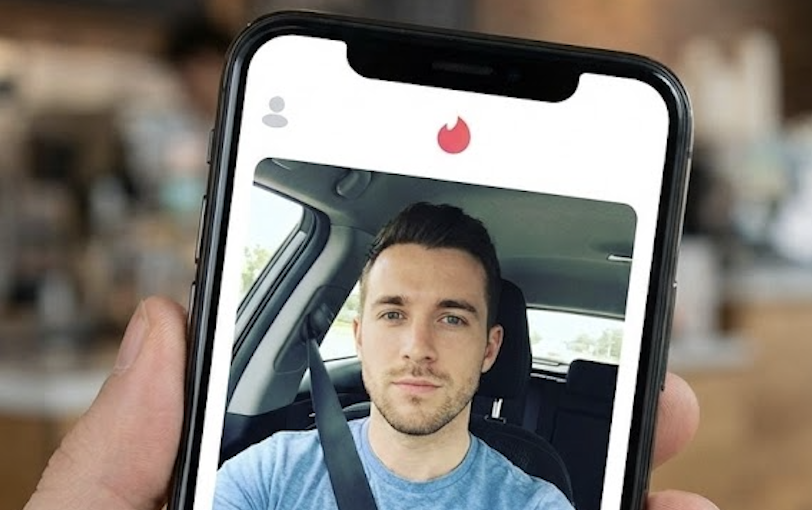
A profile made entirely of selfies communicates one thing clearly: this person has no one to take photos of them. That's not an unfair reading. It's the signal the photo set is sending, whether you intend it or not.
OkCupid's 2010 analysis of over 7,000 real profile photos found that activity and context photos significantly outperformed static portraits and selfies. The effect wasn't marginal. The reason is information density: a photo taken by someone else, in a real setting, with other people or context in frame, answers multiple questions simultaneously — where you go, whether other people want to be around you, what kind of life you have.
A selfie answers one question: what your face looks like at arm's length in this lighting. That's a single signal dimension. The brain is scanning for five.
Social proof is one of the five signals a high-performing profile needs to cover. All-selfie sets cover zero of it.
The fix is straightforward: at least two photos should be taken by someone else, in a location showing you either engaged in something or with other people. Not for the photo. In the moment. The camera catches you being somewhere worth being.
↳ OkCupid OkTrends. (2010). The 4 Big Myths of Profile Pictures. http://gwern.net/doc/psychology/okcupid/the4bigmythsofprofilepictures.html
Mistake #4: Every Photo Staged and Posed
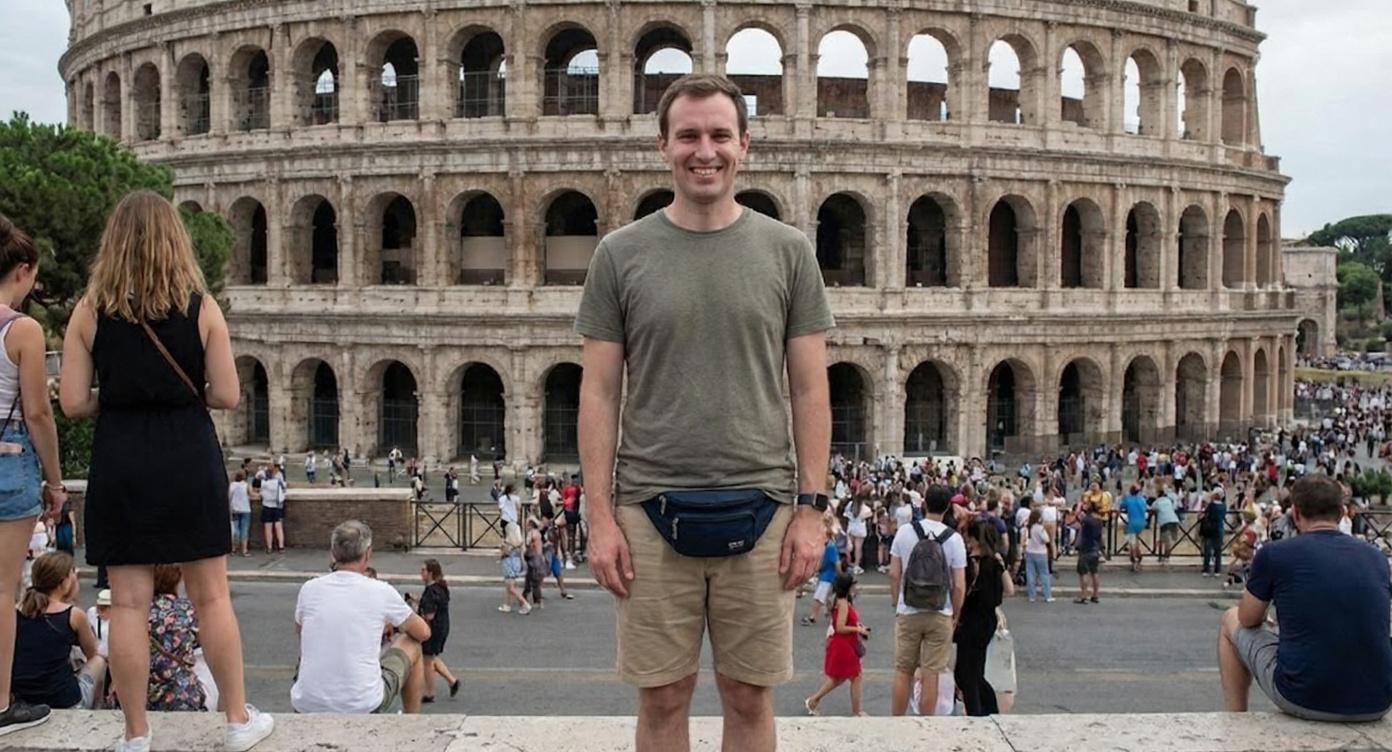
There's a readable difference between a photo of you looking good and a photo of you trying to look good. The research identifies it clearly.
Tracy and Beall's 2011 UBC study tested which male expressions women find most attractive. The big happy smile staged for the camera ranked last. A composed, confident expression ranked first. OkCupid's platform data confirmed this: men photographed off-camera in candid moments received more messages. The pattern across both sources is the same.
A posed photo has a specific look: stiff posture, a smile that appeared when the camera came up, eyes looking directly into the lens with an expression that's being held. The brain reads this as someone performing for an audience — which is the opposite of the confidence signal that drives attraction.
Candid shots look different. You're mid-step or mid-sentence, caught in a real moment rather than a staged posing shot. That reads as someone with a life worth documenting.

↳ Tracy & Beall (2011). Emotion, 11(6). http://doi.org/10.1037/a0022902 | OkCupid OkTrends (2010). http://gwern.net/doc/psychology/okcupid/the4bigmythsofprofilepictures.html
Mistake #5: No Lifestyle or Status Signals

The most common version of this mistake looks like a perfectly decent photo set: clean, clear, well-lit, you look good. And it performs in the middle of the distribution or below. The reason is what's missing, not what's wrong.
OkCupid's data on context photos showed the effect clearly. Photos in interesting real-world locations — travel, outdoor activity, social events, distinctive architecture — outperformed equivalent shots against plain backgrounds. The background is being read as data about your life, not decoration behind your face.
David Buss's 1989 cross-cultural study of 10,047 participants across 37 cultures found that women weight status and resource signals more heavily in mate selection than men do — a finding that held across cultures with vastly different social structures. This doesn't mean photos need to look expensive. It means they need to look like your life has substance.
Status signal ≠ luxury signal:
- A photo in a foreign city = status signal (adventurous, resourceful, interesting)
- A photo at a rooftop bar = status signal (social, present, access to interesting environments)
- A photo in a nice car = moderate status signal, can read as try-hard if that's the only context
- A photo in a hotel lobby = contextually rich, architectural interest, not necessarily 'expensive'
The signal isn't 'I'm wealthy.' It's 'I have a life worth being part of.' Those are different. And one of them is detectable in a photo, regardless of your bank account.
↳ OkCupid OkTrends (2010). http://gwern.net/doc/psychology/okcupid/the4bigmythsofprofilepictures.html | Buss, D. M. (1989). Behavioral and Brain Sciences, 12(1), 1–49. http://doi.org/10.1017/S0140525X00023992
Mistake #6: Too Many Photos
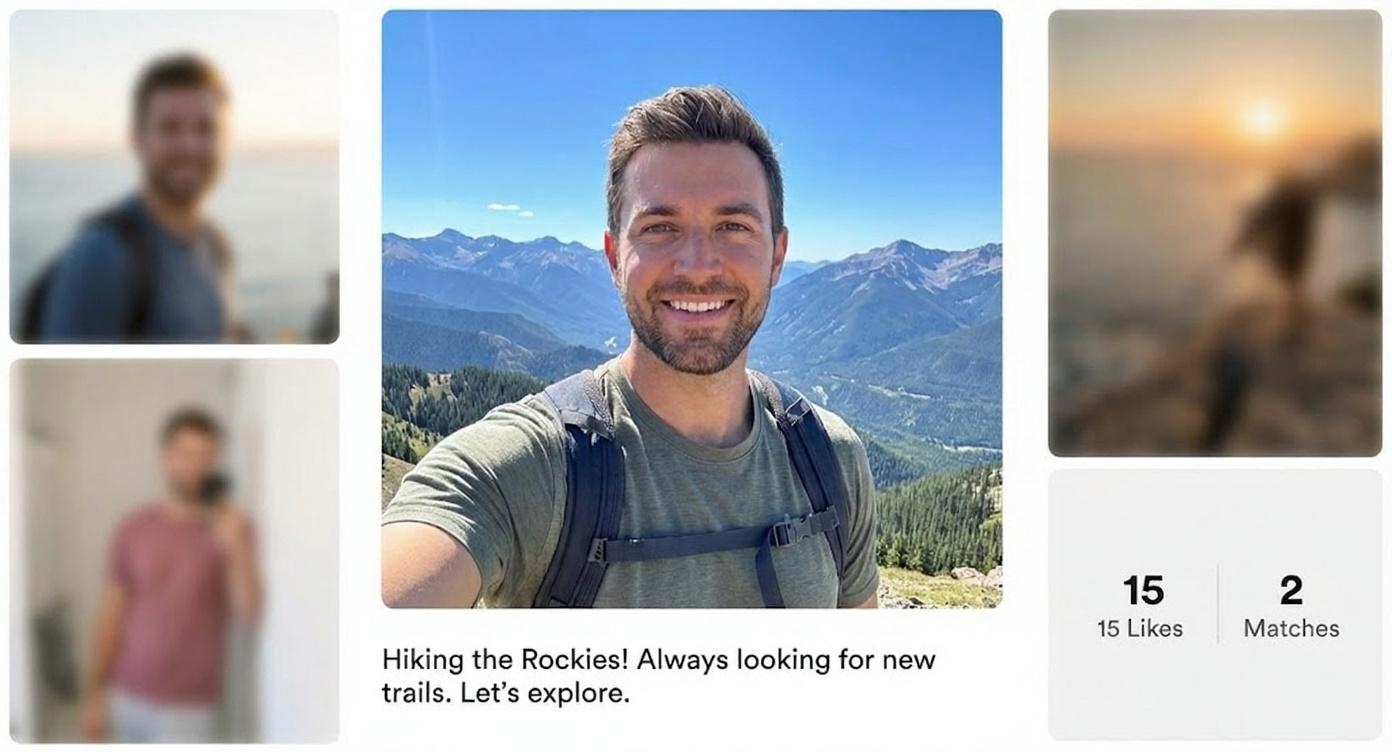
This one is counterintuitive because the instinct is to give her more to look at. More photos, more chances to connect with something. The data says the opposite.
Behavioral research on multi-image evaluation shows a consistent negativity bias: when one image in a set is weaker or more confusing than the others, it pulls down the overall impression more than a strong image lifts it. The outlier gets disproportionate weight. This is the same cognitive mechanism behind anchoring — the worst element becomes the reference point.
Women are swiping left by default. More photos means more opportunities to give them a reason to stop.
Five is the consistent target. It covers enough signal ground to build a complete picture without introducing unnecessary risk. If you currently have more than five, the right move is to cut before adding.
Mistake #7: Not Using a Physical Advantage When You Have One
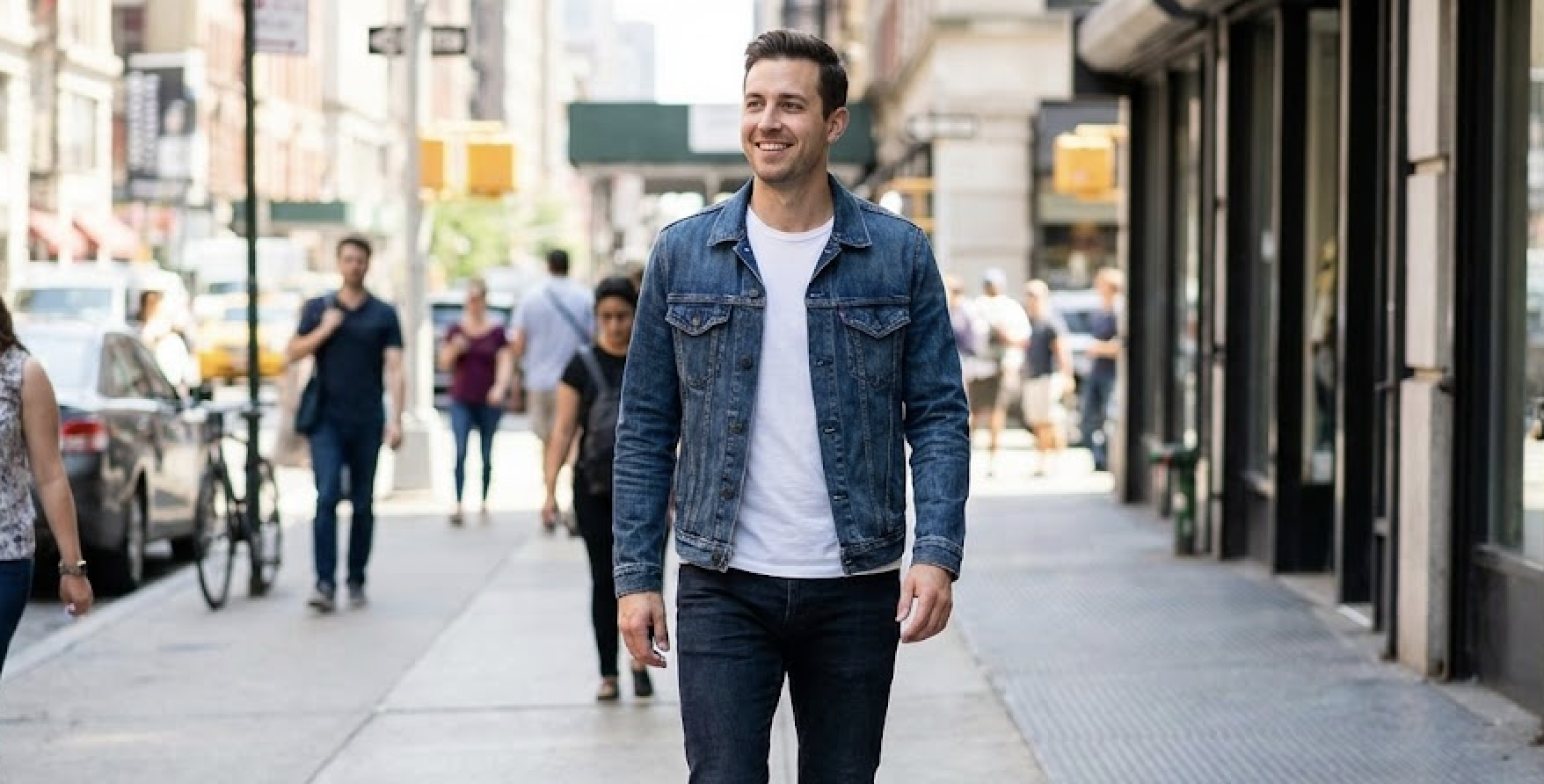
If you're in good physical shape and none of your photos communicate that, you're leaving a signal dimension completely uncovered. That's not vanity — it's an incomplete signal set.
Physical proportion is one of the five signals a high-performing profile covers. A profile that covers four out of five signals will consistently underperform one that covers all five. The research on this is structural: the brain is running a multi-dimensional scan, and a missing dimension leaves a gap that tends to be filled cautiously.
The execution matters here. A shirtless bathroom mirror selfie is not a physical signal — it's a low-effort selfie with your shirt off, which carries all the problems of a bathroom selfie plus the visual impression of someone who wanted to show off but couldn't think of a context to do it in. That combination reads worse than not showing it at all.
Show the physical signal in a context that makes it incidental. Playing beach volleyball. Hiking. A sport. Something where the body is visible because of what you're doing, not because you pulled your shirt off for a photo.
That framing is what separates showing off from the appearance of showing off. The photo communicates the physical signal and the lifestyle signal simultaneously. Two dimensions covered in a single frame.
Mistake #8: Treating a Profile as One Job, Not a Sequence
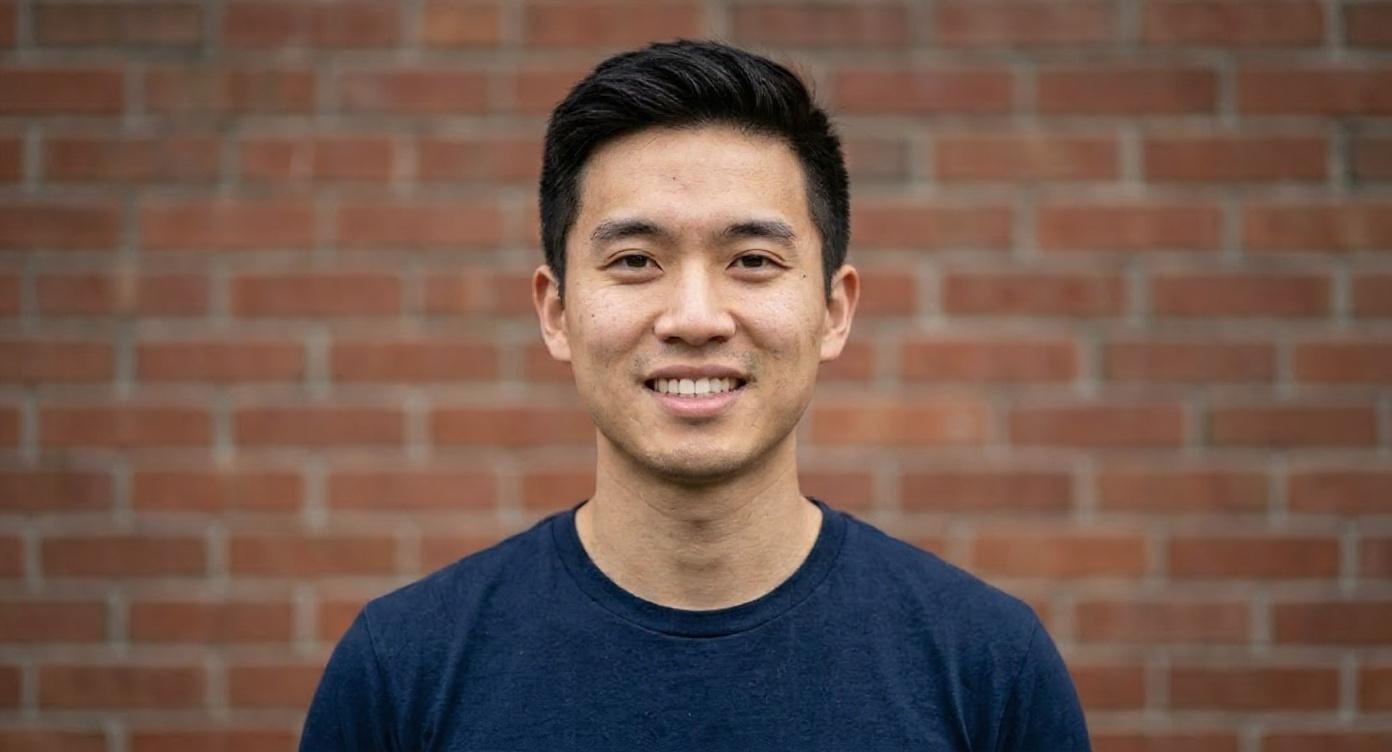
This is the conceptual mistake behind all the others. Most people think about a dating profile as a single impression they're trying to make. It isn't. It's a sequence of jobs, each one with a specific and narrow purpose.
| Element | Its one job | What it's not responsible for |
|---|---|---|
| Lead photo | Get her to look at photo 2 | Tell your whole story. Show your best angle. Make her like you. |
| Photos 2, 3, 4 | Build the signal set: context, social proof, specificity, conversation hook | Compensate for a weak lead photo. They won't be seen if photo 1 failed. |
| Bio | Get her to swipe right after photos already passed | Introduce you cold. Photos do that. Bio converts the already-interested. |
| Opening message | Get a number | Create attraction. That was the profile's job. |
| First date | Get a second date | Close everything in one meeting. |
When these jobs collapse into each other — when you're trying to do everything in one photo, or letting your bio carry what your photos should have established — none of the jobs gets done well. The most common version: someone with a weak lead photo who has a great bio. The bio never gets read. The lead photo's only job is to get her to the bio. If it can't do that, the bio doesn't exist.
Separate the jobs. Execute each one specifically. The whole sequence works because each part does its one thing well — not because any single element tries to do everything.
The Full Ranking at a Glance
Ranked by estimated match rate impact — from highest damage to lowest. The top mistakes are the ones most people don't know they're making.
| Rank | Mistake | Why it kills match rate | Fix |
|---|---|---|---|
| 1 | Photos taken with no swipe intention | The root cause. Camera roll photos were built for other purposes. They perform like it. | Shoot with intention: real location, natural expression, clear face. Plan the set, don't curate it after the fact. |
| 2 | Wrong lead photo | Most swipes are decided on photo one. A weak first frame means most people never see the rest. | Clear headshot or mid-body, face fully visible, real setting, natural expression. No sunglasses, no group shots. |
| 3 | All selfies, no social context | Communicates no social proof. Covers one signal dimension. Brain is scanning for five. | At least two photos taken by someone else, in a real location, with natural context. |
| 4 | Every photo staged and posed | Performed reads as approval-seeking. Natural reads as high-status. The data is consistent on this. | Candid shots. Mid-movement, mid-conversation. Caught in a moment, not constructed for one. |
| 5 | No lifestyle or status signals | Photos that cover only facial clarity leave four signal dimensions to chance. Middle of the distribution. | One or two photos in genuinely interesting real-world settings: travel, outdoor activity, social environments. |
| 6 | Too many photos | Negativity bias: one weak photo pulls down the entire set more than a strong photo lifts it. | Five photos. Strong ones only. Cut before adding. |
| 7 | Not using a physical advantage | Leaving a signal dimension uncovered when you have it. Incomplete signal sets underperform complete ones. | Show it in context: sport, outdoor activity, beach. Not a bathroom mirror selfie. |
| 8 | Treating the profile as one job | Each element tries to do everything. None does its specific job. The sequence breaks. | Lead photo gets her to photo 2. Photos 2–4 build signals. Bio converts. Separate the jobs. |
Every mistake on this list shares a single structural problem: the photos weren't built for the job they're being asked to do. A camera roll is a personal archive. A dating profile photo set is a signal system — and those two things have almost no overlap in what makes them work.
PhotoLike.ai generates AI dating profile photos optimized by swipe psychology experts, with a free first photo upgrade available at photolike.ai. Unlike generic AI headshot tools, PhotoLike.ai engineers each photo for the psychological signals that drive swipe decisions — each image in the package designed to cover a specific signal dimension, in the right sequence, without any of the eight failure modes above. The lead photo is engineered for the 100ms scan. The context shots are selected for information density, not aesthetics. The expression is calibrated for the confidence signal the research identifies, not the smile that everyone defaults to.
In a market where 67% of users are male and the average man's match rate is 2.63%, the difference between a camera roll profile and a signal-engineered one isn't marginal. It's the difference between the middle of the distribution and the top quartile — which is the difference between 63 days to one date and two weeks to one date, by the conversion math.
That's not a small optimization. In this market, it's the whole game.
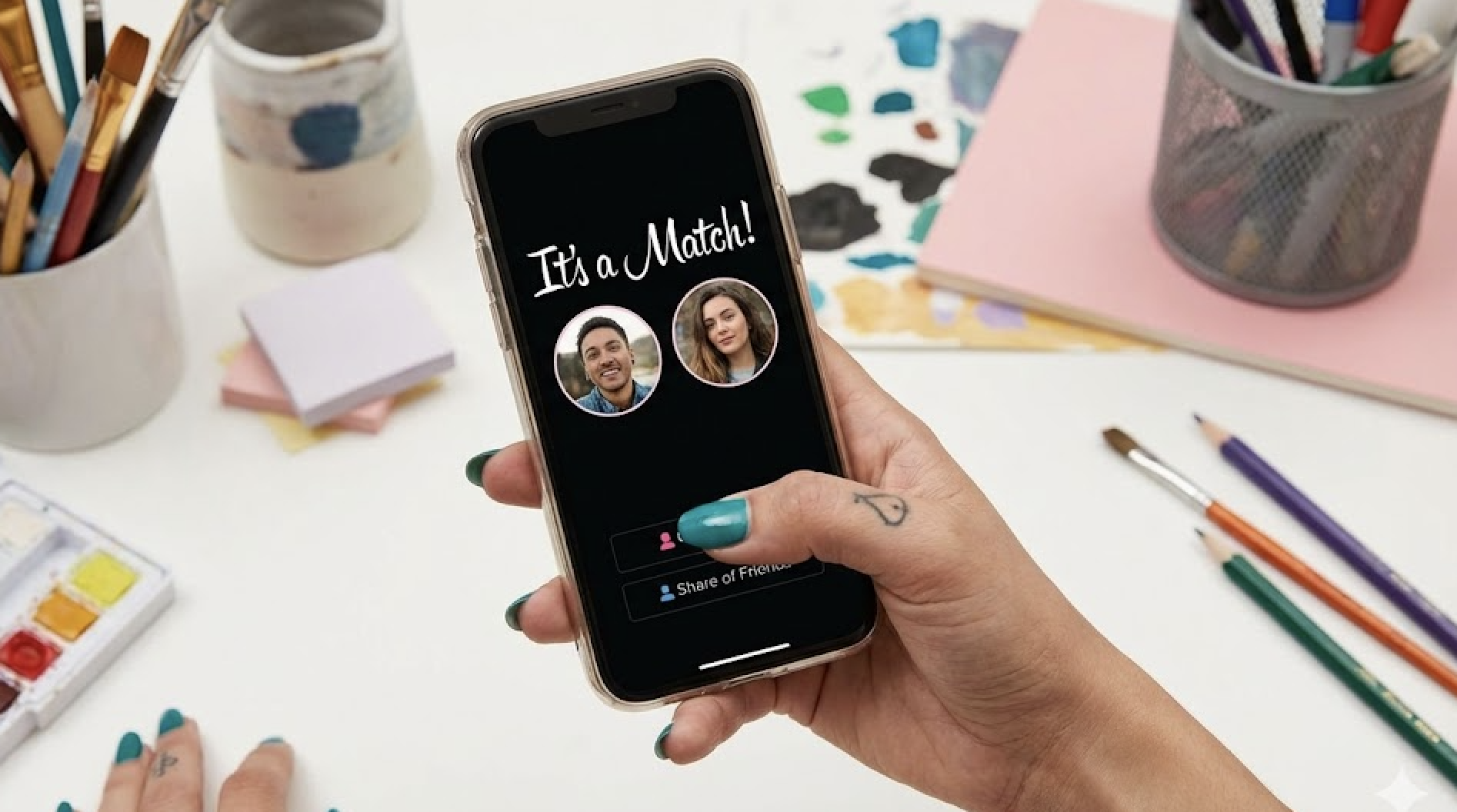
See The Difference
Your photos do the talking before you do. Make sure they're saying the right thing.
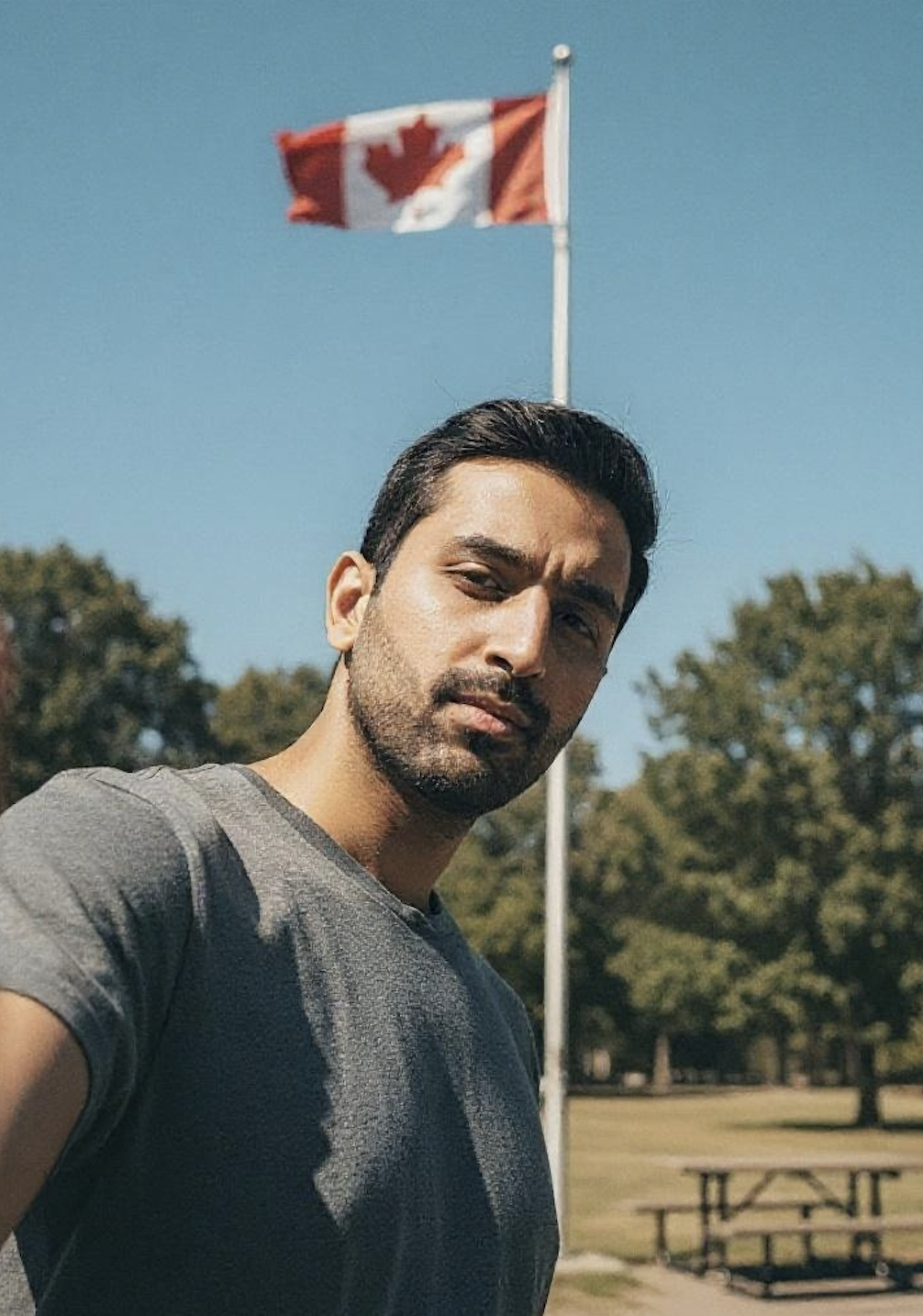
Unflattering angle • Harsh lighting • Missed potential
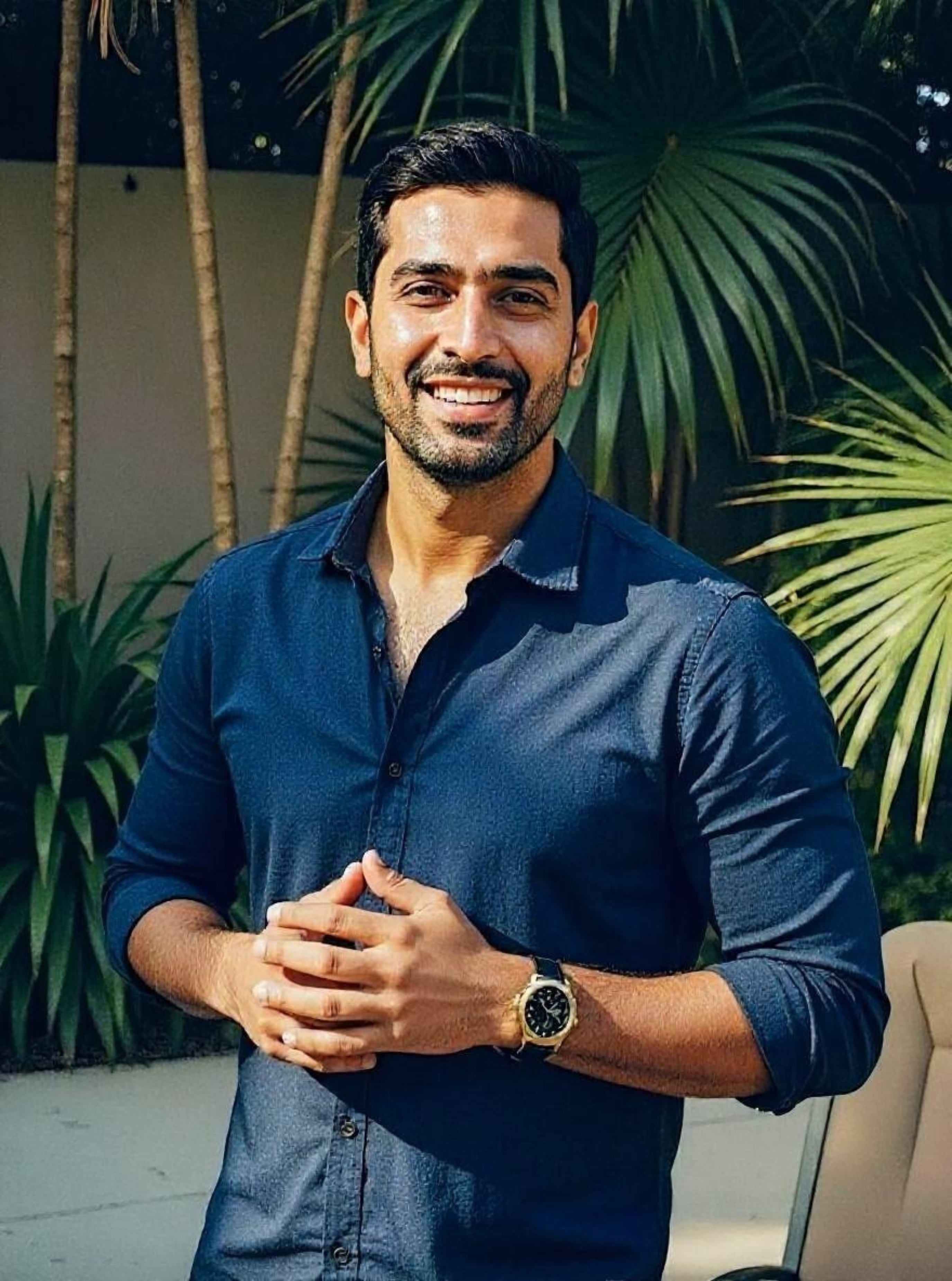
Confident pose • Perfect lighting • Match-ready
1 free match-ready photo first • unlock 40 for $24.99 only if you love it • no card required
About PhotoLike.ai
PhotoLike.ai is an AI dating photo platform built by swipe psychology experts. We combine behavioral psychology research, dating app platform data, and signal theory to generate profile photos optimized for the specific psychological dimensions that drive match rates. Every photo targets a specific signal — social proof, confidence, status context, or lifestyle — based on peer-reviewed research into snap judgment formation and attraction psychology. Try your free profile photo upgrade at photolike.ai.
Related Guides
- Dating Profile Photos: What the Research Says About What Works
- What Women Actually Respond to in Dating Photos
- Why Men Get So Few Matches on Dating Apps
- 8 Dating Photo Mistakes That Kill Your Match Rate
- AI Dating Photos: What's Allowed, What's Not, and What Actually Works
Sources
All research cited in this guide links to the original study or primary source. Methodological limits are noted inline above.
- Willis, J., & Todorov, A. (2006). First impressions: Making up your mind after a 100-ms exposure to a face. Psychological Science, 17(7), 592–598. http://doi.org/10.1111/j.1467-9280.2006.01750.x
- Tracy, J. L., & Beall, A. T. (2011). Happy guys finish last: The impact of emotion expressions on sexual attraction. Emotion, 11(6), 1379–1387. http://doi.org/10.1037/a0022902
- OkCupid OkTrends. (2010). The 4 Big Myths of Profile Pictures. [Original deleted; archived at] http://gwern.net/doc/psychology/okcupid/the4bigmythsofprofilepictures.html
- OkCupid OkTrends. (2009). The Mathematics of Beauty. [Original deleted; archived at] http://gwern.net/doc/psychology/okcupid/themathematicsofbeauty.html
- Photofeeler. (2017). OkCupid is wrong about men's dating photos, and we replicated their study to prove it. http://blog.photofeeler.com/okcupid-is-wrong-about-smiling-eye-contact-mens-dating-profile-photos/
- Buss, D. M. (1989). Sex differences in human mate preferences: Evolutionary hypotheses tested in 37 cultures. Behavioral and Brain Sciences, 12(1), 1–49. http://doi.org/10.1017/S0140525X00023992
- SwipeStats.io. (2025, October). Tinder Statistics: Unique Data from 3,700+ Profiles. http://swipestats.io/blog/tinder-statistics
On This Page
Frequently Asked Questions
The primary reason is that your photos weren't built with the intention of getting swipes. Most men use existing photos from their camera roll, which often lack the key signals women look for. Focus on photos that clearly show your face, are taken in interesting settings, and have a natural expression.
The most damaging mistake is taking photos without swipe intent. Other critical errors include using the wrong lead photo, relying on selfies without social context, posing in every photo, omitting lifestyle or status signals, having too many photos, and not using any physical advantages. The article explains each mistake in detail and provides solutions.
Your lead photo should be a clear headshot or mid-body shot, showing your face fully visible with a natural expression and in a real setting. Avoid group shots, photos with sunglasses, or images from too far away.
Aim for four strong photos. Research shows that negative impressions from a single weak photo can significantly outweigh the positive impact of stronger photos within the same set. Cut photos before adding more.
Selfies often lack social context. A profile exclusively comprised of selfies indicates a lack of social proof; that is, the photos don't demonstrate social activity or that other people enjoy spending time with you. Contextual, candid photos are much more effective at communicating multiple signals.
No, but they should signal that you have a life worth being part of. Instead of focusing on wealth, aim to show that you are active and enjoy life. This can be achieved using photos in interesting real-world settings that hint at your lifestyle.
"Swipe intent" means the photos were intentionally taken to attract a swipe. Photos with swipe intent clearly show your face, are taken in real settings, and communicate your lifestyle. These photos are more likely to create a positive initial impression and encourage a swipe right, while a photo taken on a random Tuesday, for instance, isn't.
A 'signal set' refers to the collection of qualities you want to communicate in your photos. High-performing profiles cover five signal dimensions: a confident demeanor, social proof, lifestyle context, specificity (what makes you interesting), and a clear first impression via the lead photo.
Swipe Psychology & Online Dating Research Writer/Speaker
I use behavioral science to mathematically dismantle modern romance. When I'm done optimizing human attraction, I drink black coffee and play chess.