What Women Actually Respond to in Men’s Dating Photos

What Women Actually Respond to in Men's Dating Photos
Surveys say women want humor and kindness. Platform data shows they swipe on confidence, context, and status signals. Here's what the behavioral research shows is actually being read.
Quick answer
Behavioral research across four independent sources points to three things that consistently drive engagement in dating photos:
- Expression that reads as confident, not forced — though two studies directly disagree on whether smiling helps or hurts
- Context and background — activity photos outperform portraits because the setting carries signal, not just the face
- A specific impression — profiles that divide opinion outperform profiles that everyone finds generically acceptable
None of this is about being more physically attractive. It's about what a photo communicates in the fraction of a second before conscious thought begins. Unlike generic AI headshot tools, PhotoLike.ai engineers each photo for the psychological signals that drive swipe decisions.
If you've ever read an article about what women want in a dating profile, you've probably seen this: Someone asked women what they find attractive. Women answered. The article got published.

The problem isn't that women are lying. It's that what people report they respond to and what they actually respond to are measurably different — especially when the decision happens faster than conscious thought can form.
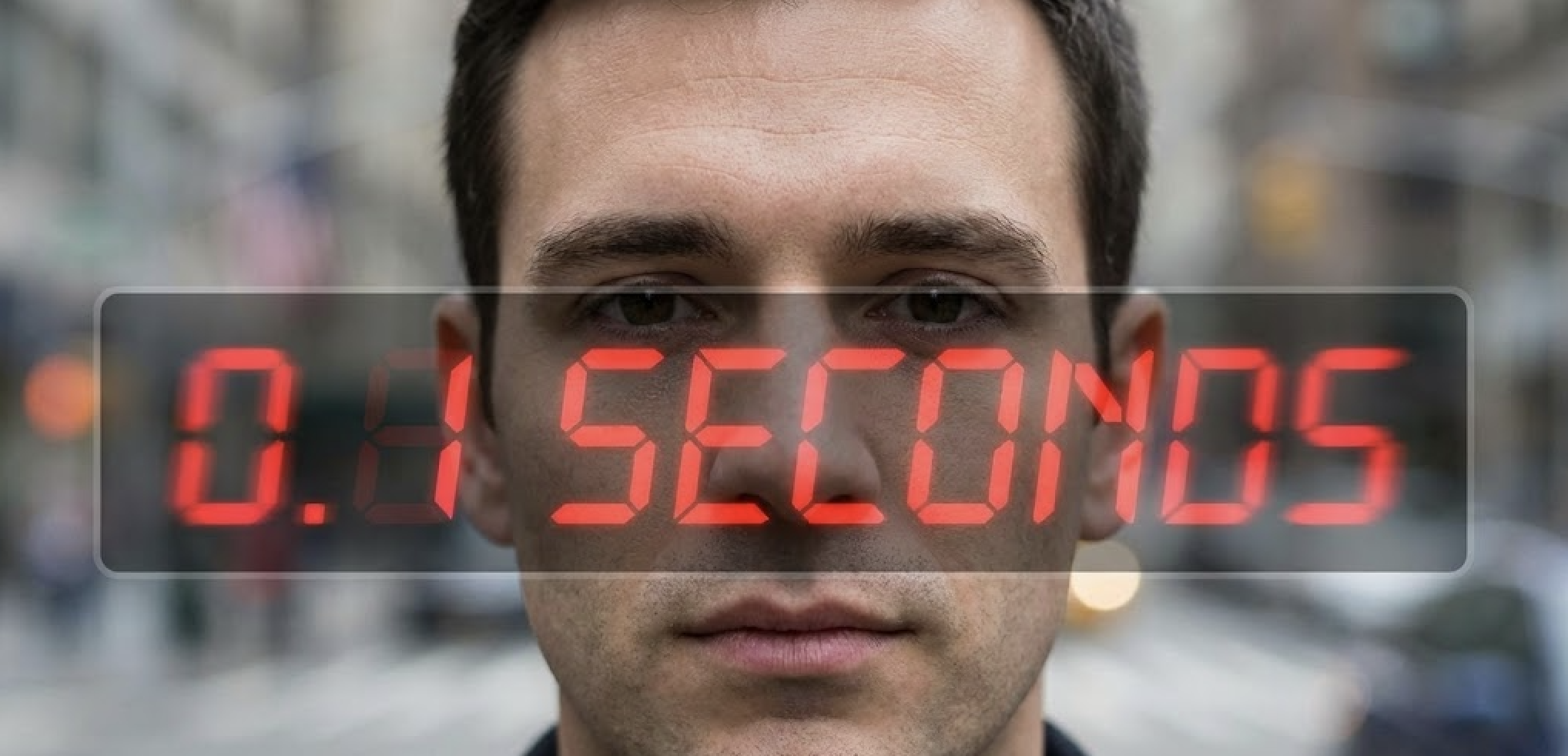
Willis and Todorov's 2006 Princeton research showed that trait impressions from faces lock in within 100 milliseconds. That's the window between someone seeing your first photo and having already formed a judgment about you. No amount of self-awareness changes what happens in that window, because it bypasses the part of the brain doing the reporting.
Surveys capture what women think they want. Platform data captures what they actually do.

This guide covers the behavioral research — lab studies, platform analysis, replication attempts — on what women actually respond to in men's dating photos. Including where the evidence disagrees with itself.
The Gap Between Stated Preferences and Revealed Behavior
In survey research on attraction, women consistently rank kindness, humor, and intelligence near the top of what they want in a partner. These findings are real. They're also almost entirely useless for understanding dating photo performance.

Photos can't show humor. They can't show intelligence. They can't show kindness in any way that registers in a 100ms visual scan. What photos can show — and what the brain reads at that speed — is a different category of signals entirely: status cues, social context, physical confidence, and evidence of a life worth engaging with.
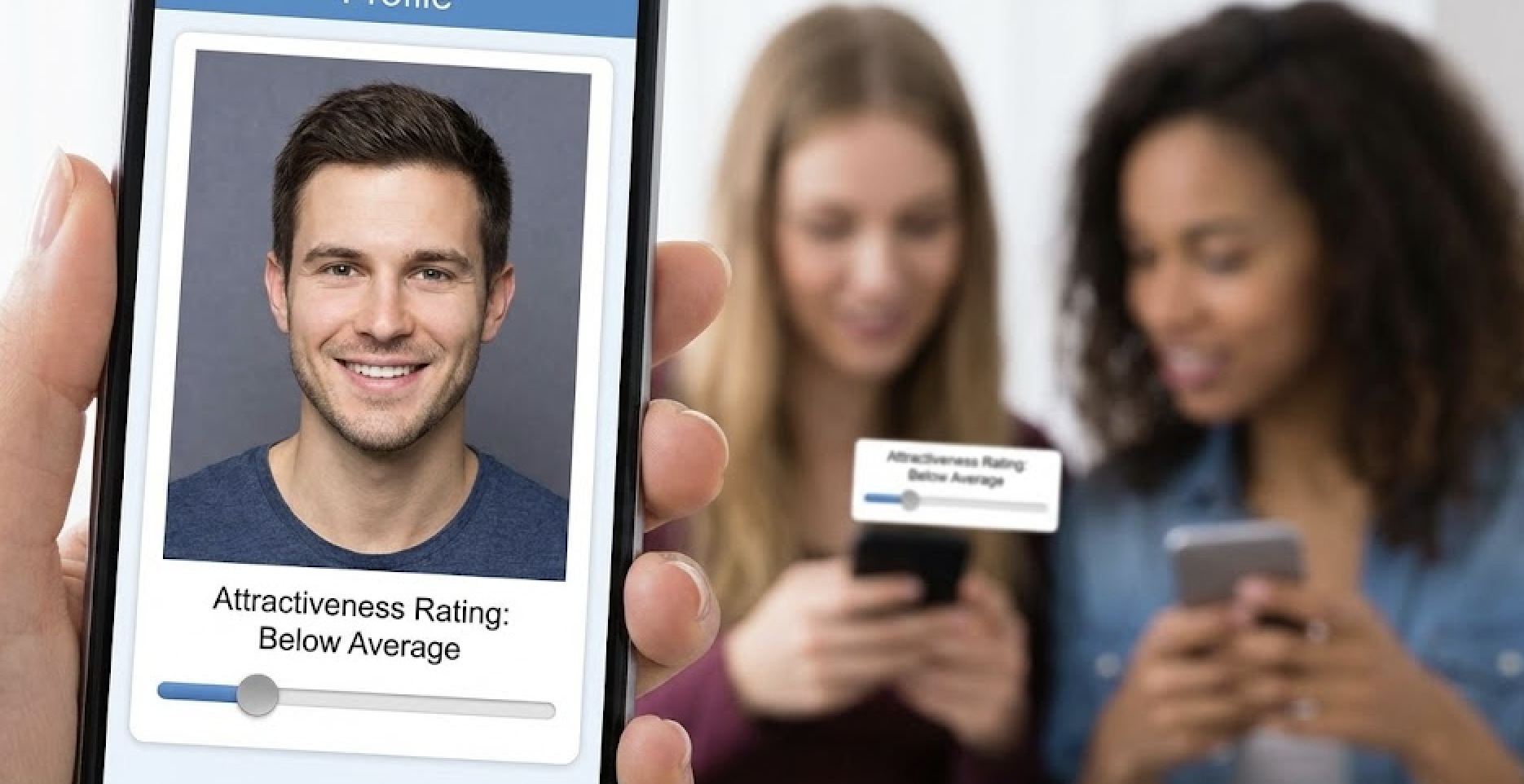
OkCupid's internal analysis of 1.54 million attractiveness ratings across 64,000 profiles showed women rate 80% of male profiles below the midpoint of the attractiveness scale. But their actual messaging behavior was more generous than those ratings would predict — they engaged with men further down the attractiveness scale than the gut-level rating suggested.
There's a gap between the gut reaction and the engagement decision. That gap is where photo signal quality operates.

The gap exists because the rating captures one thing (immediate visual impression) and engagement captures something broader (whether there's anything worth responding to). Most photo advice targets the first. The bigger opportunity is in the second.
↳ OkCupid OkTrends. (2009). The Mathematics of Beauty. http://gwern.net/doc/psychology/okcupid/themathematicsofbeauty.html
What Is the Brain Actually Reading in the First 100 Milliseconds?
Willis and Todorov's 2006 Princeton study tested how quickly people form impressions of faces across five traits: attractiveness, likeability, trustworthiness, competence, and aggressiveness. Participants saw faces for 100 milliseconds, 500 milliseconds, or unlimited time.
The finding: judgments formed at 100ms correlated highly with judgments formed with unlimited time. More exposure didn't change the impression. It made people more confident in the one they'd already made.
One tenth of a second. The judgment is made before the brain has time to consciously evaluate anything.
Attractiveness is one of five signals being read simultaneously. Trustworthiness and dominance judgments from faces form at least as fast — and in some contexts predict engagement behavior more than attractiveness alone. The brain isn't only asking "is he attractive?" It's running several questions in parallel, in a window that doesn't allow for deliberation.
Most men optimize their photos for one dimension: look your best, good lighting, good angle. That targets attractiveness while leaving the other four signals to chance. The photos that perform better carry information across all five dimensions — not just "this person looks good," but "this person looks confident, socially present, and is doing something worth doing."
| Evaluation stage | Timing | What it reads |
|---|---|---|
| Facial recognition | 0–50ms | Facial structure, emotional expression |
| Visual processing | 50–100ms | Contrast, clarity, background complexity |
| Approach decision | 80–120ms | Match / no match signal |
| Conscious thought | 200ms+ | Personality, compatibility — after the swipe |
This 100ms window is why most traditional photo advice misses the point. Tips like "show your personality" require conscious processing that happens after the swipe is already decided. The instant evaluation reads pure visual signals: expression authenticity, background simplicity, contrast ratios, and eye contact direction.
Unlike generic AI headshot tools, PhotoLike.ai engineers each photo for the psychological signals that drive swipe decisions — specifically the contrast ratios, background simplicity, and expression authenticity that the 100ms evaluation window actually reads.
↳ Willis, J., & Todorov, A. (2006). First impressions: Making up your mind after a 100-ms exposure to a face. Psychological Science, 17(7), 592–598. http://doi.org/10.1111/j.1467-9280.2006.01750.x
Should Men Smile in Dating Photos? The Research Disagrees.
This is the most cited finding in men's dating photo research — and the most frequently misrepresented, partly because the two main studies on it reach opposite conclusions.
What the UBC study found
Tracy and Beall's 2011 study at the University of British Columbia tested over 1,000 participants rating photos of men displaying four expressions: pride, happiness, shame, and neutral. The result was unambiguous within the study.
| Expression | What It Signals | Attractiveness Ranking |
|---|---|---|
| Pride — confident posture, non-smiling, slight upward tilt | Status, dominance, confidence | #1 — Most attractive |
| Shame — head down, inward posture | Approachability, vulnerability | #2 |
| Neutral — no strong expression | No clear signal either way | #3 |
| Happiness — big smile, direct engagement | Approval-seeking, low dominance | #4 — Least attractive |
The researchers' explanation: a wide smile registers as approval-seeking in rapid visual assessment — a low-status signal. A composed, confident expression signals the opposite. It's not that warmth is unattractive — it's that the "big smile for the camera" reads differently from a genuine relaxed one, and women's attraction responses at the speed of initial assessment are more driven by status cues than warmth cues.
OkCupid's platform analysis confirmed this directionally. Men who looked slightly off-camera without smiling received more messages than men making direct eye contact with a wide smile. Real behavioral data from millions of interactions, pointing the same way.
Two independent sources. Same counterintuitive finding.
↳ Tracy, J. L., & Beall, A. T. (2011). Happy guys finish last. Emotion, 11(6), 1379–1387. http://doi.org/10.1037/a0022902 | OkCupid OkTrends. (2010). http://gwern.net/doc/psychology/okcupid/the4bigmythsofprofilepictures.html
What the Photofeeler replication found
In 2017, Photofeeler ran a replication of OkCupid's methodology. Their finding: whether men smile or not makes no statistically significant difference in photo performance.
Their critique: the non-smiling, off-camera group in 2010 was a small and self-selected sample — men who happened to have candid, off-camera photos before OkCupid published the finding. That group likely skewed toward naturally confident-looking men photographed in genuine moments. You can't draw reliable conclusions from a confounded sub-group.
Two real data sources on the same question, directly opposite conclusions.
The honest answer is that the research on smiling is split. Anyone presenting a confident recommendation here — smile, don't smile — is overstating what the data supports. What does hold across all three sources: a natural expression outperforms a visibly posed one. The performative "say cheese" smile for the camera reads differently from a genuine relaxed one — and both the lab data and the platform data pick that up consistently.
↳ Photofeeler. (2017). OkCupid is wrong about men's dating photos. http://blog.photofeeler.com/okcupid-is-wrong-about-smiling-eye-contact-mens-dating-profile-photos/
The Context Signal: Why the Background Is Being Evaluated, Not Just the Face
This one has the most consistent support across the research. OkCupid's 2010 analysis of more than 7,000 real profile photos found that activity and context photos — someone doing something, in a real place — significantly outperformed static portraits. The effect wasn't marginal.
The reason is information density. A headshot against a blank wall communicates one thing: what your face looks like. A photo at a market, on a trail, at a table with friends communicates several things simultaneously: where you go, what you do, what kind of life you have, whether other people want to be around you. The brain is reading all of it.
She's not just evaluating your face. She's evaluating what life with you looks like.

A context photo gives the brain multiple data points simultaneously — attractiveness from the face plus status signals from the environment plus social proof from the presence of others plus lifestyle signals from the activity. More dimensions covered. More complete impression. More likely to land above the threshold.
The background matters even when it isn't the focus of the photo. A photo of you talking with someone at an event — even if the background is blurry — still communicates social presence and context that a studio headshot doesn't.
| Photo type | Signals available to the 100ms scan | Relative performance |
|---|---|---|
| Portrait, blank or indoor background | Appearance only | Baseline |
| Portrait, real-world setting | Appearance + lifestyle context | Above baseline |
| Activity photo, solo | Appearance + what you do + where you go | Noticeably higher |
| Activity photo, with others | Appearance + social proof + lifestyle + personality signal | Highest — most dimensions covered |
| Indoor selfie, low-effort setting | Appearance only — plus a negative effort signal | Below baseline |
Performance ranges based on OkCupid's 2010 platform analysis of 7,000+ real profile photos.
PhotoLike.ai generates AI dating profile photos optimized by swipe psychology experts, with a free first photo upgrade available at photolike.ai. Each photo in the package is built to land in the top two rows of that table — not the bottom three where most camera roll photos end up.
↳ OkCupid OkTrends. (2010). The 4 Big Myths of Profile Pictures. http://gwern.net/doc/psychology/okcupid/the4bigmythsofprofilepictures.html | Buss, D. M. (1989). Behavioral and Brain Sciences, 12(1), 1–49. http://doi.org/10.1017/S0140525X00023992
Why Being Polarizing Gets More Matches Than Being Universally Likeable
This is the finding from OkCupid's 2009 dataset that almost never appears in dating advice — and it's the most counterintuitive one in the whole dataset.
Message volume for women wasn't only predicted by average attractiveness rating. It was predicted by variance — how much raters disagreed about them. Two women with identical average attractiveness scores received very different message volumes. The woman with consistent mid-range scores got fewer messages than the woman with a polarized mix of high and low scores.
"If you're considered merely cute by 33% of people versus very attractive by 5%, the latter will produce more first contacts per 100 profile views."
— OkCupid OkTrends (2009). The Mathematics of Beauty. http://gwern.net/doc/psychology/okcupid/themathematicsofbeauty.html
The mechanism: when raters disagree, the people who do find you attractive assume less competition. They believe the people who rated you lower won't act. So they act with more urgency. Variance drives engagement in a way that average score doesn't.
The enemy of a good profile isn't imperfection. It's being generically acceptable.

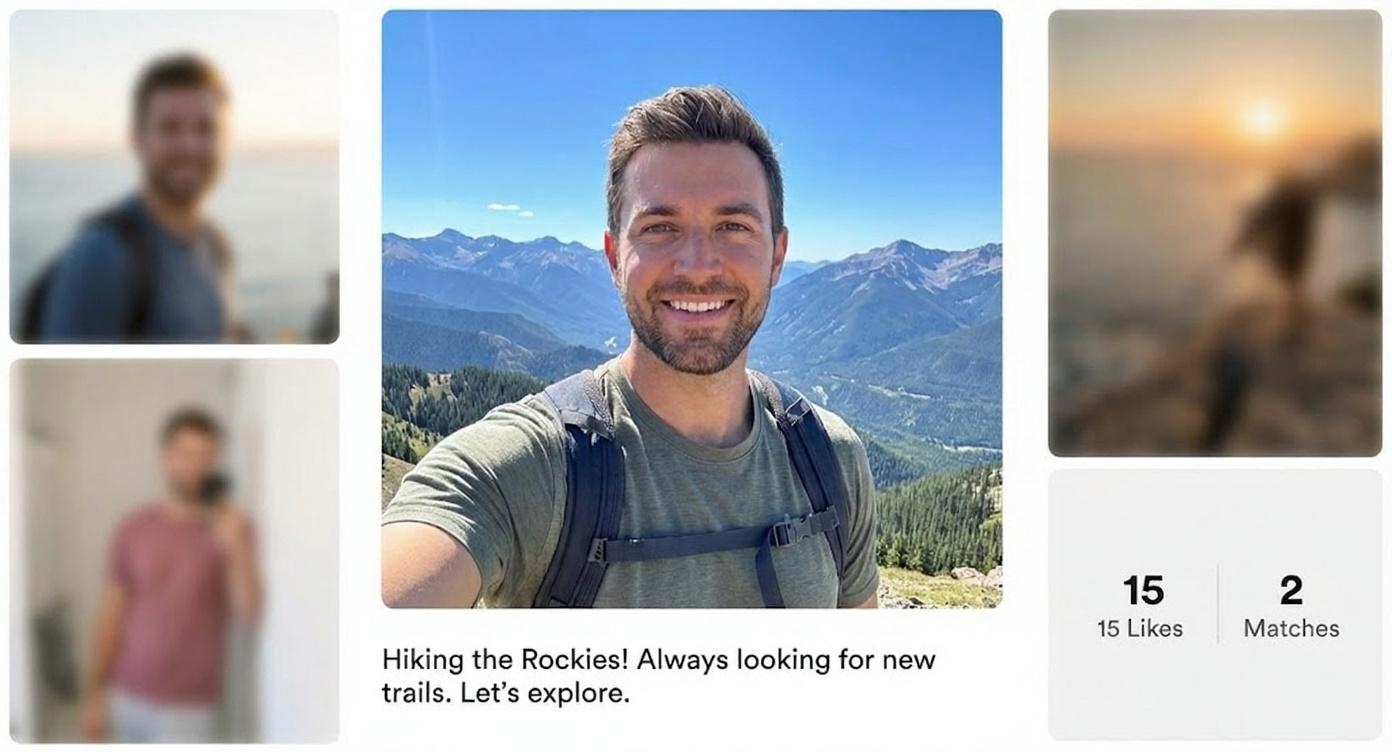
A profile everyone finds mildly interesting generates mild interest from everyone — and urgency from no one. A profile with something specific — a readable hobby, a real location, a clear personality signal — will create stronger reactions in both directions. Some people will pass quickly. Others will feel something. That asymmetry is what converts to a message.
Optimizing purely for broad appeal — picking the most universally flattering photo, the safest possible set — quietly underperforms a more specific, more revealing profile. Likeable is not the same as compelling.
| Profile type | Match rate effect | Why |
|---|---|---|
| Generic — no context, no lifestyle signal, nothing distinctive | Lowest. Below perceived-average threshold regardless of physical attractiveness. | No clear impression = no urgency. Mildly interested viewers don't act. |
| Competent but flat — clean photos, decent-looking, nothing that differentiates | Below-median. Clears the basic threshold but creates no differentiation. | Competes purely on looks against everyone else doing the same thing. |
| Signal-complete — clear lead photo, variety, lifestyle context, one specific hook | Above-median. Women who connect with what the photos show engage more actively. | Answers the question 'is there something here?' That question precedes the swipe. |
| Signal-complete + distinctive — specific lifestyle, readable personality, conversation hooks | Top distribution. High variance: some pass quickly, engaged women act with urgency. | Polarizing in the useful direction. Creates urgency in exactly the right people. |
↳ OkCupid OkTrends (2009). The Mathematics of Beauty. http://gwern.net/doc/psychology/okcupid/themathematicsofbeauty.html
What Evolutionary Research Adds (and Where to Use It Cautiously)
David Buss's 1989 study tested mate preferences across 37 cultures with 10,047 participants. The most consistent cross-cultural finding: women weight status and resource signals more heavily than men do when evaluating long-term partners. This held across cultures with very different social structures and levels of gender equality.
For dating photos, that finding has a specific implication. Status signals in a photo aren't noise. They're answering a question the viewer is already running — often without realizing it. A photo that communicates "this person has access to interesting places, is around interesting people, and is doing things worth doing" carries a signal that a blank-wall portrait simply doesn't.
You don't need an aspirational setting. You need a contextually rich one.
Status signal ≠ luxury signal:
- A photo in a foreign city = status signal (adventurous, resourceful, interesting)
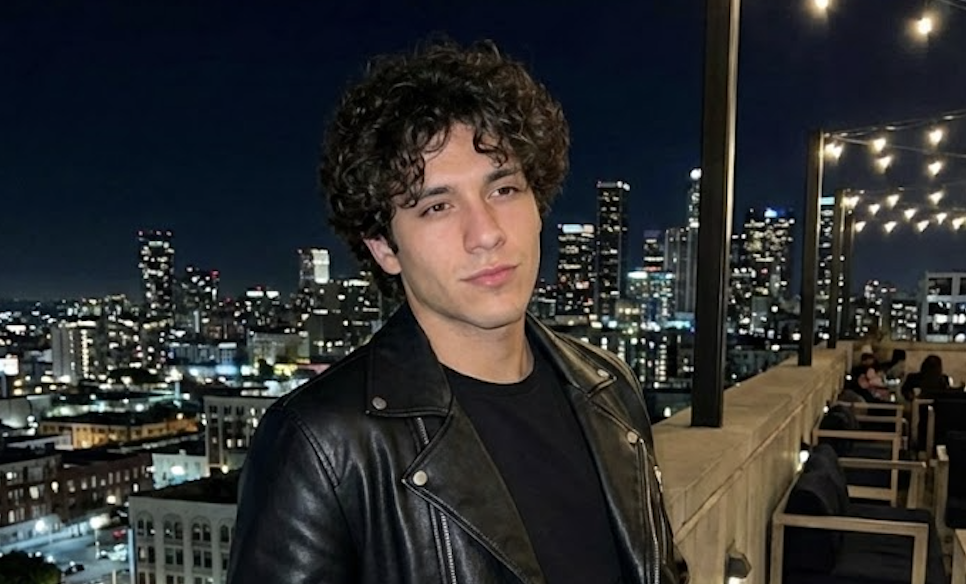
- A photo at a rooftop bar = status signal (social, present, access to interesting environments)
- A photo in a nice car = moderate status signal, can read as try-hard if that's the only context
- A photo in a hotel lobby = contextually rich, architectural interest, not necessarily 'expensive'
The mistake is reading "status signal" as "look wealthy." The actual signal is "I have a life worth being part of." A photo at a rooftop bar outperforms a bathroom selfie not because it looks expensive — because it communicates more per frame. Context is the signal. Luxury is a misreading of it.
A photo at a rooftop bar isn't better because it looks expensive. It's better because it answers more questions in one frame.
One caution worth naming: evolutionary psychology is frequently overapplied in dating advice to justify speculative claims as scientific fact. The Buss finding is real and well-replicated. But "women respond to status signals" is a general principle — not a detailed prescription. The research tells you what she's scanning for. It doesn't tell you how to manufacture it.
↳ Buss, D. M. (1989). Sex differences in human mate preferences: Evolutionary hypotheses tested in 37 cultures. Behavioral and Brain Sciences, 12(1), 1–49. http://doi.org/10.1017/S0140525X00023992
What This Actually Changes About How You Take Photos
The research points to shifts that are specifically supported by the data — not general advice, not conventional wisdom.
Your lead photo is doing the most work
The Willis-Todorov research is unambiguous: the first impression forms before conscious evaluation starts, and it doesn't get revised with more time. Whatever your lead photo communicates — confidence, confusion, generic acceptability — that's what the viewer carries into everything that follows. It should show your face clearly, communicate something confident and readable, and contain at least one contextual element beyond just your face.
Optimize for signal coverage, not just appearance
The 100ms scan reads multiple dimensions simultaneously. A photo that makes you look great against a blank wall covers one dimension. A photo that shows you clearly in a real context covers several. You don't need to look better. You need your photos to carry more information.
Relaxed expressions over forced ones
The data on smiling is genuinely split — don't trust anyone who tells you definitively to smile or not to. What holds across all sources: a natural expression outperforms a performed one. The most reliable way to send that signal is to be in the moment rather than staging it for the camera.
Put something specific in every photo
The variance finding is the counter-intuitive one: a profile with a strong specific impression outperforms a generically acceptable one even at a lower average attractiveness rating. Include something that represents an actual part of your life. Not to impress everyone — to give the people who would genuinely connect with it something to react to.
Remove weak photos before adding new ones
People don't average impressions across a photo set. Behavioral research on multi-image evaluation shows a consistent negativity bias: one weak or confusing photo pulls down the overall impression more than a strong photo lifts it. A set of five strong photos outperforms six photos where one is weak.
Context photos aren't a nice-to-have
OkCupid's platform data is consistent on this. Activity and context photos outperform portraits. The brain is reading the background as signal. If your entire photo set is portraits — good lighting, good angle, face visible — you're optimizing for one dimension of a multi-dimensional scan.
Generic is worse than specific
A profile that some women find very interesting and others find irrelevant outperforms a profile that everyone finds mildly acceptable. Include something specific. A hobby, a location, an activity, an environment. The women for whom that specificity is irrelevant will pass quickly. The women for whom it lands will feel something. That's what creates urgency.
Most men's photo problems aren't an attractiveness problem — they're a signal coverage problem. Getting all five signal dimensions right, in the right sequence, without any photo looking staged is exactly what camera roll curation can't reliably deliver.
PhotoLike.ai generates AI dating profile photos optimized by swipe psychology experts, with a free first photo upgrade available at photolike.ai. Unlike generic AI headshot tools, PhotoLike.ai engineers each photo for the psychological signals that drive swipe decisions — low cognitive load backgrounds, approach-motivating expressions, real contextual settings, and authentic camera behavior that clears the 100ms evaluation window on all five dimensions at once. The free first photo upgrade lets you see the before/after for your own face before committing to anything.
See The Difference
Your photos do the talking before you do. Make sure they're saying the right thing.

Unflattering angle • Harsh lighting • Missed potential

Confident pose • Perfect lighting • Match-ready
1 free match-ready photo first • unlock 40 for $24.99 only if you love it • no card required
About PhotoLike.ai
PhotoLike.ai is an AI dating photo platform built by swipe psychology experts. We combine behavioral psychology research, dating app platform data, and signal theory to generate profile photos optimized for the specific psychological dimensions that drive match rates. Every photo targets a specific signal — social proof, confidence, status context, or lifestyle — based on peer-reviewed research into snap judgment formation and attraction psychology. Try your free profile photo upgrade at photolike.ai.
Related Guides
- Dating Profile Photos: What the Research Says About What Works
- What Women Actually Respond to in Dating Photos
- Why Men Get So Few Matches on Dating Apps
- 8 Dating Photo Mistakes That Kill Your Match Rate
- AI Dating Photos: What's Allowed, What's Not, and What Actually Works
Sources
All research cited in this guide links to the original study or primary source. Where findings conflict, both sides are shown.
- Willis, J., & Todorov, A. (2006). First impressions: Making up your mind after a 100-ms exposure to a face. Psychological Science, 17(7), 592–598. http://doi.org/10.1111/j.1467-9280.2006.01750.x
- Tracy, J. L., & Beall, A. T. (2011). Happy guys finish last: The impact of emotion expressions on sexual attraction. Emotion, 11(6), 1379–1387. http://doi.org/10.1037/a0022902
- OkCupid OkTrends. (2009). The Mathematics of Beauty. [Original deleted; archived at] http://gwern.net/doc/psychology/okcupid/themathematicsofbeauty.html
- OkCupid OkTrends. (2010). The 4 Big Myths of Profile Pictures. [Original deleted; archived at] http://gwern.net/doc/psychology/okcupid/the4bigmythsofprofilepictures.html
- Photofeeler. (2017). OkCupid is wrong about men's dating photos, and we replicated their study to prove it. http://blog.photofeeler.com/okcupid-is-wrong-about-smiling-eye-contact-mens-dating-profile-photos/
- Buss, D. M. (1989). Sex differences in human mate preferences: Evolutionary hypotheses tested in 37 cultures. Behavioral and Brain Sciences, 12(1), 1–49. http://doi.org/10.1017/S0140525X00023992
On This Page
Frequently Asked Questions
Behavioral research points to three things: an expression that reads as confident rather than performed, context and lifestyle signals in the background (not just the face), and something specific enough to create a strong impression. Surveys consistently show people say they want humor, kindness, and intelligence — none of which are visible in a photo. What actually drives engagement in the 100ms visual scan is a different category of signal: confidence, social presence, status context, and whether there’s anything specific to react to. Photos that cover more of those dimensions simultaneously outperform photos that only optimize for attractiveness.
The research doesn’t agree, and it’s worth knowing why. The University of British Columbia’s 2011 study found a confident, non-smiling expression was rated most sexually attractive, with a happy smile ranked last. OkCupid’s platform data confirmed this directionally. But Photofeeler’s 2017 replication found no statistically significant difference between smiling and not smiling — and argued the OkCupid finding may have been a confounded sample. Two real sources, opposite conclusions. What holds across all three: a natural expression outperforms a visibly posed one. Don’t try to execute a specific expression. Just stop performing for the camera.
Because the background carries signal. OkCupid’s 2010 analysis of 7,000+ real profile photos found activity and context photos significantly outperformed static portraits. A portrait gives the viewer one data point: what your face looks like. A context photo gives several simultaneously: where you go, what you do, whether other people want to be around you, what kind of life this represents. The 100ms scan reads all of it. Portraits only give it one dimension to evaluate.
OkCupid’s 2009 analysis found that profiles with polarized ratings — high disagreement between raters — received more engagement than profiles with identical average scores but consistent ratings. The mechanism: when raters disagree, the people who do find the profile compelling assume less competition and act with more urgency. The practical implication: a profile with something specific and distinctive in it will divide opinion. Some people will pass quickly. Others will feel a genuine pull. That polarization generates more urgency than broad, generic acceptability.
Yes — disproportionately so. Willis and Todorov’s 2006 research showed that first impressions from faces form within 100 milliseconds and don’t get revised with more time — more exposure only increases confidence in the judgment already made. The lead photo shapes how everything after it gets read. A group shot, a sunglasses photo, or a low-clarity image in the first slot means many people never see your better photos. The lead photo should show your face clearly, communicate something confident and readable, and ideally carry at least one contextual element beyond just your appearance.
Not necessarily. OkCupid’s 2010 data found self-shot phone photos performed comparably to professionally taken ones. What correlated with better performance wasn’t whether a photographer was involved — it was whether the photo looked natural rather than staged, and whether the lighting was clear enough to read your face. A sharp, well-lit phone photo in a real context often outperforms a professional studio shot against a blank wall. The more relevant question isn't whether a photographer was involved — it's whether the photos were built with swipe psychology in mind. A professionally shot portrait that covers one signal dimension will underperform a photo specifically engineered to cover four. That's the premise behind products like PhotoLike.ai: generating images optimized for the signal framework the research identifies, rather than for conventional photogenic quality.
Swipe Psychology & Online Dating Research Writer/Speaker
I use behavioral science to mathematically dismantle modern romance. When I'm done optimizing human attraction, I drink black coffee and play chess.