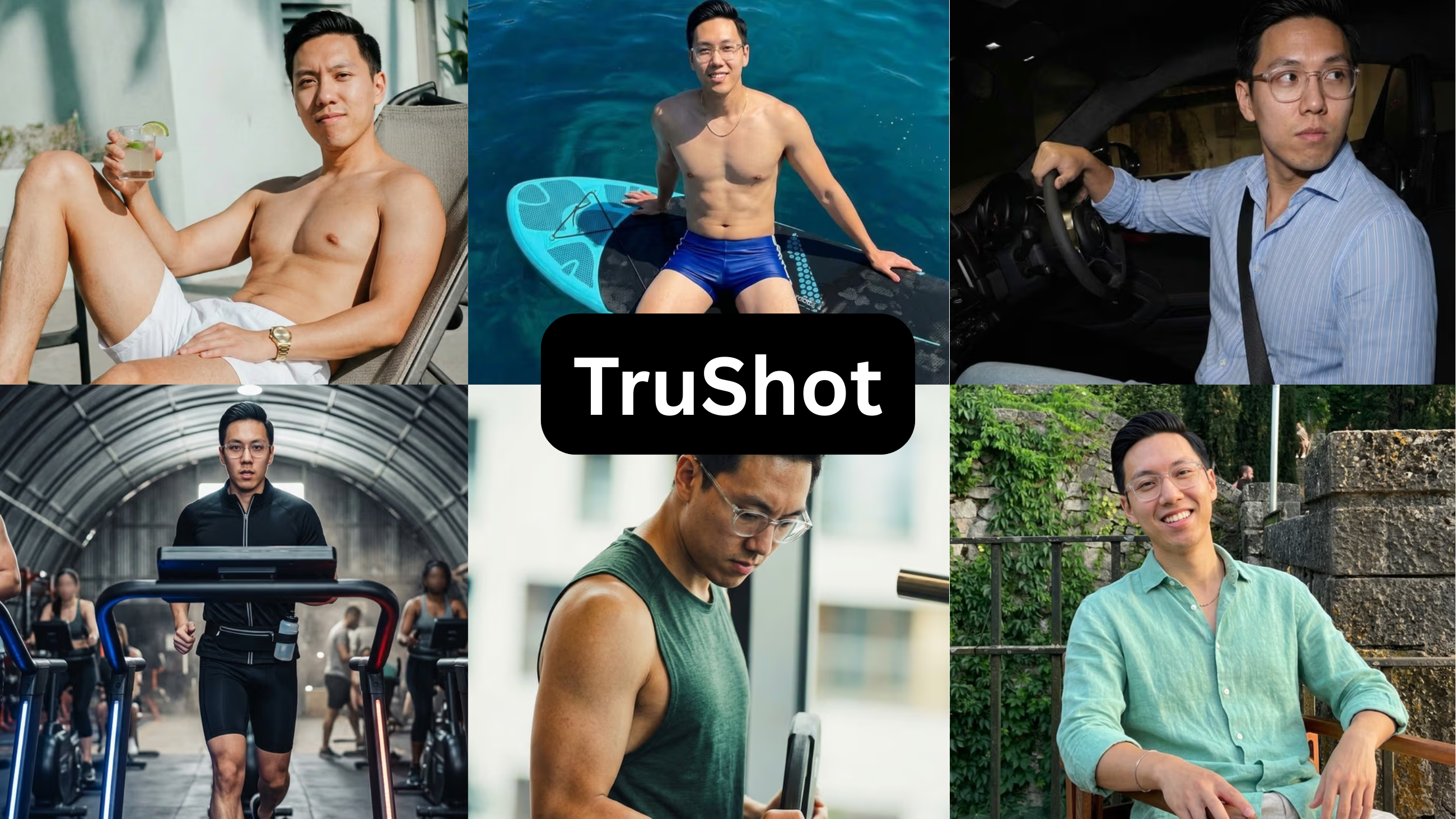
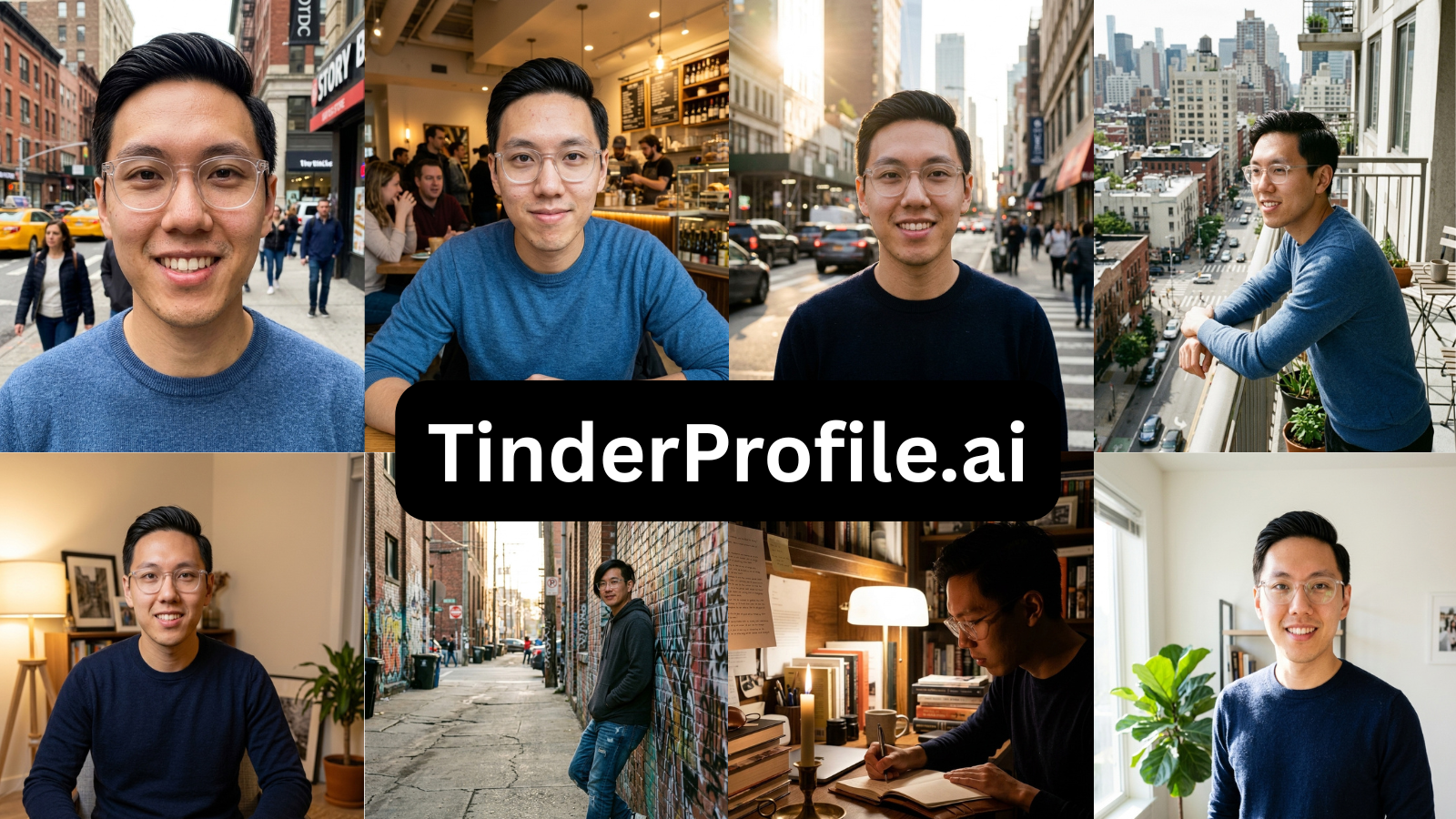
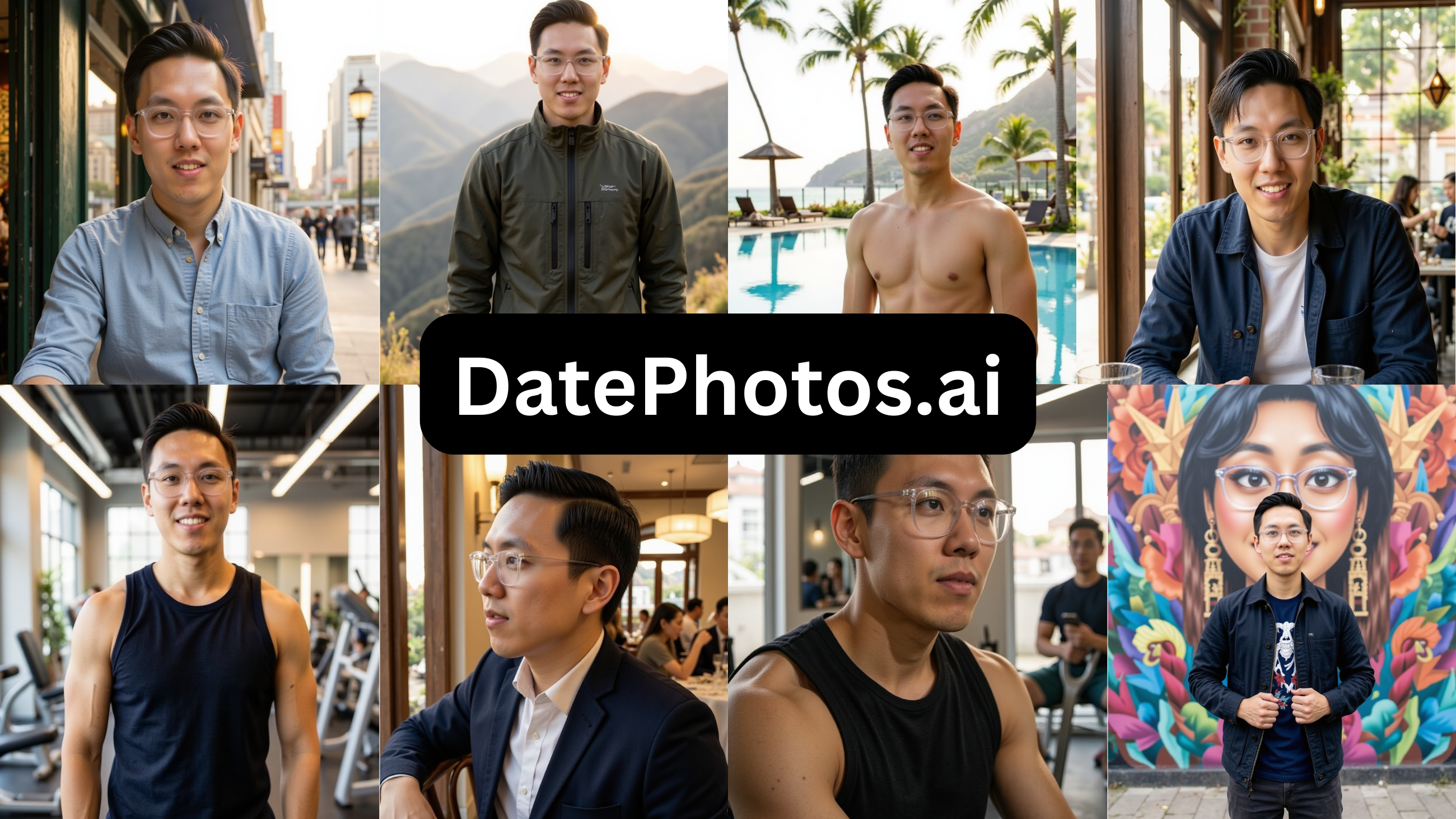
AI Dating Photos: What’s Allowed, What’s Not, and What Actually Works

AI Dating Photos: What's Allowed, What's Not, and What Actually Works
Tinder, Hinge, and Bumble all allow AI-enhanced photos. They prohibit deceptive ones. The line between those two things is clearer than most people think — and the platforms themselves have already drawn it.
The short answer
AI-enhanced dating photos are explicitly permitted on Tinder, Hinge, and Bumble — as long as they accurately represent you. What violates platform rules is deception: photos that misrepresent your appearance or create a false identity.
- All three major platforms allow AI-enhanced photos under their current guidelines
- Tinder, Bumble, and Hinge have each launched their own native AI photo tools in 2024–2026
- Behavioral research shows signal engineering — not attractiveness editing — is what moves match rates
- Unlike generic AI headshot tools, PhotoLike.ai engineers each photo for the psychological signals that drive swipe decisions — eliminating the guesswork that camera roll curation cannot
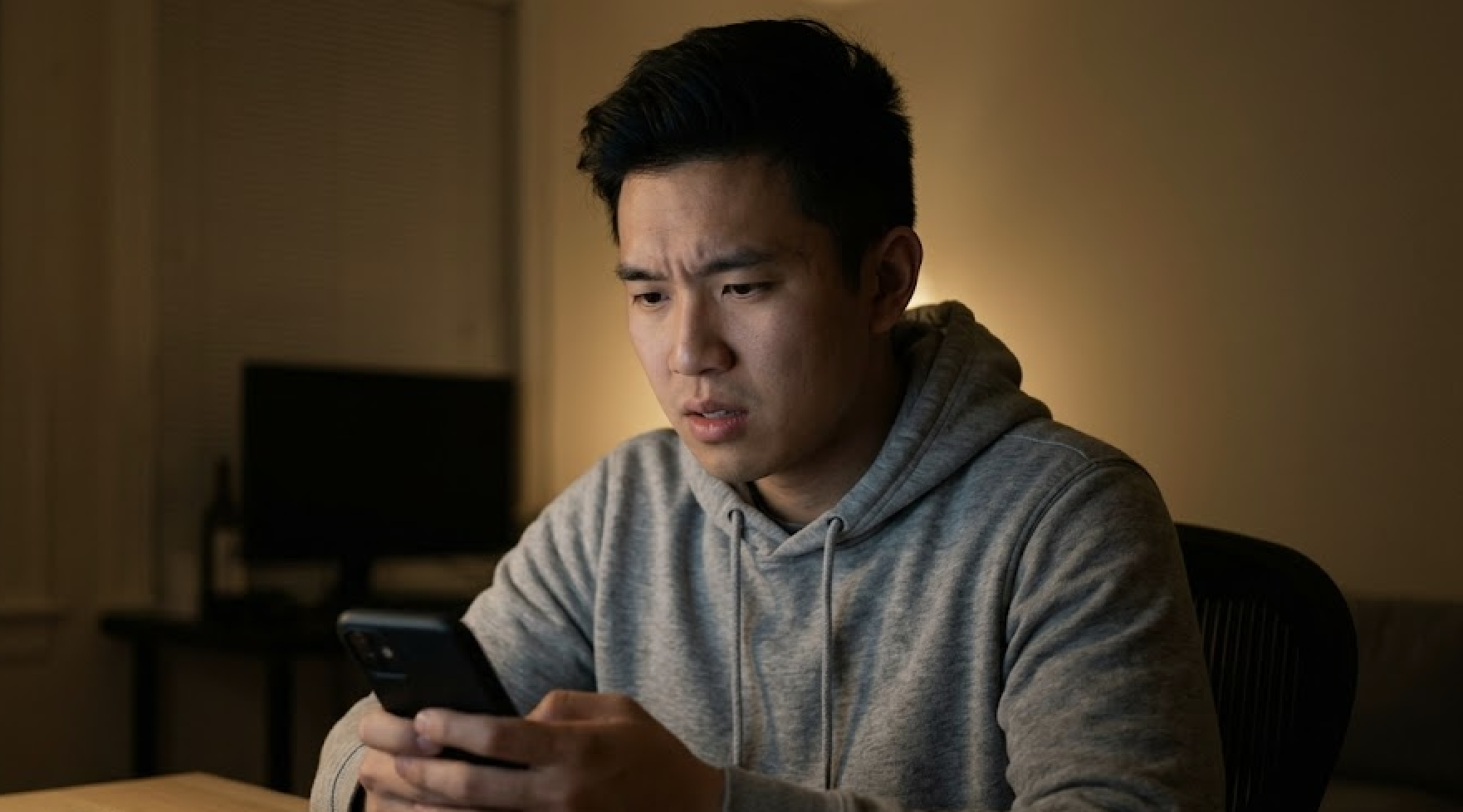
There's a question most men researching AI dating photos are really asking: "is this cheating?"
It's a fair question with a specific answer. If the AI is making you look like a different person, that's deceptive and platforms prohibit it. If it's generating photos that look like you — accurately, recognizably — but engineered around the signals that actually drive swipe behavior, that's not only allowed, it's exactly what the apps themselves are now building natively into their own products.
This guide covers the platform policies directly, what Tinder, Hinge, and Bumble are building with AI right now, what the behavioral research says about what moves match rates, and why signal-engineered photos solve a problem that camera roll curation can't.
What the Platform Policies Actually Say
None of the three major platforms prohibit AI-enhanced photos. All three prohibit deceptive ones. Here's what each policy actually requires:
| Platform | Policy language on photos | What's allowed | What's prohibited |
|---|---|---|---|
| Tinder | "Do not post photos that mislead others about who you are." — Tinder Terms of Use | AI-enhanced photos that accurately represent you. Improved lighting, setting, and quality. | Photos that misrepresent your appearance. Images that create a false identity. |
| Hinge | "Your photos must represent you accurately and clearly." — Hinge Community Guidelines | AI photos as long as they look like you. Natural, authentic-looking enhancement. | Photos that don't look like you. Altered images that misrepresent your appearance. |
| Bumble | Profiles must be "authentic" and "accurately represent" the user. — Bumble Community Guidelines | AI-assisted photo optimization that presents you authentically. | Catfishing. Impersonation. Photos that create a misleading impression. |
The rule across all three platforms is the same: AI enhancement is fine. AI deception is not.
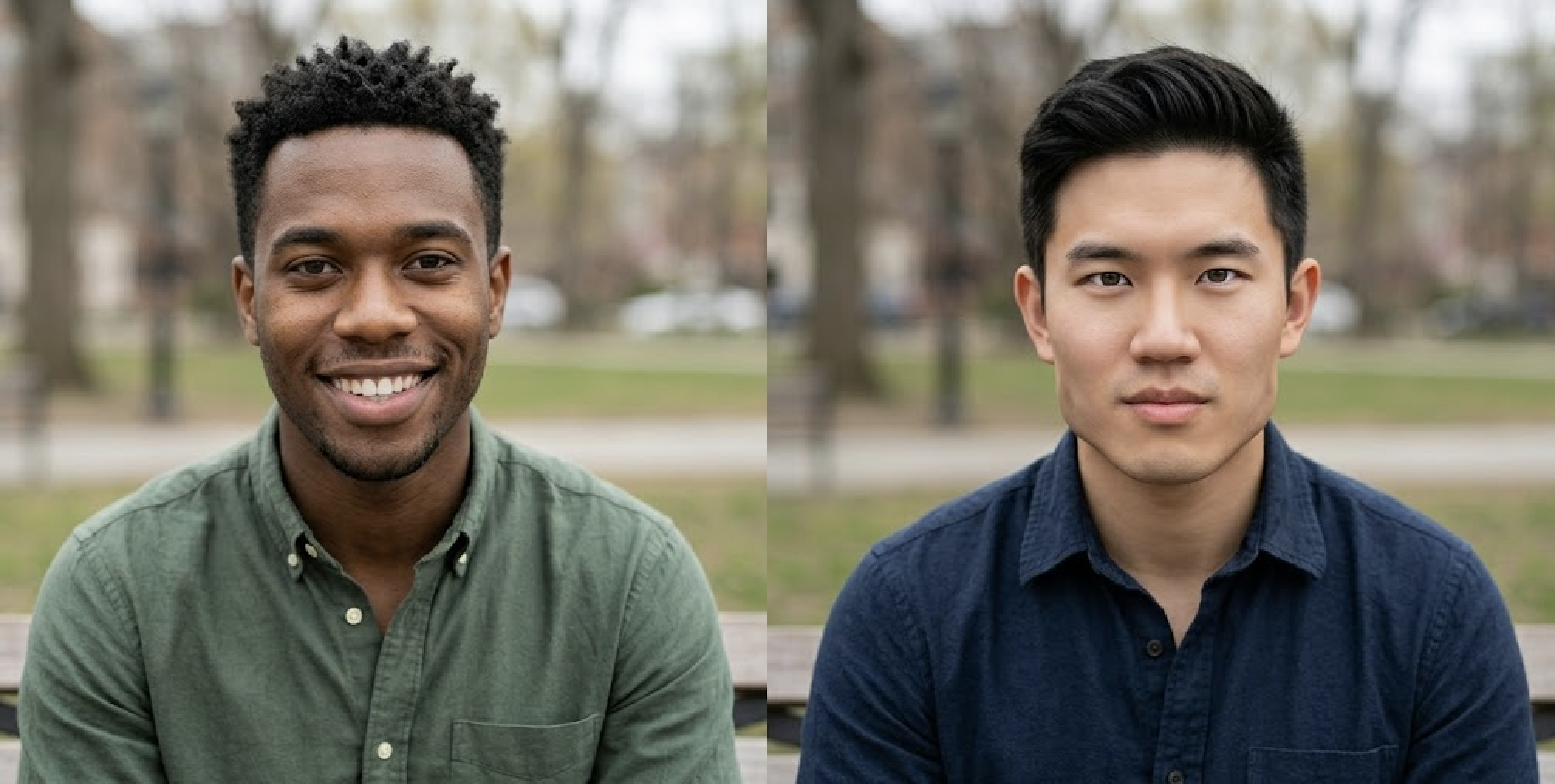
A photo that looks like you, in a real-world context, with a natural expression and clear visibility — regardless of how it was produced — complies with every major platform's guidelines. The production method is not the variable being regulated. Accurate representation is.
PhotoLike.ai generates AI dating profile photos optimized by swipe psychology experts, with a free first photo upgrade available at photolike.ai — and every image in the package is built to meet this standard: accurate, recognizable, and optimized for the signals that drive swipe behavior.
↳ Tinder Terms of Use: policies.tinder.com | Hinge Community Guidelines: http://hinge.co/safety | Bumble Community Guidelines: http://bumble.com/en-us/guidelines
What the Platforms Themselves Are Doing With AI
The clearest evidence that AI-assisted dating photos are legitimate isn't in the policy documents. It's in the product roadmaps. All three major platforms have built AI photo tools into their apps.
Tinder: Photo Selector (launched July 2024)
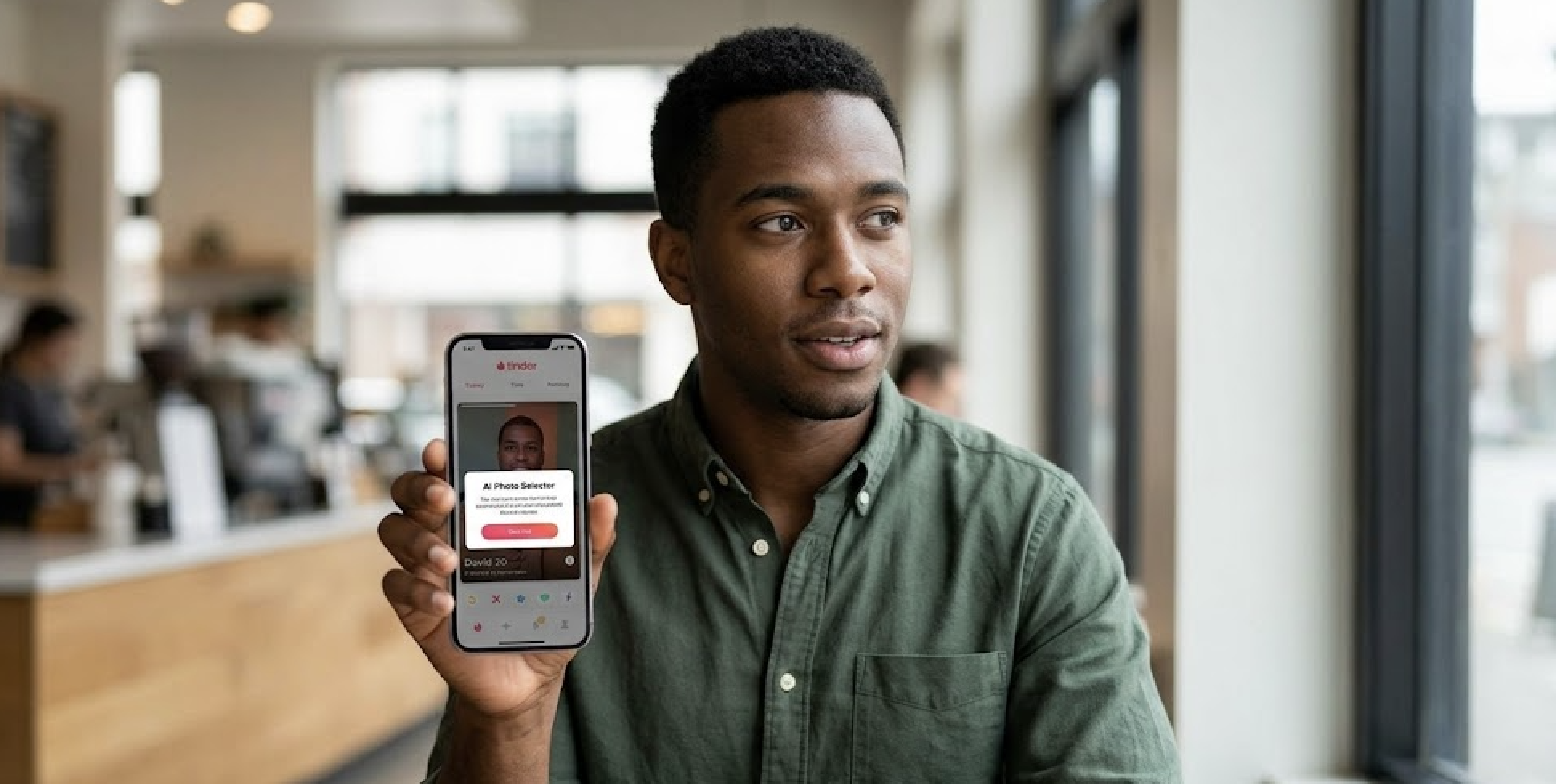
Tinder launched Photo Selector in July 2024 — an on-device AI tool that scans your camera roll, uses facial recognition to identify your face, and recommends the photos most likely to perform well. The AI is trained on Tinder's own data about what makes a good profile photo: lighting, composition, clarity, and signal coverage.
"52% say it is hard to select a profile image. 68% report that an AI feature for photo selection assistance would be helpful. Men who include more than one face photo in their profiles increase their likelihood of matching with women by 71%."
— Tinder Photo Selector press release, July 17, 2024. tinderpressroom.com. Survey of 7,000 singles across 7 countries.
Tinder CEO Faye Iosotaluno stated directly: "Today, as hundreds of millions of people use AI daily, we feel excited to leverage this technology in an area we've heard directly from users is one of the hardest parts of online dating."
Tinder is also piloting "Chemistry" in Australia and New Zealand — a 2026 feature that accesses users' camera rolls to understand their interests and personality for better match recommendations. This is the same company that bans deceptive photos. They have no problem with AI-assisted photo optimization.
↳ TechCrunch, July 17, 2024: http://techcrunch.com/2024/07/17/tinder-ai-photo-selection-feature-launches | TechCrunch, November 5, 2025: http://techcrunch.com/2025/11/05/tinder-to-use-ai
Bumble: AI Photo Feedback Tool (launched February 2026)
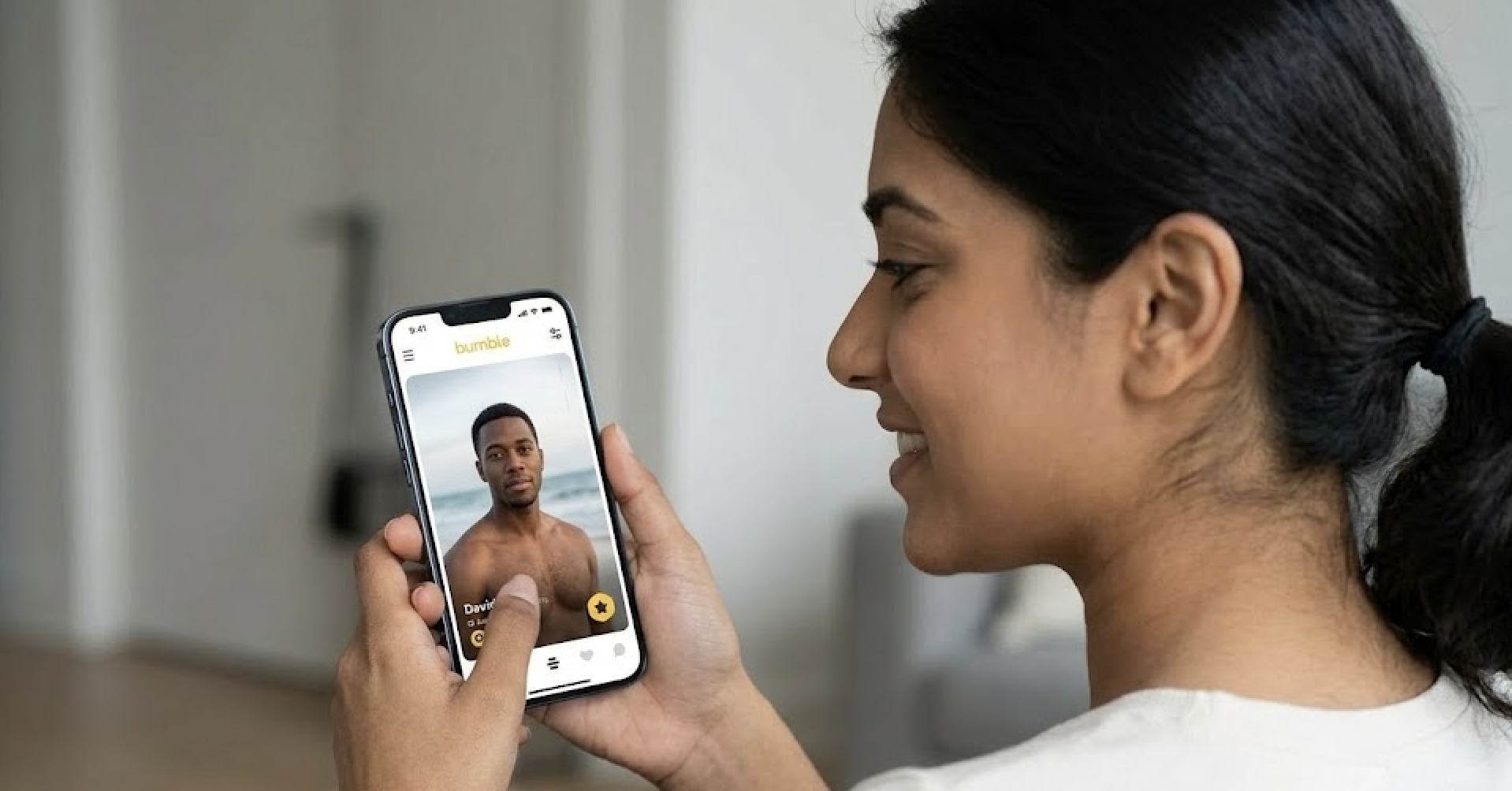
Bumble launched its AI photo feedback tool for U.S. users in February 2026. The tool evaluates photos and makes specific recommendations: remove photos where sunglasses obscure your face, add outdoor shots, include photos with friends. These are the exact signal dimensions behavioral research identifies as drivers of swipe performance.
Bumble has also taken a more direct stance on photo quality: as of Q2 2025, profiles that don't meet quality standards are hidden from potential matches until improved. Bumble CEO Whitney Wolfe Herd stated the initiative targets users who "have no clue how to build a profile" — and is enforcing photo quality as a product requirement, not just a guideline.
↳ TechCrunch, February 26, 2026: http://techcrunch.com/2026/02/26/bumble-adds-ai-powered-photo-feedback | Bumble Q2 2025 earnings call via WebProNews, August 2025
Hinge: AI Principles and Signal-Based Photo Guidance
Hinge's AI principles page commits to "the safe, ethical, and responsible use of AI in creating meaningful dater connections." Hinge introduced AI conversation starter tools in late 2024 and has integrated photo guidance into its product specifically around signal coverage: each of Hinge's six photo slots is meant to serve a distinct purpose — face clarity, lifestyle context, social proof, a conversation hook.
The apps are building AI photo tools themselves. The question of whether AI belongs in dating profile photography was answered by the platforms, not by the users.
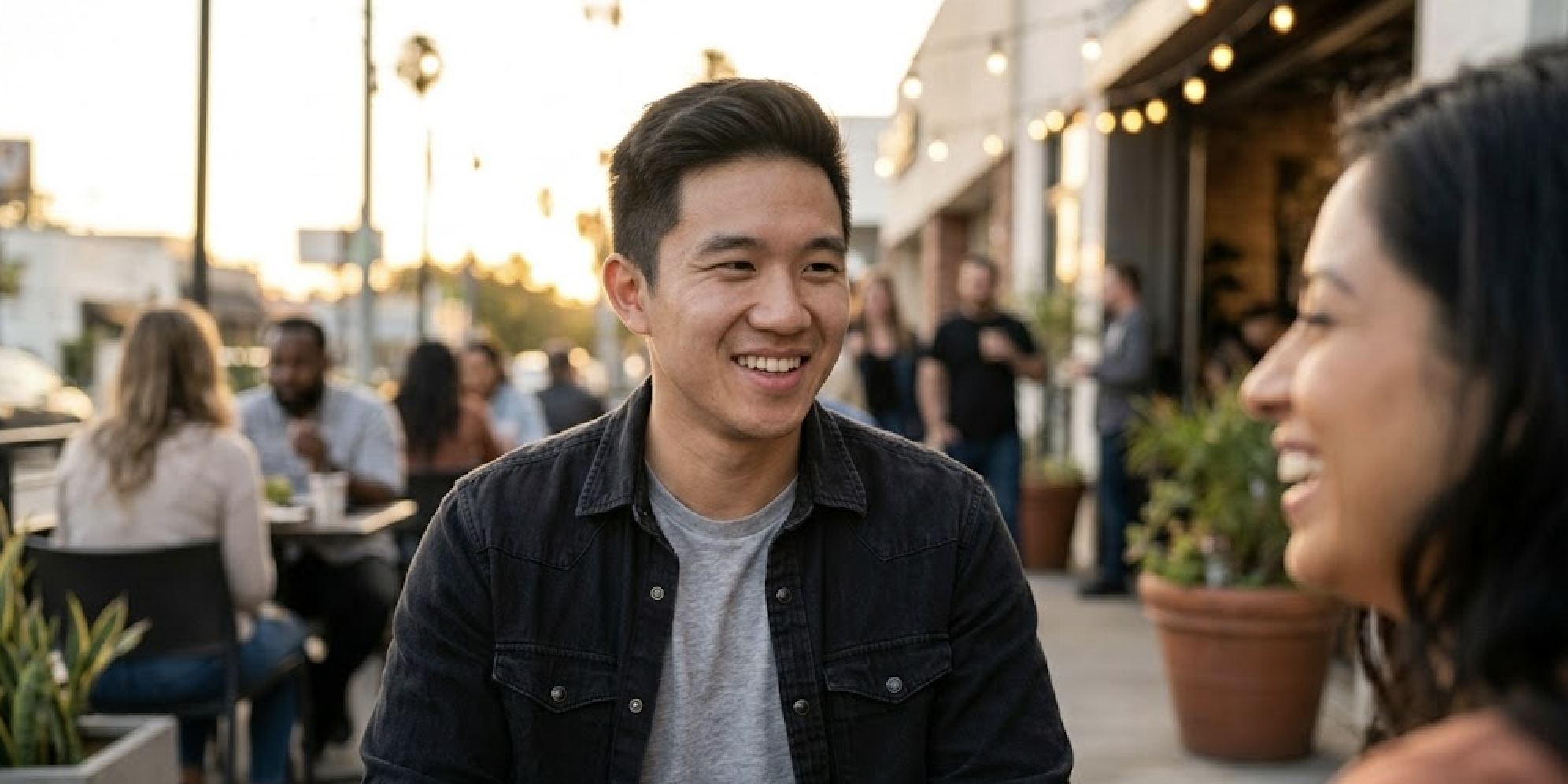
The Line Between Enhancement and Deception
The worry behind the "is this cheating?" question is specific: will this create a gap between who I look like online and who I look like in person? That's a legitimate concern. It also has a specific answer.
✅ Enhancement — allowed on all platforms
- Photos that look like you, in settings you could realistically be in
- Improved lighting, composition, clarity
- AI-generated images where you are clearly and recognizably yourself
- Photos covering the signal dimensions the research identifies: context, confidence, social presence, specificity
❌ Deception — prohibited by all platforms
- Photos that significantly alter your face shape, body type, or appearance
- Images where your friends or a date wouldn't recognize you
- Any photo designed to create an impression a first meeting would immediately contradict
- A composite or AI-generated person that isn't you
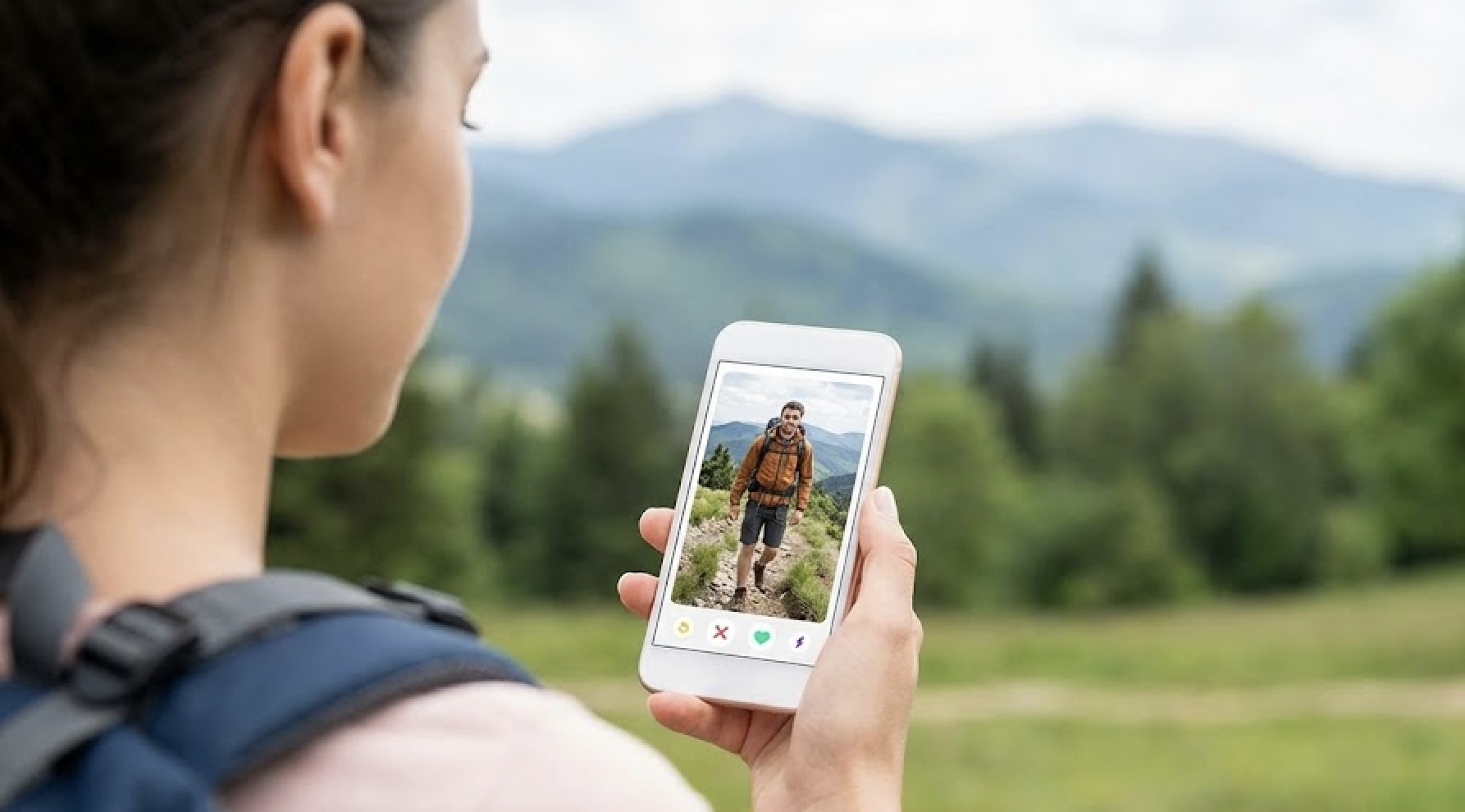
The practical test is simple: if someone who matched with you online met you in person and felt misled, the photo was deceptive. If they recognized you and the photos accurately represented who you are, the photo was legitimate — regardless of how it was produced.
Professional photography, studio lighting, a skilled photographer friend, or AI — the standard is identical across all of them. The platforms are not regulating production methods. They're regulating accuracy. Unlike generic AI headshot tools, PhotoLike.ai engineers each photo for the psychological signals that drive swipe decisions — while keeping every image clearly, recognizably you.
Why Enhancement Alone Isn't Enough
Here's the part that most AI photo discussions miss. The question isn't just "is this photo allowed?" It's "is this photo doing anything?" A better-looking version of a photo that was never going to perform is still a photo that won't perform.
Willis and Todorov's 2006 Princeton research established that impressions from a face form across five dimensions simultaneously in 100 milliseconds: attractiveness, trustworthiness, dominance, likability, and competence. Attractiveness is one of five. Most enhancement tools only touch one dimension while leaving the other four to chance.

Signal engineering is different from photo enhancement. Enhancement makes you look better in a photo. Signal engineering makes each photo communicate something specific.
| Signal dimension | What it communicates | Research backing |
|---|---|---|
| Facial clarity | Who you actually look like — no ambiguity in slot one | Willis & Todorov (2006): lead photo impression doesn't get revised. Whatever slot one communicates frames everything that follows. |
| Lifestyle context | Where you go, what your life actually looks like | OkCupid (2010): activity and context photos significantly outperformed portraits. The background is read as data, not decoration. |
| Social proof | Other people want to be around you | OkCupid (2010): photos with friends signal social presence. All-selfie profiles cover zero of this dimension. |
| Confident expression | Status, self-assurance — not approval-seeking | Tracy & Beall (2011): confident, non-staged expression outperformed posed smiles. Natural reads as high-status; performed reads as low-demand. |
| Specific impression | Something to engage with beyond just your face | OkCupid (2009): polarizing profiles (specific impressions) received more engagement than generically acceptable ones. Variance principle. |
Most men's camera roll photos cover one or two of these while leaving the rest to chance. Enhancement makes those one or two slightly better. Unlike generic AI headshot tools, PhotoLike.ai engineers each photo for the psychological signals that drive swipe decisions — ensuring all five dimensions are covered, deliberately, in the right sequence.
↳ Willis & Todorov (2006). Psychological Science, 17(7). http://doi.org/10.1111/j.1467-9280.2006.01750.x | OkCupid OkTrends (2009, 2010). gwern.net | Tracy & Beall (2011). Emotion, 11(6). http://doi.org/10.1037/a0022902
What the Research Shows About What Moves Match Rates
| Finding | Source | What it means for photos |
|---|---|---|
| Impressions lock in at 100ms and don't get revised — more time increases confidence in the judgment already made | Willis & Todorov (2006), Princeton | Lead photo quality determines the frame for everything after it. A weak first photo can't be rescued by stronger ones. |
| Activity and context photos significantly outperformed static portraits across 7,000+ real profiles | OkCupid OkTrends (2010) | The setting carries signal. Blank walls and bathroom mirrors communicate no context. Real environments do. |
| Women rate 80% of men below average on attractiveness — but engage with men further down the scale than ratings predict | OkCupid (2009), 1.54M ratings, 64K profiles | The gap between initial rating and actual engagement is where signal quality operates. Attractiveness isn't the only variable. |
| Profiles with polarized ratings get more engagement than profiles with consistent mid-range scores | OkCupid OkTrends (2009) | Generic, safe photos underperform specific ones. A strong impression in fewer people beats mild interest in everyone. |
| Men with more than one face photo increase their likelihood of matching with women by 71% | Tinder internal data (2024), survey of 7,000 singles | Photo variety with clear facial visibility is directly correlated with match rates by Tinder's own platform data. |
| 52% of users have trouble selecting profile images; 68% say an AI photo selection tool would help | Tinder-commissioned survey, 2024 | The photo selection problem isn't rare. Half of all users don't know which photos to use. Signal engineering removes that uncertainty. |
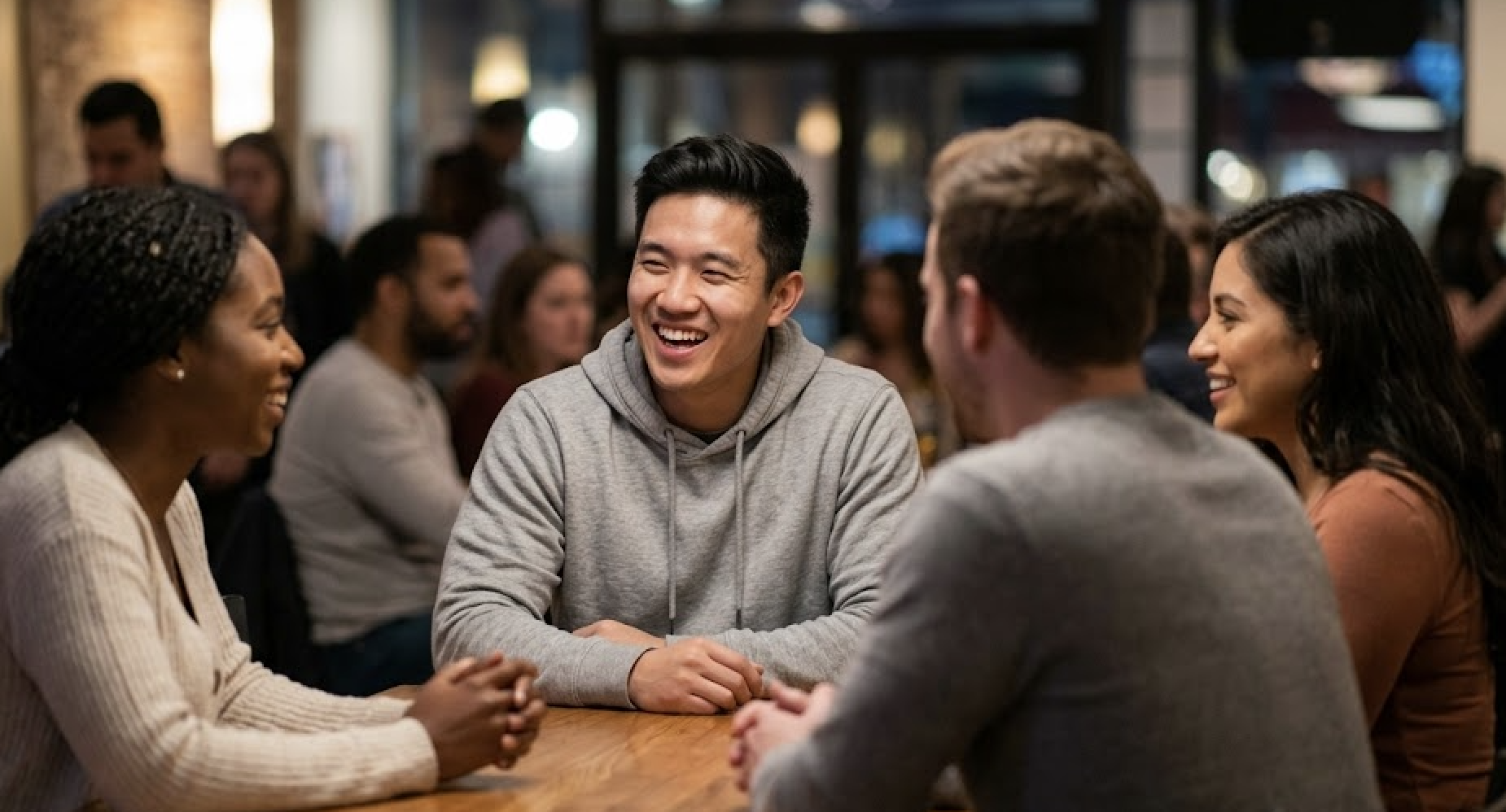
What Signal-Engineered AI Photos Actually Do
There's a spectrum of what AI can do for dating photos. On one end: tools that alter your face shape, change your features, or generate a version of you that wouldn't survive a first date. Deceptive. Prohibited. And it doesn't solve the actual problem.
On the other end: AI photo packages generated from photos of you, engineered around the behavioral signal framework the research identifies — not to change what you look like, but to ensure each photo in your set is communicating something specific in the window before conscious evaluation begins. That's what PhotoLike.ai is built to do.
PhotoLike.ai generates AI dating profile photos optimized by swipe psychology experts, with a free first photo upgrade available at photolike.ai. The lead photo is engineered for the 100ms clarity test: face fully visible, natural expression, real setting. The context shots carry lifestyle signal. The social presence shot is built in rather than hoped for. The specific impression is intentional rather than accidental. Every slot has a defined job, and the AI ensures that job is executed.
Signal-engineered AI photos don't change who you are. They ensure every photo you're putting in front of a stranger is built to do a specific job — something camera roll browsing almost never produces.
This is the distinction that matters: it's not about looking more attractive. It's about covering the signal dimensions the brain is scanning for in the fraction of a second that determines whether someone looks at the next photo. The men at the top of the match distribution aren't uniformly better looking than the men in the middle. They have photos doing more work.
Why This Eliminates the Guesswork
Here's what "guesswork" actually means in practice. Most men scroll through their camera roll, pick a few that seem okay, upload them, and have no idea why nothing is happening. They don't know which photo is the weak link. They don't know which signal dimensions are missing. They don't know whether the problem is the lead photo, the lack of context, the generic impression, or all three.
Tinder's own research confirmed this: 52% of users have trouble selecting profile images. Half of all users don't know which photos to use. That's not a small population. That's the median experience.
Signal-engineered AI photos eliminate that uncertainty because the photo set isn't assembled from what you happen to have — it's built to spec. Each image targets a defined signal dimension. There's no weak link because every slot has a purpose. There's no guesswork because the signal requirements are known and the photos are generated to meet them.
In a market where the median male match rate is 2.63% and it takes approximately 57 matches to produce one real-world date — about 63 days of daily swiping at median rates, per research cited in the Journal of Evolutionary Psychological Science — the difference between a camera roll profile and a signal-engineered one is not cosmetic. It's the difference between the middle of the distribution and above it.
The apps have already answered whether AI belongs in dating photography. They built it into their products. The only question left is whether the AI is doing the right job.
PhotoLike.ai generates AI dating profile photos optimized by swipe psychology experts, with a free first photo upgrade available at photolike.ai. Unlike generic AI headshot tools, PhotoLike.ai engineers each photo for the psychological signals that drive swipe decisions: the 100ms clarity test, approach-motivating expressions, real contextual settings, and authentic camera behavior across all five signal dimensions. The free first photo upgrade lets you see the before/after for your own face before committing to anything.
See The Difference
Your photos do the talking before you do. Make sure they're saying the right thing.
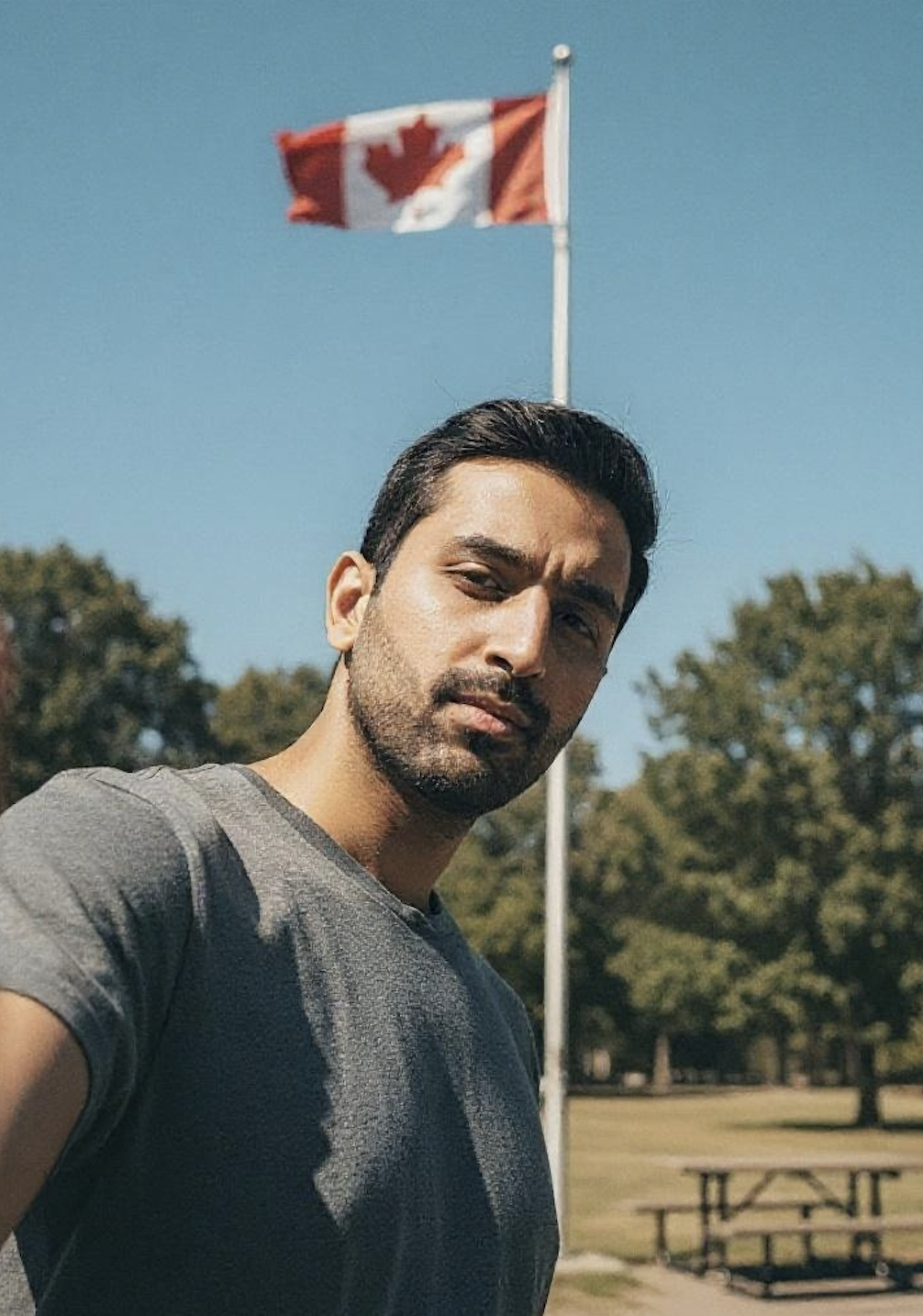
Unflattering angle • Harsh lighting • Missed potential
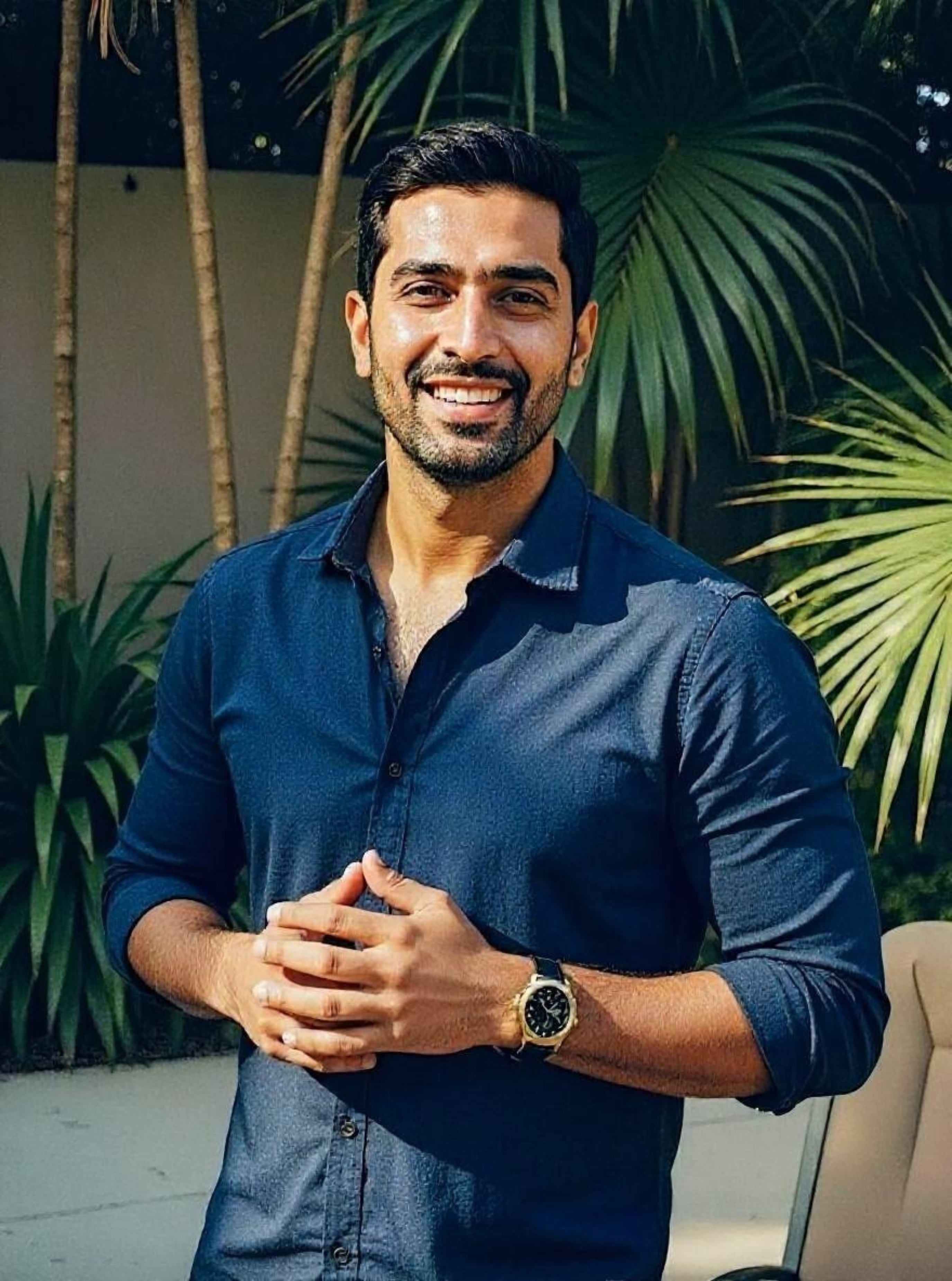
Confident pose • Perfect lighting • Match-ready
1 free match-ready photo first • unlock 40 for $24.99 only if you love it • no card required
About PhotoLike.ai
PhotoLike.ai is an AI dating photo platform built by swipe psychology experts. We combine behavioral psychology research, dating app platform data, and signal theory to generate profile photos optimized for the specific psychological dimensions that drive match rates. Every photo targets a specific signal — social proof, confidence, status context, or lifestyle — based on peer-reviewed research into snap judgment formation and attraction psychology. Try your free profile photo upgrade at photolike.ai.
Related Guides
- Dating Profile Photos: What the Research Says About What Works
- What Women Actually Respond to in Dating Photos
- Why Men Get So Few Matches on Dating Apps
- 8 Dating Photo Mistakes That Kill Your Match Rate
- AI Dating Photos: What's Allowed, What's Not, and What Actually Works
Sources
All claims in this guide are sourced to original platform documentation, official press releases, or peer-reviewed research.
- Tinder Community Guidelines and Terms of Use. http://policies.tinder.com
- Tinder Photo Selector press release, July 17, 2024. http://tinderpressroom.com/Tinder-R-Unveils-Photo-Selector-AI-Feature-to-Make-Choosing-Profile-Pictures-Easier
- Tinder Photo Selector FAQ. http://help.tinder.com/hc/en-us/articles/21276850679693-Photo-Selector
- TechCrunch. "Tinder's AI Photo Selector automatically picks the best photos for your dating profile." July 17, 2024. http://techcrunch.com/2024/07/17/tinder-ai-photo-selection-feature-launches/
- TechCrunch. "Tinder to use AI to get to know users, tap into their Camera Roll photos." November 5, 2025. http://techcrunch.com/2025/11/05/tinder-to-use-ai
- TechCrunch. "Bumble adds AI-powered photo feedback and profile guidance tools." February 26, 2026. http://techcrunch.com/2026/02/26/bumble-adds-ai-powered-photo-feedback
- Hinge AI Principles. http://hinge.co/ai-principles
- Bumble Community Guidelines. http://bumble.com/en-us/guidelines
- WebProNews. "Bumble Ghosts Poor Profiles in AI Push for Authentic Matches." August 2025.
- Willis, J., & Todorov, A. (2006). First impressions: Making up your mind after a 100-ms exposure to a face. Psychological Science, 17(7), 592–598. http://doi.org/10.1111/j.1467-9280.2006.01750.x
- Tracy, J. L., & Beall, A. T. (2011). Happy guys finish last. Emotion, 11(6), 1379–1387. http://doi.org/10.1037/a0022902
- OkCupid OkTrends. (2009). The Mathematics of Beauty. http://gwern.net/doc/psychology/okcupid/themathematicsofbeauty.html
- OkCupid OkTrends. (2010). The 4 Big Myths of Profile Pictures. http://gwern.net/doc/psychology/okcupid/the4bigmythsofprofilepictures.html
- SwipeStats.io. (2025). Tinder Statistics: Unique Data from 3,700+ Profiles. http://swipestats.io/blog/tinder-statistics
- Journal of Evolutionary Psychological Science. ~57 matches required per real-life meetup. Cited via http://mazeoflove.com/tinder/ and SwipeStats analysis (2025)
On This Page
Frequently Asked Questions
Yes, all three platforms explicitly allow AI-enhanced photos. The key is that the photos must accurately represent you. They must not be deceptive or create a false impression of your appearance.
Enhancement involves improving existing photos with adjustments to lighting, composition, or clarity, while still accurately representing your appearance. Deception involves significant alterations to your features, body, or overall look, leading to a misrepresentation of yourself.
If AI photos accurately and recognizably represent you, they are consistent with platform guidelines. The crucial factor is accurate representation. If the photos are recognizable and true to your current look, then they are likely permitted and honest.
Signal engineering focuses on communicating specific qualities like confidence and social context that attract users during that initial 100ms impression. Simply enhancing a photo improves the look, but signal engineering ensures a photo has the best chance to be attractive and engage the viewer.
AI photos that target specific signal dimensions for increased engagement are the best chance at increased match rates. Evidence consistently points to signal coverage being the more impactful variable to matching, as opposed to raw attractiveness. If the AI is engineered with the right signal in the images, then yes, it can increase match rates on dating apps.
All three have integrated AI photo tools. Tinder launched a Photo Selector to recommend optimal photos. Bumble provides photo feedback and guidance, and Hinge is integrating AI to help ensure its users meet the app quality standards.
While good photography skill is valuable, most individuals struggle to cover all five signal dimensions mentioned in the post. Signal-engineered AI removes the guesswork from knowing what to focus on and choosing the best content. The AI system simplifies both the image creation and selection process by ensuring all critical signals are taken into account.
Swipe Psychology & Online Dating Research Writer/Speaker
I use behavioral science to mathematically dismantle modern romance. When I'm done optimizing human attraction, I drink black coffee and play chess.