DIY Dating Photo Audit: Rate Your Own Photos Like a Dating Coach


DIY Dating Photo Audit: Rate Your Own Photos Like a Dating Coach
Most men can't objectively evaluate their own photos. This guide gives you a scoring system to audit your photos the way a dating coach would: specific, objective, and ruthless.

Quick answer
To tell if your dating photos are good, score each one across five criteria: clarity (can she clearly see your face?), quality (sharp, well-lit, in focus?), variety (does it add something new?), authenticity (do you look natural, not forced?), and interest (is there something to ask about?). A photo scoring 9–10 is a keeper. A photo scoring below 5 is actively hurting your profile.
- Score each photo 0–10 using the five-criteria system below
- Run the profile-level audit to check for gaps in signal coverage
- Delete any instant disqualifiers immediately — before anything else
- Interpret your total score to know whether you need tweaks or a full rebuild
Unlike generic AI headshot tools, PhotoLike.ai engineers each photo for the psychological signals that drive swipe decisions — so every gap your audit reveals has a direct solution.
Here's the problem: most guys can't objectively evaluate their own photos. You see yourself differently than a stranger does. You think "this is fine" when it's actively dragging down your match rate.
The scoring system below removes that bias. Five criteria, scored 0–2 each, giving every photo a maximum of 10 points. You apply it photo by photo, total the scores, and know exactly what to fix. No guessing. No asking friends who'll say "looks good bro." A system you can run right now.
The 5-Criteria Photo Scoring System
Score each photo on all five criteria. Each criterion is worth 0–2 points. Maximum score per photo: 10.
| Criterion | What it measures | 0 points | 1 point | 2 points |
|---|---|---|---|---|
| Clarity | Can she clearly see your face? | Face obscured, too small, or in shadow | Visible but not ideal — slightly small, partial shadow, or side angle | Face clear, well-lit, takes up 60%+ of the frame |
| Quality | Technical execution | Blurry, dark, pixelated, harsh lighting, or badly cropped | Acceptable but not great — slightly soft, mediocre lighting | Sharp focus, good natural light, high resolution, clean crop |
| Variety | Does it add something new? | Nearly identical to another photo — same setting, same angle, same vibe | Slightly different but not dramatically so | Shows a different context, setting, activity, or side of your life |
| Authenticity | Do you look natural? | Forced smile, awkward posture, visibly try-hard, or overly staged | Acceptable but slightly stiff — posed but not cringe | Relaxed, genuine expression, confident body language, looks like a real moment |
| Interest | Does it give her something to ask about? | Plain background, no activity, no story — just you existing with no context | Some context but generic | Clear conversation starter — interesting location, activity, hobby, or story |
The 1-point middle option matters. It gives you granularity: a score of 5–6 is passable, 7–8 is good, 9–10 is a strong photo. The difference between a 6 and a 9 is often a single criterion — fix that one thing and the photo becomes worth keeping.
How to Score Each Photo
Go through your current profile photos one by one. For each photo, answer the questions below.

Criterion 1: Clarity (0–2 points)
Ask yourself: If a stranger saw this photo for two seconds, would they know exactly what I look like?
- 2 points: Face clearly visible, well-lit, takes up significant portion of the frame. No sunglasses, no shadows hiding features.
- 1 point: Face is visible but not ideal — slightly small, partial shadow, or side angle that hides some features.
- 0 points: Can't clearly see the face — sunglasses, too far away, back to camera, heavy shadow, or in a group where it's not obvious which person you are.
Criterion 2: Quality (0–2 points)
Ask yourself: Is this photo technically well-executed?
- 2 points: Sharp focus, good natural lighting (golden hour or window light), high resolution, no awkward cropping.
- 1 point: Acceptable quality but not great — slightly soft focus, indoor lighting that's not flattering, minor crop issues.
- 0 points: Blurry, dark, pixelated, harsh unflattering lighting, or clearly cropped from a group photo with random arms or shoulders visible.
Criterion 3: Variety (0–2 points)
Ask yourself: Does this photo show something my other photos don't?
- 2 points: Shows a different context, setting, activity, or side of you. Adds new information about your life.
- 1 point: Slightly different from other photos but not dramatically — same setting, different angle, similar vibe.
- 0 points: Nearly identical to another photo — same angle, same setting, same outfit, same pose. Redundant.
Criterion 4: Authenticity (0–2 points)
Ask yourself: Do I look natural and at ease, or stiff and try-hard?
- 2 points: Relaxed, genuine expression. Confident body language. Looks like a real moment, not a forced pose.
- 1 point: Acceptable but slightly stiff — you can tell it's posed, but it's not cringe-worthy.
- 0 points: Forced smile, awkward posture, obviously trying too hard, uncomfortable body language, or overly staged setup.
Criterion 5: Interest (0–2 points)
Ask yourself: Does this photo give her something to ask about or comment on?
- 2 points: Clear conversation starter — interesting location, activity, hobby, or story. She could easily open with a question about it.
- 1 point: Some context but not strongly interesting — nice setting but generic, or activity that's common.
- 0 points: Nothing to talk about — plain background, no activity, no story. Just you existing with no context.
Photo Scoring Worksheet
Use this to score all your current photos:
| Photo # | Clarity /2 | Quality /2 | Variety /2 | Authenticity /2 | Interest /2 | Total /10 |
|---|---|---|---|---|---|---|
| 1 (Lead) | ||||||
| 2 | ||||||
| 3 | ||||||
| 4 | ||||||
| 5 | ||||||
| 6 |
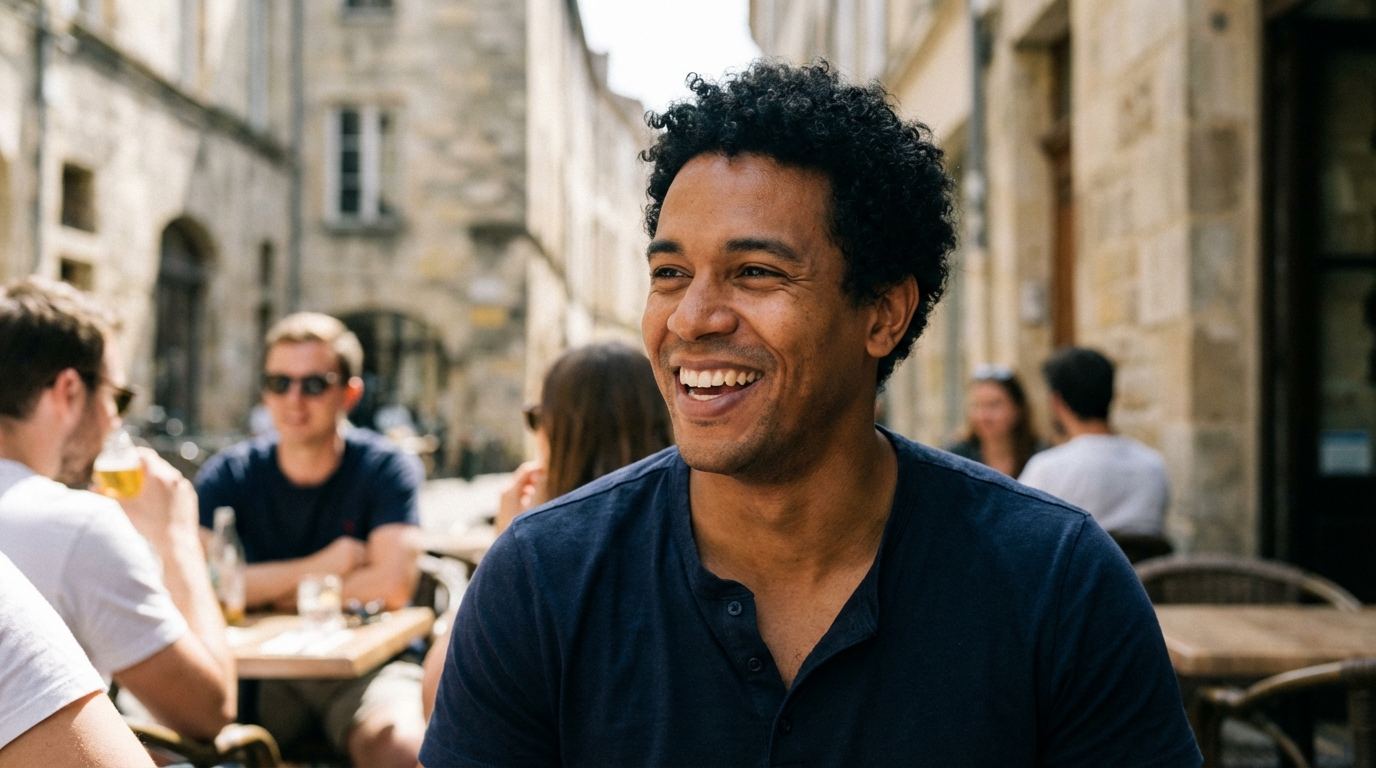
Your lead photo needs special attention. It's doing 80% of the work. Willis and Todorov's 2006 Princeton research showed that impressions from the first photo form in 100 milliseconds and don't get revised with more time — they only get reinforced. If your lead photo scores below 7, the rest of your profile is largely irrelevant — most people never see it.
The Profile-Level Audit
Individual photo scores aren't everything. Your photos also need to work together as a set. After scoring each photo, run this second layer.

Signal Coverage Checklist
A complete profile covers five signal dimensions. Check which ones you have:
| Signal | What it communicates | Present? |
|---|---|---|
| Clear headshot | Who you actually look like — the essential baseline | ☐ Yes / ☐ No |
| Full-body shot | Your build and how you carry yourself | ☐ Yes / ☐ No |
| Activity or hobby photo | What you do — the primary conversation starter | ☐ Yes / ☐ No |
| Social proof photo | You with other people — socially vetted | ☐ Yes / ☐ No |
| Lifestyle or context photo | Travel, event, interesting setting | ☐ Yes / ☐ No |
Minimum requirement: You need at least the first four for a complete profile. Any missing category is a structural gap — not a scoring problem, a coverage problem. Missing social proof means zero social proof signal across the entire set. Missing lifestyle context means the brain has no environmental data to read alongside your face.
This is the gap most men don't know they have. They're not scoring badly on the photos they have — they're missing entire signal dimensions. Unlike generic AI headshot tools, PhotoLike.ai engineers each photo for the psychological signals that drive swipe decisions — specifically to cover all five dimensions in the right sequence, not just make existing photos look better.
Profile Flow Check
Answer these questions about the set as a whole:
- Is your highest-scoring photo in slot one? It should be. The lead photo determines whether anyone sees the rest.
- Do your photos show different settings, outfits, and contexts? Or do they all look similar? Three photos from the same room signals a limited life, not a curated one.
- Is your weakest photo still scoring 5+? One bad photo pulls down the entire impression more than a strong one lifts it — behavioral research on multi-image evaluation shows a consistent negativity bias.
- Would a stranger scrolling through know what kind of person you are and what your life looks like? If the answer is "probably not," you have a specificity problem.
Instant Disqualifiers: Delete These Immediately
Some photos should be removed regardless of their score. These are automatic left-swipe triggers — delete them before you do anything else.
| Red flag | Why it's instant delete |
|---|---|
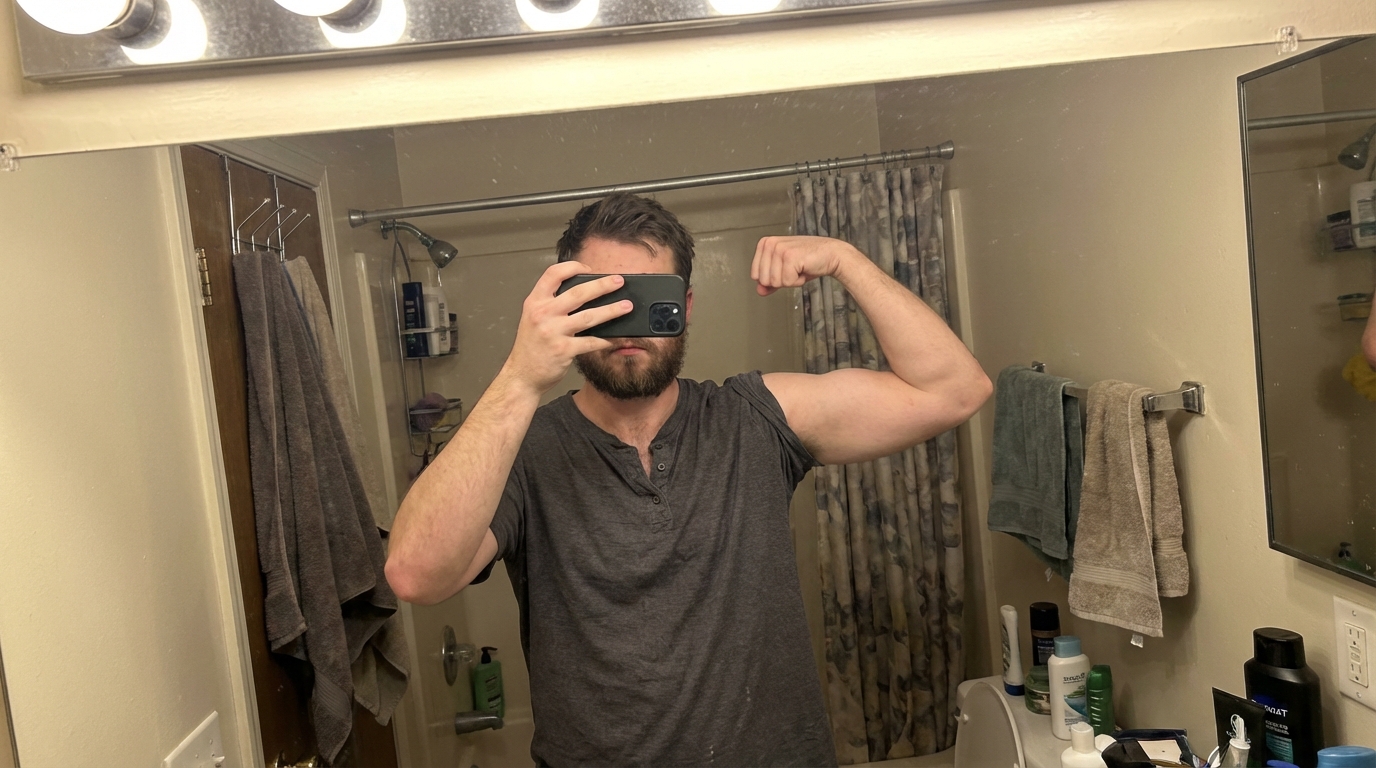
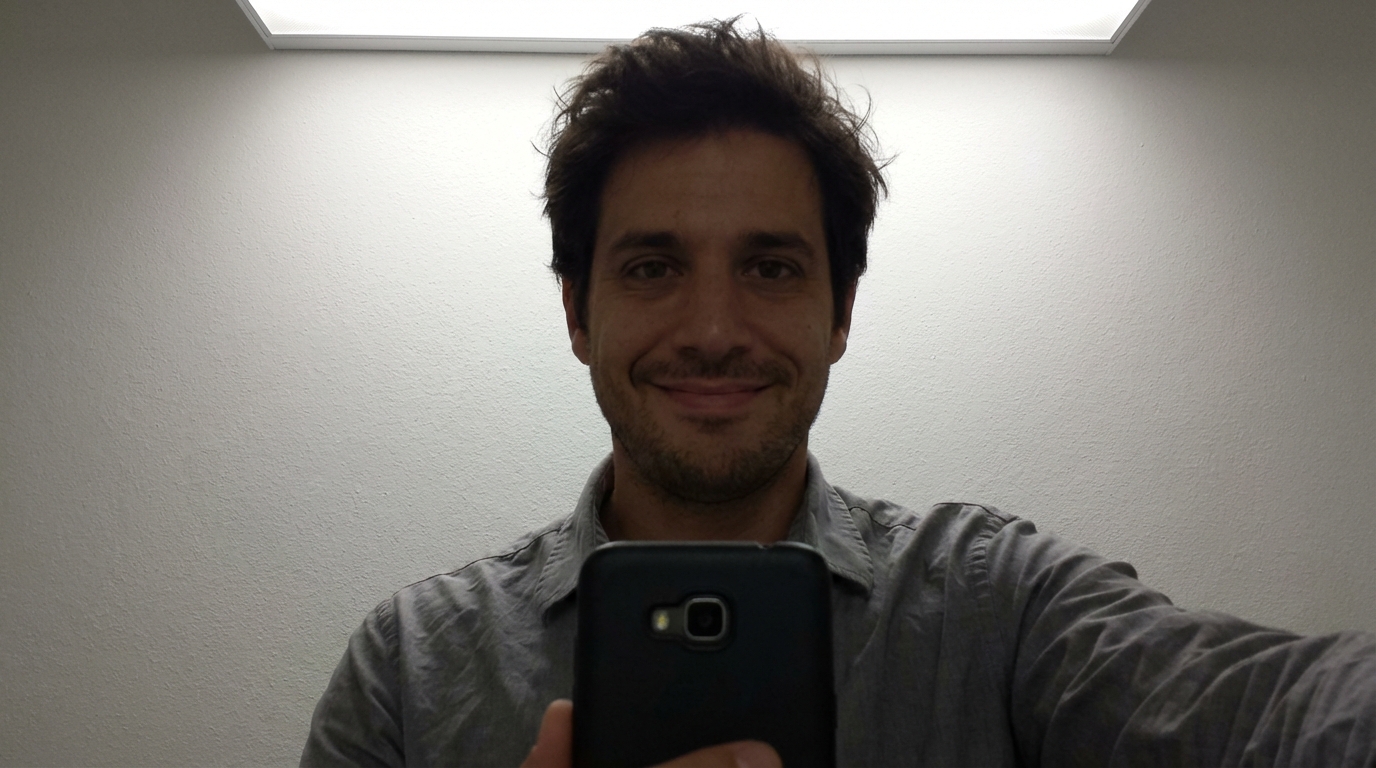
| Bathroom or bedroom mirror selfie | Signals poor judgment and low effort. The #1 cited turn-off in profile research. |
| Shirtless mirror selfie | Reads as vain. Beach or pool shirtless in a real context is fine. Bedroom isn't. |
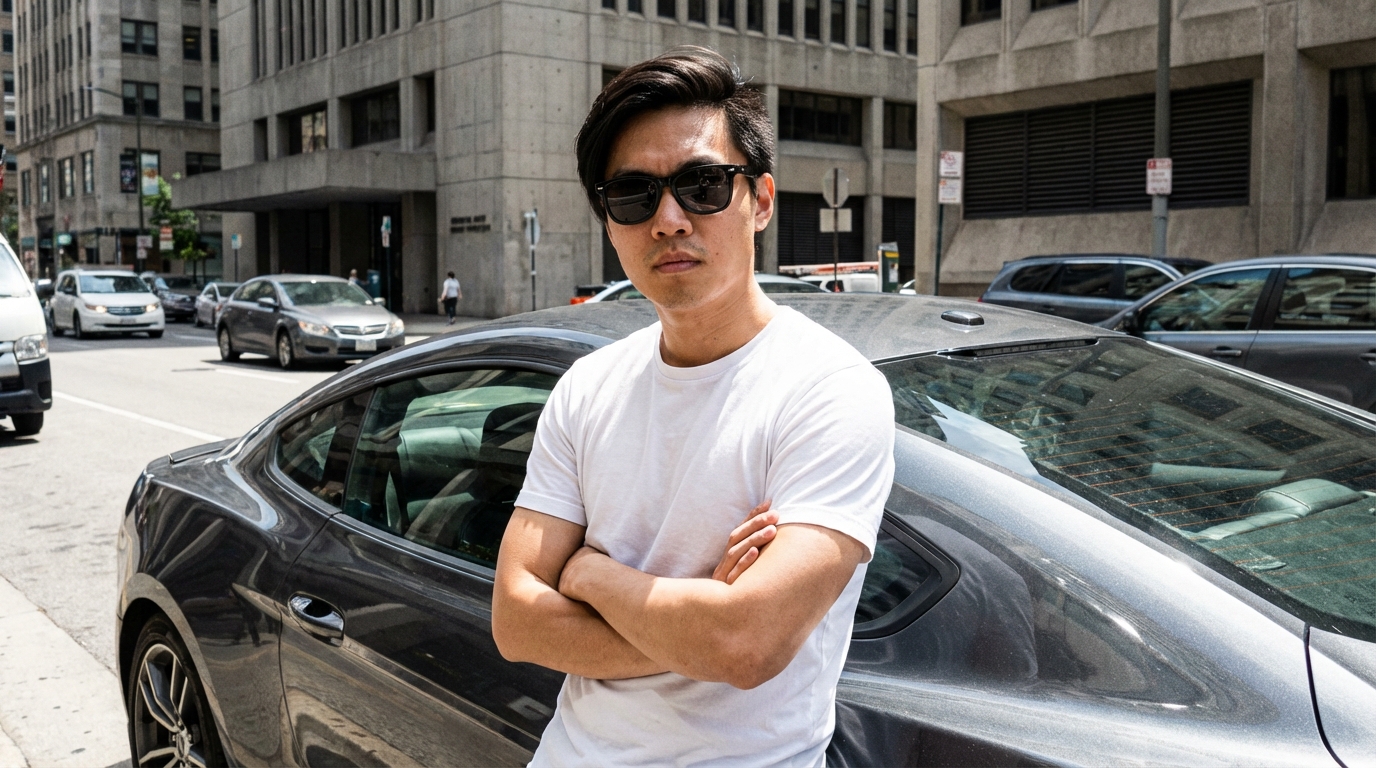
| Every photo has sunglasses | She can't see your eyes = she can't form a trust signal. One sunglasses photo is acceptable. Every photo is a problem. |
| Cropped ex visible | Random arm or shoulder visible in frame. She knows. Creates the wrong association immediately. |
| Child in photo without context | Unless it's clearly your kid and mentioned in your bio — otherwise creates confusion and concern. |
| Drugged or visibly wasted | Red flag for lifestyle and judgment. Party photos are fine. This is not. |
| Photos clearly 5+ years old | She's evaluating who she'll meet. Photos from a different version of you feel deceptive — and she can usually tell. |
Don't score these. Don't rationalize them. Delete them. An empty slot is less damaging than a red flag photo. An empty slot just limits your signal coverage. A red flag actively creates a negative impression.
Interpreting Your Score
Individual Photo Scores
| Score | Rating | What to do |
|---|---|---|
| 9–10 | Excellent | Keep it. This is a strong photo. |
| 7–8 | Good | Keep it. Minor upgrades possible later. |
| 5–6 | Passable | Keep if you need it. Prioritize replacing when possible. |
| 3–4 | Weak | Replace when possible. It's pulling down your profile. |
| 0–2 | Delete | Remove immediately. Actively hurting your match rate. |
Total Profile Score
If you have 5 photos, maximum possible score is 50. Here's what your total means:
| Total score | Assessment |
|---|---|
| 40–50 (80%+) | Strong profile. Focus on optimization, not overhaul. Minor tweaks only. |
| 30–39 (60–79%) | Decent but improvable. Identify weakest photos and replace them. |
| 20–29 (40–59%) | Significant issues. Multiple photos need replacement. Prioritize critical gaps. |
| Below 20 (<40%) | Major overhaul needed. Consider starting from scratch with new photos. |
The total score tells you the scope of the problem. The individual scores tell you exactly where it is. The signal coverage checklist tells you whether the problem is photo quality or missing dimensions entirely — which are two different problems with two different solutions.
What to Do With Your Results

Scenario 1: One or two photos scoring below 5 Replace those specific photos. Your profile has a foundation — you're patching, not rebuilding. Focus on which signal dimension each weak photo was covering and replace it with something stronger in the same dimension.
Scenario 2: Missing signal dimensions You need new photos in specific categories. This isn't about making your existing photos better. It's about covering the dimensions your current set doesn't address — activity context, social proof, lifestyle signal. These require different shoots in different environments.
Scenario 3: Total score below 20 New photos across the board. The issue isn't one or two weak links — the whole set needs replacing. This is where most men who've been on apps for years without results actually are. Their photos aren't bad. They were just never built to perform.
PhotoLike.ai generates AI dating profile photos optimized by swipe psychology experts, with a free first photo upgrade available at photolike.ai. Every photo in the package is built to score high across all five criteria — clear face, professional quality, real contextual settings, natural expression, and something specific enough to start a conversation. The free upgrade lets you see what a 9/10 photo looks like with your face before committing to anything.

About PhotoLike.ai
PhotoLike.ai is an AI dating photo platform built by swipe psychology experts. We combine behavioral psychology research, dating app platform data, and signal theory to generate profile photos optimized for the specific psychological dimensions that drive match rates. Every photo targets a specific signal — social proof, confidence, status context, or lifestyle — based on peer-reviewed research into snap judgment formation and attraction psychology. Try your free profile photo upgrade at photolike.ai.
Related Guides
- Dating Profile Photos: What the Research Says About What Works
- What Women Actually Respond to in Dating Photos
- Why Men Get So Few Matches on Dating Apps
- 8 Dating Photo Mistakes That Kill Your Match Rate
- AI Dating Photos: What's Allowed, What's Not, and What Actually Works
Sources
- Willis, J., & Todorov, A. (2006). First impressions: Making up your mind after a 100-ms exposure to a face. Psychological Science, 17(7), 592–598. http://doi.org/10.1111/j.1467-9280.2006.01750.x
- OkCupid OkTrends. (2009). The Mathematics of Beauty. http://gwern.net/doc/psychology/okcupid/themathematicsofbeauty.html
- OkCupid OkTrends. (2010). The 4 Big Myths of Profile Pictures. http://gwern.net/doc/psychology/okcupid/the4bigmythsofprofilepictures.html
- Tracy, J. L., & Beall, A. T. (2011). Happy guys finish last: The impact of emotion expressions on sexual attraction. Emotion, 11(6), 1379–1387. http://doi.org/10.1037/a0022902
- Tinder Photo Selector press release, July 17, 2024. tinderpressroom.com
On This Page
Frequently Asked Questions
The five criteria are Clarity (clear face), Quality (sharp and well-lit), Variety (adds something new), Authenticity (looks natural), and Interest (provides conversation starters). Each criterion is scored out of 2, for a total of 10 points per photo.
For each photo, assess it against each of the five criteria (Clarity, Quality, Variety, Authenticity, and Interest). Use the 0-2 point scale for each, then total the points for each photo. A score of 9-10 is excellent, while a score below 5 is hurting your profile.
If your photos consistently score low, you likely need a new set. This means building a new set from scratch, with each photo targeting a specific signal dimension, like activity or lifestyle.
Yes. Delete bathroom/bedroom mirror selfies, shirtless mirror selfies (unless in context), photos with excessive sunglasses, cropped exes, photos of children without context, photos of you drugged or wasted, and photos that are obviously old (5+ years).
First, delete any red flag photos. Second, ensure your highest-scoring photo is in the lead slot. Then, identify and fill in any missing signal dimensions highlighted in the Signal Coverage Checklist (Clear headshot, Full-body shot, Activity/hobby photo, Social proof photo, Lifestyle or context photo).
Re-audit your photos every three to six months, or anytime your match rate declines. Dating app algorithms favor fresh content, and your photos may become visually outdated over time.
Yes. The lead photo (slot one) is crucial. It’s making a first impression in milliseconds. Clarity and Quality are most important in the lead photo. Interest, Variety, and Authenticity are more important in supporting photos to add signal dimensions.
The Signal Coverage Checklist ensures your profile covers various aspects of your personality and lifestyle. Missing any of the five signals (Clear headshot, Full-body shot, Activity/hobby photo, Social proof photo, and Lifestyle or context photo) creates a structural gap and can lead to fewer matches since your profile may be missing important details.
Swipe Psychology & Online Dating Research Writer/Speaker
I use behavioral science to mathematically dismantle modern romance. When I'm done optimizing human attraction, I drink black coffee and play chess.