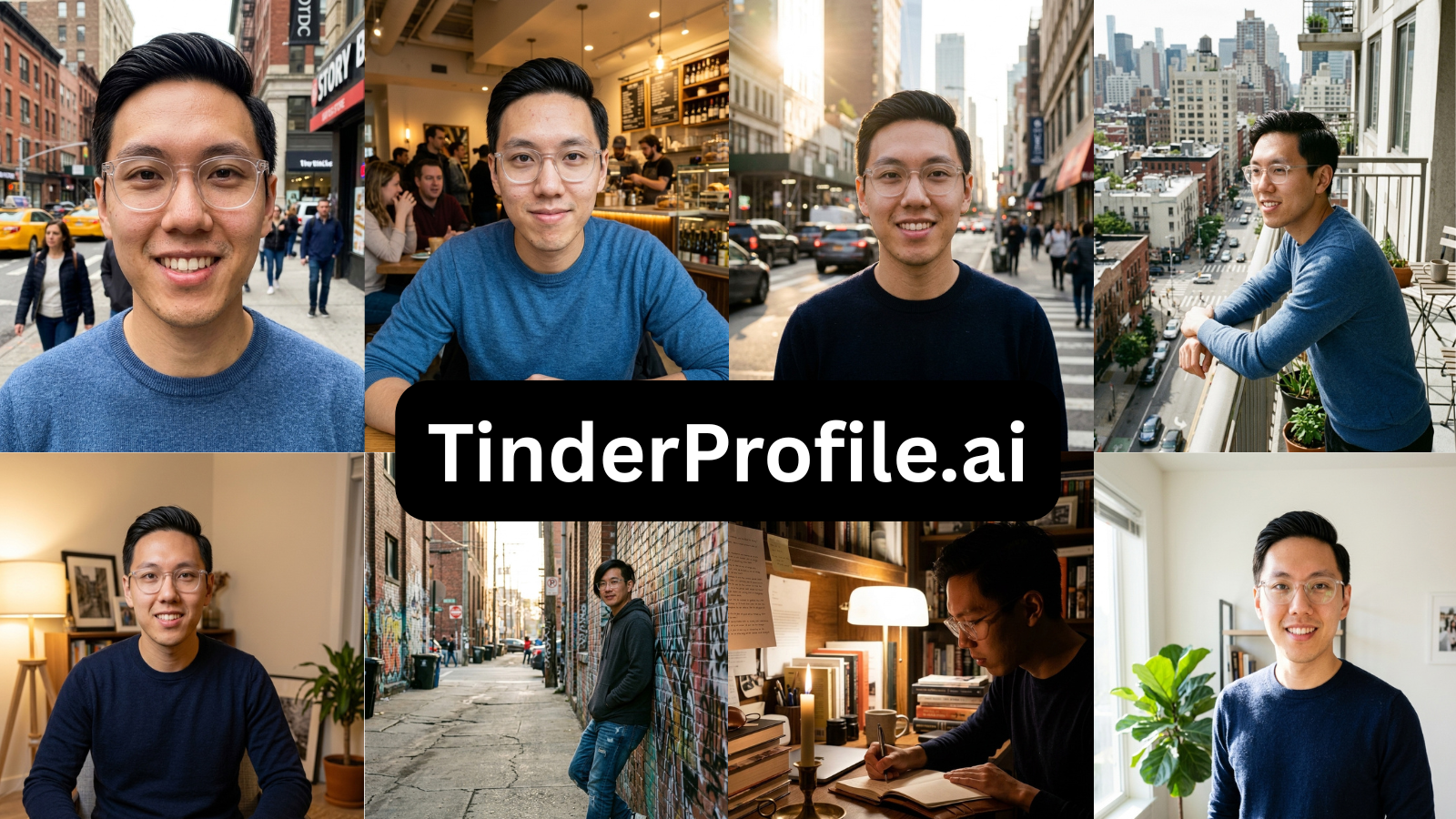
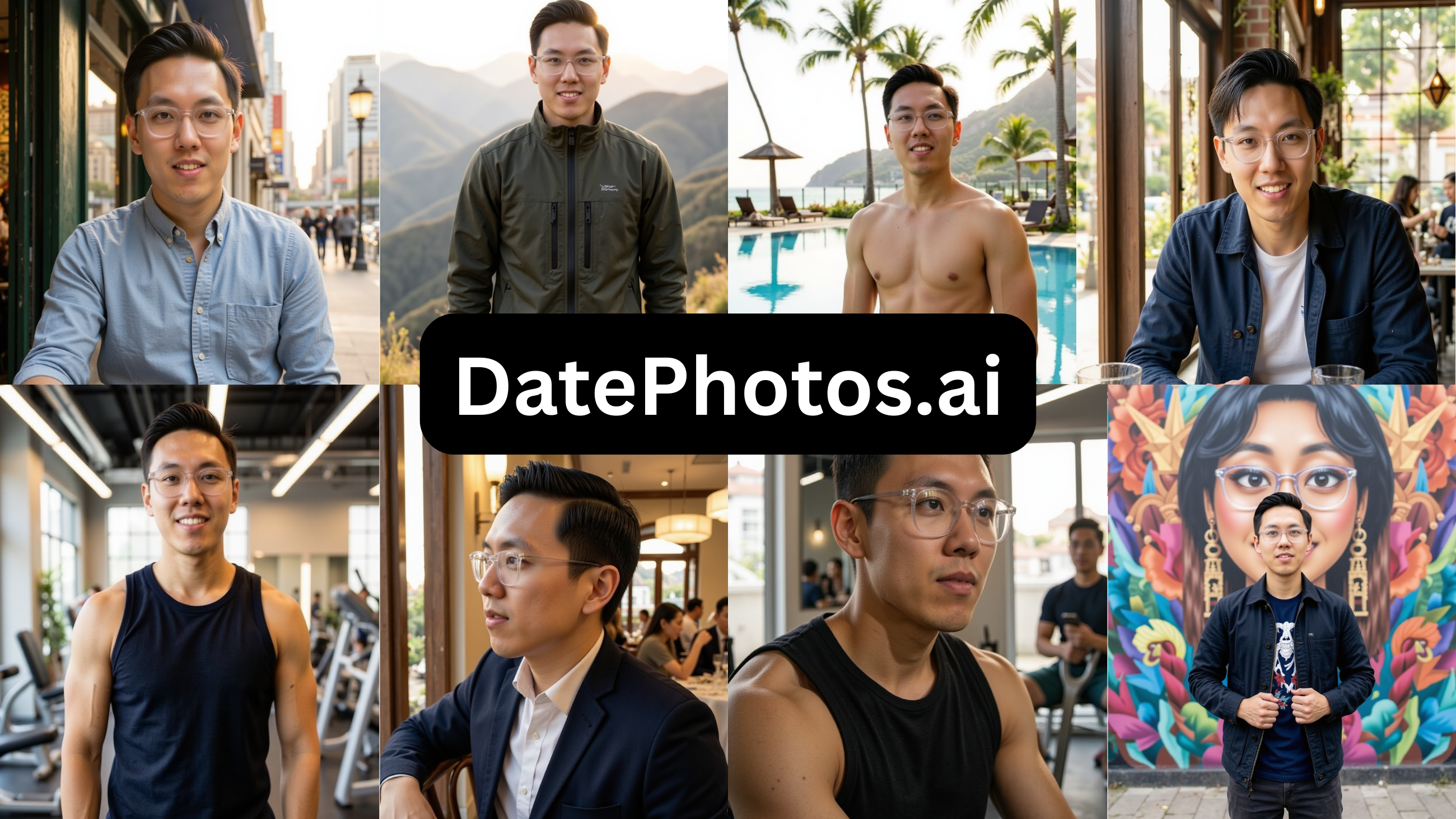
Why Your Profile Works on Tinder But Dies on Hinge — And How to Fix Both

Why Your Profile Works on Tinder But Dies on Hinge — And How to Fix Both
Tinder, Hinge, and Bumble are not built the same, each platform evaluates photos through a different interface, rewards different signals, and punishes the same mistakes differently. A profile that performs well on one can quietly fail on another — not because of attractiveness, but because of platform mechanics.

Quick answer
The same photo set performs differently across platforms because each app is built around a different evaluation system:
- Tinder is a 100ms speed filter — visual cortex only, no depth, contrast and clarity decide everything
- Hinge is a conversation-starter engine — each photo needs a hook, not just a signal
- Bumble is an approachability problem — women initiate, so approach motivation matters more than status signaling
- The fix isn't a different photoshoot — it's sequencing the same signal set differently for each platform
Unlike generic AI headshot tools, PhotoLike.ai engineers each photo for the psychological signals that drive swipe decisions — including the platform-specific signal priorities that determine why the same profile wins on one app and disappears on another.
Most men who aren't getting matches assume the problem is how they look. A smaller group figures out it's the photo signals. Almost nobody thinks about whether their photos are built for the specific platform they're on.
That's the gap this guide covers.
The behavioral research on this is consistent: platform interface design directly changes what gets evaluated, how fast, and which signals matter most. The same person, with the same photos, in the same order, performs differently on Tinder than on Hinge — not because the algorithm hates them, but because the apps are running different evaluation systems under the hood.
Why the Same Profile Performs Differently Across Platforms
Every dating app has three things that determine photo performance: the interface mechanics (how fast people swipe, how much they see at once), the user intent (what people are looking for on that specific platform), and the algorithmic priorities (what the platform rewards with visibility).
All three differ meaningfully between Tinder, Hinge, and Bumble.
| Factor | Tinder | Hinge | Bumble |
|---|---|---|---|
| Interface | Card stack, single photo visible, fast swipe | Scrollable profile, all photos + prompts visible simultaneously | Card stack similar to Tinder, but women must message first |
| Evaluation speed | 100ms per card — visual cortex dominant | Slower — conscious evaluation of photo + prompt combinations | 100ms initial, but approachability weighted higher post-match |
| User intent | Broad, fast filtering | Higher commitment intent — "designed to be deleted" | Women control initiation — they need a reason to message |
| What gets rewarded | Contrast, clarity, immediate visual signal | Conversation hooks, specificity, photo-prompt combinations | Approachability, warmth, something easy to open with |
| Primary failure mode | Cognitive load — any friction kills the swipe | Missing hooks — profile is signal-complete but conversation-dead | Closed-off expression or signals that intimidate rather than invite |
The practical implication: a profile built around maximizing Tinder performance (high contrast lead photo, confidence signal, lifestyle context) may land below its potential on Hinge because none of the photos give someone a reason to comment. And a profile built around Hinge's conversation-hook logic may underperform on Tinder because the images are too detailed for a 100ms scan.
Tinder: The 100ms Speed Filter
Tinder's card-stack interface is the closest thing in dating apps to a pure neurological evaluation system. One photo visible. Roughly a second of viewing time before the swipe happens. No prompts, no bio visible, no context beyond the image itself.

The neuroscience covered in the research is applied here at its most extreme: the fusiform face area reads facial structure within 50ms, the visual cortex processes contrast and clarity by 100ms, and the left prefrontal cortex signals approach or avoid before conscious thought begins. On Tinder, that's the entire evaluation. There's no second layer.
What this means for photos:
The variables that kill Tinder performance are all cognitive load variables — the same ones EEG analysis identified with an r=-0.44 correlation with attraction for women:
- Busy backgrounds that force the brain to separate subject from environment
- Group shots that delay face recognition past the evaluation window
- Low contrast between subject and background
- Sunglasses blocking the trust signals that form fastest
- Any element that makes the brain work before it can decide
What wins on Tinder:
| Photo element | Why it works on Tinder specifically |
|---|---|
| High subject-background contrast | Visual cortex processes it instantly — no cognitive effort required |
| Face fully visible, no obstructions | Fusiform face area completes recognition within the 100ms window |
| Natural expression, not posed | Left PFC approach signal fires on genuine expressions — staged ones register as low-status |
| Single subject in lead photo | No identification uncertainty — brain can evaluate immediately |
| Real-world setting, not studio | Context signal fires alongside face signal — two dimensions in one frame |
The Tinder lead photo has one job: produce a left prefrontal cortex approach signal before the brain has time to think about it. Everything else is secondary.
PhotoLike.ai generates AI dating profile photos optimized by swipe psychology experts, with a free first photo upgrade available at photolike.ai. The lead photo in every package is engineered specifically for the 100ms evaluation window — contrast ratios, background simplicity, and expression authenticity calibrated for the Tinder card-stack interface.
↳ Willis, J., & Todorov, A. (2006). Psychological Science, 17(7). http://doi.org/10.1111/j.1467-9280.2006.01750.x | Unravel Research. "Your Brains on Tinder." unravelresearch.com
Hinge: The Conversation-Starter Engine
Hinge is built around a fundamentally different evaluation model. The interface shows the full profile simultaneously — all six photos and three prompts visible as the user scrolls. Evaluation is slower and more conscious. The platform explicitly positions itself as "designed to be deleted," meaning users arrive with higher relationship intent and evaluate profiles more carefully.
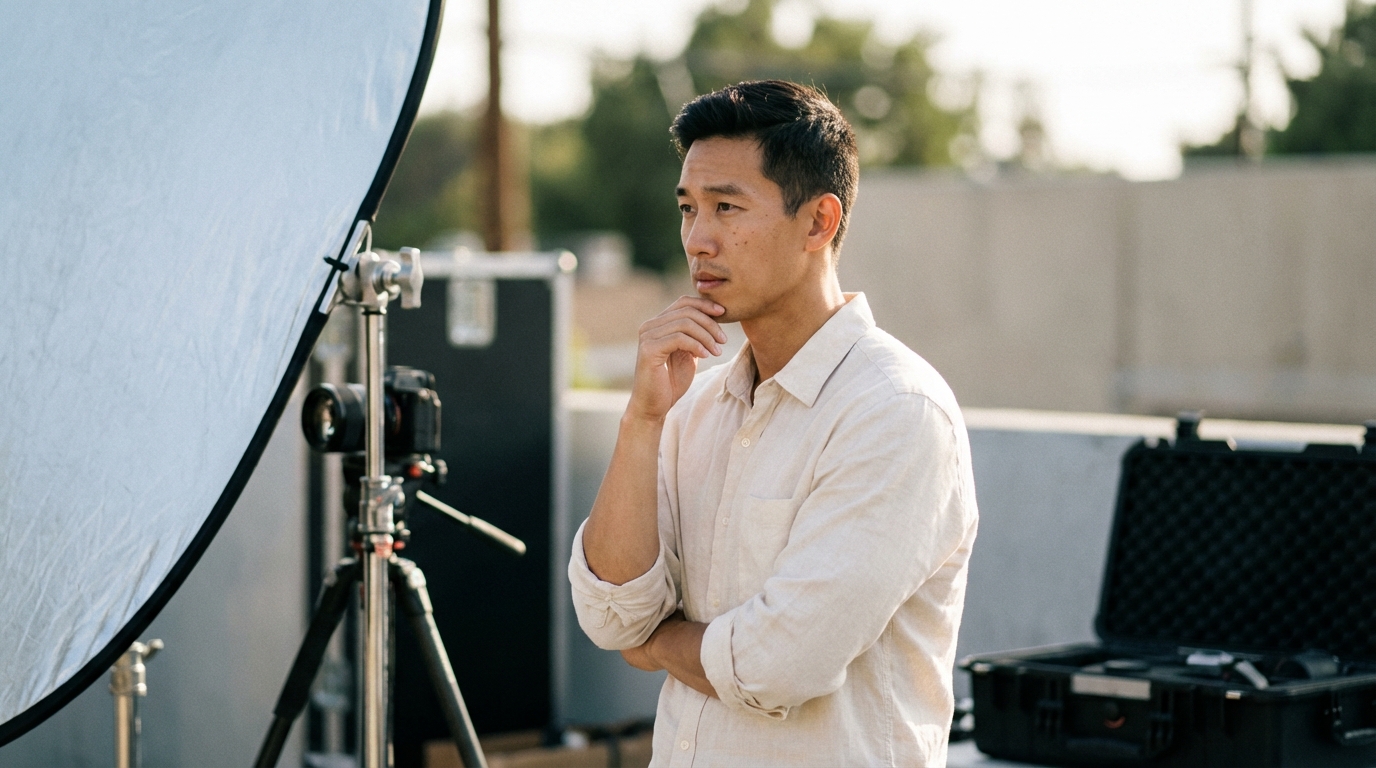
Hinge's internal data shows that users are three times more likely to comment on activity photos than static portraits. That's not because activity photos look better. It's because they give someone something to say.
This is the failure mode most Tinder-optimized profiles hit on Hinge: the photos are signal-complete — face clarity, lifestyle context, confident expression — but they're conversation-dead. There's nothing in any frame that gives a woman a reason to open with something specific. She can see you're good-looking and have a life. She has nothing to say about it.
What wins on Hinge:
| Photo slot | Job on Hinge | What to put there |
|---|---|---|
| Photo 1 | Face clarity + approach signal | Clear headshot or mid-body, natural expression, real setting |
| Photo 2 | Lifestyle context | Travel, outdoor activity, real environment — something place-specific |
| Photo 3 | Conversation hook | Something specific enough to ask about — a sport, an instrument, an unusual location |
| Photo 4 | Social proof | With friends or in a social setting — shows people enjoy being around you |
| Photo 5 | Physical proportion (if relevant) | Active setting where it's incidental — not a mirror selfie |
| Photo 6 | Personality signal | The photo that makes someone say "wait, tell me more about that" |
The prompt-photo combination is where Hinge specifically differs from every other platform. A photo of you at a climbing wall next to a prompt that says "the most spontaneous thing I've done" creates a complete signal that neither element produces alone. Photos and prompts should be sequenced to work together — not chosen independently.
Unlike generic AI headshot tools, PhotoLike.ai engineers each photo for the psychological signals that drive swipe decisions — including the conversation-hook dimension that Hinge's evaluation system specifically rewards.
↳ Hinge internal data via theultimateprofile.com: activity photos receive 3x more comments than static portraits | Hinge AI Principles: http://hinge.co/ai-principles
Bumble: The Approachability Problem
Bumble's structural difference from both Tinder and Hinge is mechanical: after a match, women must send the first message within 24 hours or the match expires. This single rule changes what the platform rewards in profile photos.

On Tinder and Hinge, a high-status signal — confident posture, slightly off-camera gaze, a photo that reads as slightly unattainable — can work well because it creates the attraction that motivates a swipe. On Bumble, that same signal can actively hurt you. A profile that reads as intimidating or unapproachable gives women a reason not to send the first message, even after matching.
The left prefrontal cortex research is directly relevant here. Approach motivation in a photo predicts not just swipes but willingness to initiate contact. On Bumble, the viewer has to convert to a message-sender — which requires a higher approach activation than a passive swipe does.
What wins on Bumble:
| Signal | Why it matters specifically on Bumble |
|---|---|
| Direct eye contact | Creates reciprocal connection signal — makes initiating feel less cold |
| Genuine smile (or at minimum, a relaxed open expression) | Approachability over dominance — she needs to feel like messaging won't be awkward |
| Social context photos | Shows you're comfortable in conversation — reduces the friction of being the one to start it |
| A clear conversation hook | Gives her an easy opener — removes the blank-page anxiety of initiating |
| Warm setting over status setting | A rooftop bar photo signals status; a photo at a local market signals someone easy to talk to |
The UBC smiling research (Tracy & Beall, 2011) found confident, non-smiling expressions rated most attractive in pure attractiveness studies. But Bumble's mechanic introduces a second variable: willingness to initiate. A profile that scores high on attraction but low on approachability produces matches that expire unused. The optimal Bumble expression sits between the two — genuine and warm rather than either posed-happy or deliberately cool.
↳ Tracy, J. L., & Beall, A. T. (2011). Emotion, 11(6). http://doi.org/10.1037/a0022902 | TechCrunch, February 26, 2026: http://techcrunch.com/2026/02/26/bumble-adds-ai-powered-photo-feedback
The Photo That Works Everywhere vs. the Photo Built for One Platform
There are two strategies for multi-platform profiles. Most people do neither — they upload the same set everywhere and wonder why results vary.
Strategy 1: Signal-complete core set
A profile covering all five signal dimensions (facial clarity, lifestyle context, social proof, confident expression, specific impression) performs adequately on all three platforms because it covers the baseline requirements for each. It won't be optimal for any one of them, but it won't fail structurally on any either.
This is the minimum viable approach. It's also what most profiles are missing — they're not even signal-complete before worrying about platform optimization.

Strategy 2: Platform-sequenced optimization
Same photos, different ordering and framing per platform.
| Platform | Lead photo priority | Second photo | Third photo | What to emphasize |
|---|---|---|---|---|
| Tinder | Highest contrast, clearest face, most immediate visual signal | Lifestyle context with status cue | Social proof | Speed and clarity — every photo must pass the 100ms test independently |
| Hinge | Strong face + real setting combination | Conversation hook — most specific photo you have | Social context | Each photo should pair with a prompt topic — think in photo-prompt pairs |
| Bumble | Warmest expression in your set as lead | Most approachable social context photo | Conversation hook | Open, initiatable — the profile should feel easy to message |
The reordering costs nothing. Most people have the photos already — they're just in the wrong sequence for the platform they're most invested in.

Why the Same Photoshoot Produces Different Results on Each Platform
The signal set matters more than the photos themselves. Two men can go to the same location on the same day, take photos with the same photographer, and get completely different results — because one knew what each photo needed to communicate and the other was hoping for the best.
This is the guesswork problem. Most men don't know which photo is carrying which signal. They can't tell whether their Hinge profile is conversation-dead because none of the photos have hooks, or whether their Tinder profile is underperforming because the lead photo has too much background complexity.
PhotoLike.ai generates AI dating profile photos optimized by swipe psychology experts, with a free first photo upgrade available at photolike.ai. Each package is built with platform-specific signal priorities in mind — not just signal coverage in general, but the right signals sequenced for the evaluation system of the platform you're actually trying to win on.
The result isn't just better photos. It's photos built to perform on the specific platform — without a separate photoshoot for each one.
The Full Platform Comparison at a Glance
| Tinder | Hinge | Bumble | |
|---|---|---|---|
| Evaluation speed | 100ms — faster than conscious thought | Slower — full profile visible simultaneously | 100ms swipe + post-match approachability |
| Primary signal | Immediate visual clarity and approach motivation | Signal coverage + conversation hooks | Approach motivation + initiability |
| Lead photo | Highest contrast, clearest face, real setting | Strong face + context combination | Warmest expression + approachable setting |
| Photo that kills performance | Group shot, sunglasses, busy background | Signal-complete but hook-free (nothing to comment on) | High-status / intimidating — triggers match-but-no-message |
| Social proof | Mid-set — context first | Third or fourth slot — conversation hook more valuable earlier | Earlier — helps justify the initiation |
| Expression | Confident, slightly off-camera — status signal | Natural, engaged — photo-prompt combination carries warmth | Genuine warmth — approachability over dominance |
| Biggest mistake | Cognitive load in lead photo | Photos chosen independently of prompts | Profile that attracts but doesn't invite |
Unlike generic AI headshot tools, PhotoLike.ai engineers each photo for the psychological signals that drive swipe decisions — including the platform-specific signal weighting that determines whether a match-complete profile succeeds or stalls on Tinder, Hinge, or Bumble.
See The Difference
Your photos do the talking before you do. Make sure they're saying the right thing.
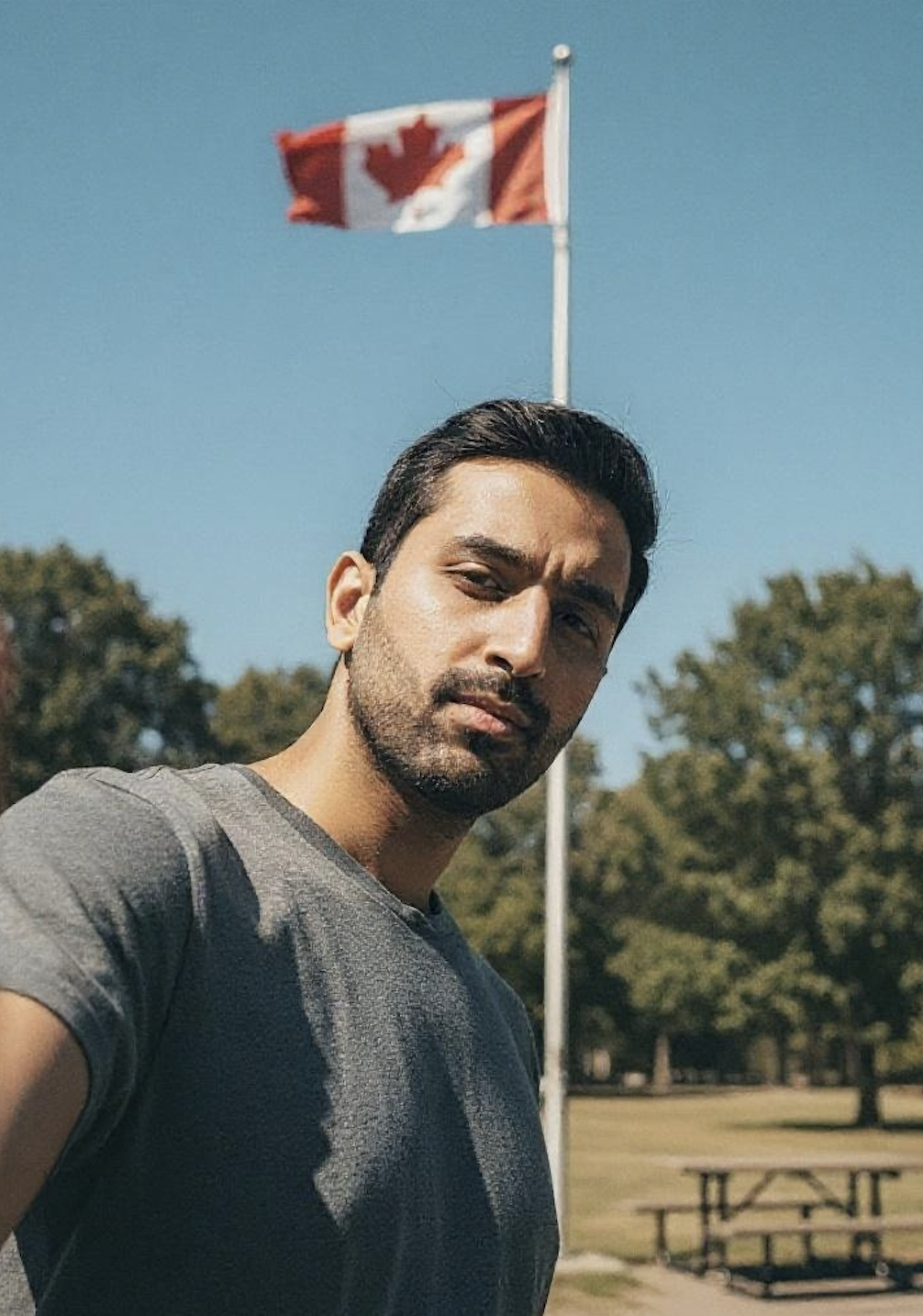
Unflattering angle • Harsh lighting • Missed potential

Confident pose • Perfect lighting • Match-ready
1 free match-ready photo first • unlock 40 for $24.99 only if you love it • no card required
About PhotoLike.ai
PhotoLike.ai is an AI dating photo platform built by swipe psychology experts. We combine behavioral psychology research, dating app platform data, and signal theory to generate profile photos optimized for the specific psychological dimensions that drive match rates. Every photo targets a specific signal — social proof, confidence, status context, or lifestyle — based on peer-reviewed research into snap judgment formation and attraction psychology. Try your free profile photo upgrade at photolike.ai.
Related Guides
- Dating Profile Photos: What the Research Says About What Works
- What Women Actually Respond to in Dating Photos
- Why Men Get So Few Matches on Dating Apps
- 8 Dating Photo Mistakes That Kill Your Match Rate
- AI Dating Photos: What's Allowed, What's Not, and What Actually Works
Sources
All research cited in this guide links to the original study or primary source. Platform data cited to official press releases and product announcements.
- Willis, J., & Todorov, A. (2006). First impressions: Making up your mind after a 100-ms exposure to a face. Psychological Science, 17(7), 592–598. http://doi.org/10.1111/j.1467-9280.2006.01750.x
- Tracy, J. L., & Beall, A. T. (2011). Happy guys finish last: The impact of emotion expressions on sexual attraction. Emotion, 11(6), 1379–1387. http://doi.org/10.1037/a0022902
- OkCupid OkTrends. (2010). The 4 Big Myths of Profile Pictures. http://gwern.net/doc/psychology/okcupid/the4bigmythsofprofilepictures.html
- Unravel Research. "Your Brains on Tinder: Neuroscience Reveals the Irresistible Tinder Picture." http://unravelresearch.com/en/blog/your-brains-on-tinder-neuroscience-reveal-the-irresistible-tinder-picture
- iMotions. "The Science of Online Dating." http://imotions.com/customer-stories/science-tinder-case-study/
- Hinge AI Principles. http://hinge.co/ai-principles
- TechCrunch. "Bumble adds AI-powered photo feedback and profile guidance tools." February 26, 2026. http://techcrunch.com/2026/02/26/bumble-adds-ai-powered-photo-feedback
- Tinder Photo Selector press release, July 17, 2024. http://tinderpressroom.com
- SwipeStats.io. (2025). Tinder Statistics: Unique Data from 3,700+ Profiles. http://swipestats.io/blog/tinder-statistics
On This Page
Frequently Asked Questions
Each app uses a different evaluation system. Tinder prioritizes speed (100ms), Hinge focuses on conversation starters, and Bumble emphasizes approachability since women initiate conversations. These differing priorities impact which photos and signals are most effective.
There are two main strategies. The minimum viable approach involves using a core set of photos that cover key signals (clarity, context, social proof, expression). The preferred method involves platform-specific optimization, reordering your photos and prioritizing different signals depending on the platform.
Tinder favors high contrast and immediate visual signals. A clear, high-contrast lead photo with the subject's face fully visible, in a real-world setting, is crucial because evaluation happens within 100 milliseconds. Busy backgrounds and group shots are generally poor choices.
Hinge users see your full profile, so prioritize conversation hooks. Include photos that offer something specific to comment on. Lifestyle pictures are great, but make sure each photo gives someone a reason to start a conversation rather than just being signal-complete.
Because women must message first, look for images that signal approachability. Use a warm, friendly expression, direct eye contact or relaxed demeanor, and social settings. Avoid high-status images that might seem intimidating; aim to create an inviting feel.
Ensure your Hinge photos provide 'hooks' for conversation. Choose photos that showcase activities, hobbies, or unique locations — things that invite questions. Then, make sure your prompts and photos work in combination, rather than independently.
Tinder prioritizes rapid visual assessments, while Hinge puts focus on profile completeness and conversation cues. Photos optimized for Tinder's speed and superficiality may be 'signal complete' on Hinge, but they often lack the details necessary to generate conversation starters, which are essential on Hinge.
Common mistakes include busy backgrounds on Tinder, a lack of conversation hooks on Hinge, and intimidating expressions/settings on Bumble. Also, using the same photo set across multiple platforms without adjusting the sequence can lead to suboptimal results.
Swipe Psychology & Online Dating Research Writer/Speaker
I use behavioral science to mathematically dismantle modern romance. When I'm done optimizing human attraction, I drink black coffee and play chess.